
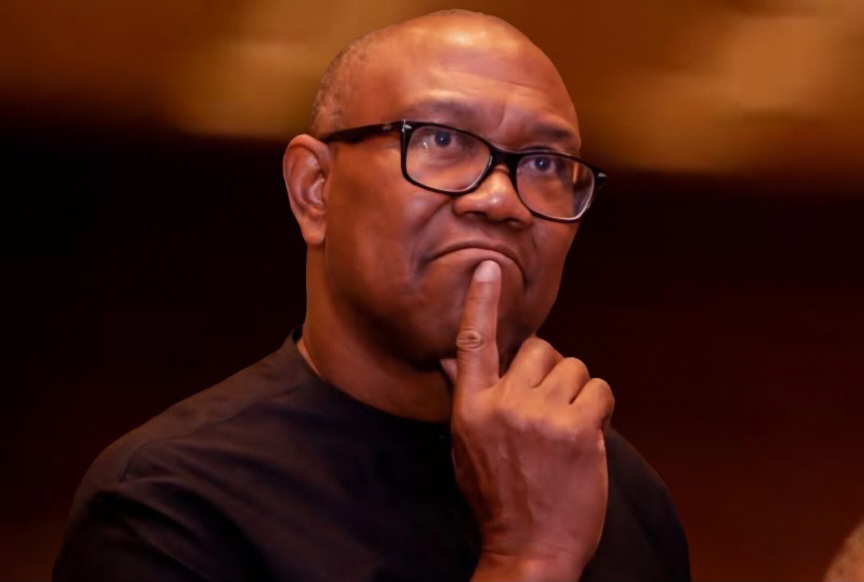
Peter Obi’s latest political posture raises a question that should concern every sincere believer in the long-standing quest for a Nigerian president of Igbo extraction: did he negotiate four years for Ndigbo, or did he negotiate it for himself?
That question has become necessary following recent reports of a possible political understanding between Obi and Senator Rabiu Musa Kwankwaso ahead of the 2027 presidential election. If the reports are true, and Obi has indeed accepted or considered a single-term arrangement in exchange for Northern support, then the matter goes beyond personal ambition. It touches the deeper issue of political representation, perceived political marginalisation, and the seriousness with which the South-East approaches its long quest for the presidency.


Obi, a former vice presidential candidate of the Peoples Democratic Party and the Labour Party presidential candidate in 2023, has spent the last few years projecting himself as the face of a new political morality. His appeal has rested largely on claims of competence, frugality, data-driven leadership, and a promise to rescue Nigeria from waste and misgovernance. Yet his recent public engagements, especially his weekend interview with Seun Okinbaloye on Channels Television, have raised more questions than answers.
The interview was uncomfortable to watch. Rather than clarify his record and strengthen public confidence in his capacity, Obi appeared defensive, evasive, and increasingly trapped by the burden of his own political claims. From his assertions about schools built in Anambra to his comments on the religious composition of his cabinet and his familiar summersault views about the power sector reform, the conversation exposed gaps that his admirers often prefer to explain away. For a man who has built a movement around presumptuous facts, figures and moral superiority, that interview did serious damage.
Politics is unforgiving because public trust is built slowly and lost quickly. Once a politician makes credibility his strongest selling point, every inconsistency becomes more damaging than it would have been for an ordinary aspirant. Obi’s greatest challenge today is no longer whether he can excite a section of young voters on social media. It is whether he can convince the wider Nigerian electorate that he possesses the temperament, political depth, coalition-building capacity, and national reach required to govern a complex country like Nigeria.
This is where the reported four-year pact with Kwankwaso becomes deeply troubling. Ndigbo have carried the burden of presidential exclusion for decades. Since the return of democratic politics in 1979, every serious attempt by an Igbo politician to reach the highest office in the land has fallen short. Dr. Nnamdi Azikiwe tried under the Nigerian People’s Party. Dr. Alex Ekwueme came close within the PDP structure before the 1999 election, only for the political tide to shift decisively in favour of Chief Olusegun Obasanjo. Ditto for Owelle Rochas Okorocha who came second after Late President Umaru Yar’Adua ahead the 2007 presidential primaries of the PDP. Other Igbo aspirants have made attempts since then, but none has crossed the final line.
That history is not a small matter. It represents decades of aspiration, negotiation, disappointment, and political recalibration. The desire for an Igbo presidency is therefore bigger than Peter Obi. It is bigger than any one politician, party, campaign slogan, or social media movement. It is a national question that requires patience, alliance-building, strategic discipline, and broad acceptance across Nigeria’s major political blocs.
This is why Obi’s reported willingness to accept a one-term arrangement should worry serious-minded observers. If Ndigbo have waited this long for the presidency, should their most visible aspirant be negotiating a four-year tenancy in Aso Rock as though the matter is a personal career bargain? Did he consult widely with Igbo political, traditional, business, and intellectual stakeholders before entering such conversations? Did he ask whether a single term satisfies the historic demand for full political inclusion, or did he simply calculate what works best for his own ambition?
The question becomes even more relevant when placed against the current political cycle. After eight years of President Muhammadu Buhari from the North, the presidency returned to the South in 2023 through President Bola Ahmed Tinubu. The broad political understanding in many quarters is that the South should ordinarily complete eight years before power returns to the North. President Tinubu is currently serving his first term and is seeking a second term in 2027. In that context, Obi’s reported pact raises a strategic dilemma for southern politics and, more specifically, for the South-East.
Should the South-East stake its historic presidential aspiration on a hurried four-year term or should Ndigbo pursue a broader, more patient, and more sustainable national negotiation that can produce a presidency with stronger legitimacy and a fuller mandate when the political conditions become more favourable?
No serious student of Nigerian politics should pretend that the presidency is won by enthusiasm alone. It is won through structure, numbers, alliances, timing, regional understanding and trust. Obi’s 2023 performance showed that he could energise a movement, especially among young voters and urban citizens. But it also showed the limits of a campaign that could not sufficiently penetrate the North, did not command the South-West, and relied heavily on emotional momentum rather than durable political machinery.
For Obi to become president, he would need far deeper support in the North and a meaningful opening in the South-West. At the moment, that path remains narrow. President Tinubu has spent decades building relationships across northern political, religious, business and traditional networks. He did not begin his northern outreach on the eve of an election. He invested in alliances long before many of his opponents understood the weight of such groundwork. Obi, by contrast, appears to have turned to the North only after discovering that online enthusiasm does not automatically translate into national victory.
Even the reported alliance with Kwankwaso is not the magic wand some of Obi’s supporters imagine it to be. Kwankwaso is a significant political figure with a defined base, especially in Kano, but it is doubtful that he possesses the northern reach required to deliver Obi to the presidency. If the price of that limited support is a four-year concession, then Obi may have accepted a poor bargain and dressed it up as strategy.
For the avoidance of doubt, the Igbo presidency is not impossible. It is possible, legitimate, and desirable within the framework of national inclusion. But it cannot be achieved through emotional blackmail, hurried bargains, or political shortcuts that isolate the South-East from the major blocs whose support will be necessary. It must be negotiated with seriousness. It must be accepted by a meaningful section of the South-West and the North. It must be built on trust, timing, competence, and national persuasion.
That is why Obi may still have a more honourable path before him. He can choose to place the collective interest of Ndigbo above his personal ambition. More emphatic, he can support President Tinubu’s completion of the South’s turn in 2027, work with other Igbo leaders to deepen negotiations across the country, and help prepare the ground for a stronger Igbo presidential bid in the future. Such a move would require sacrifice, but politics at its noblest level is not always about who contests now. Sometimes it is about who helps create the conditions for a more sustainable victory later.
Of course, many will disagree with this position. Some will insult, misrepresent, and attack it. That is expected. But anger does not answer the central question. If Peter Obi has truly accepted a four-year arrangement with Kwankwaso, then Ndigbo deserve to know whether he did so on behalf of the collective aspiration of the South-East, or whether he merely negotiated a temporary political opening for himself.
The South-East has waited too long for its presidential ambition to be reduced to a personal experiment. It deserves more than a symbolic four-year bargain. It deserves a serious national negotiation, a broad coalition, and a candidate who understands that the presidency of Nigeria is not seized through wishful thinking, but built through trust, structure, patience, and strategic maturity.
In the end, Obi must answer the question his reported pact has placed before the country: did he negotiate four years for Ndigbo, or did he negotiate four years for Peter Obi?
- Stanley Nkwocha, Senior Special Assistant to the President on Media and Communications (Office of the Vice President), wrote in from Abuja.

