
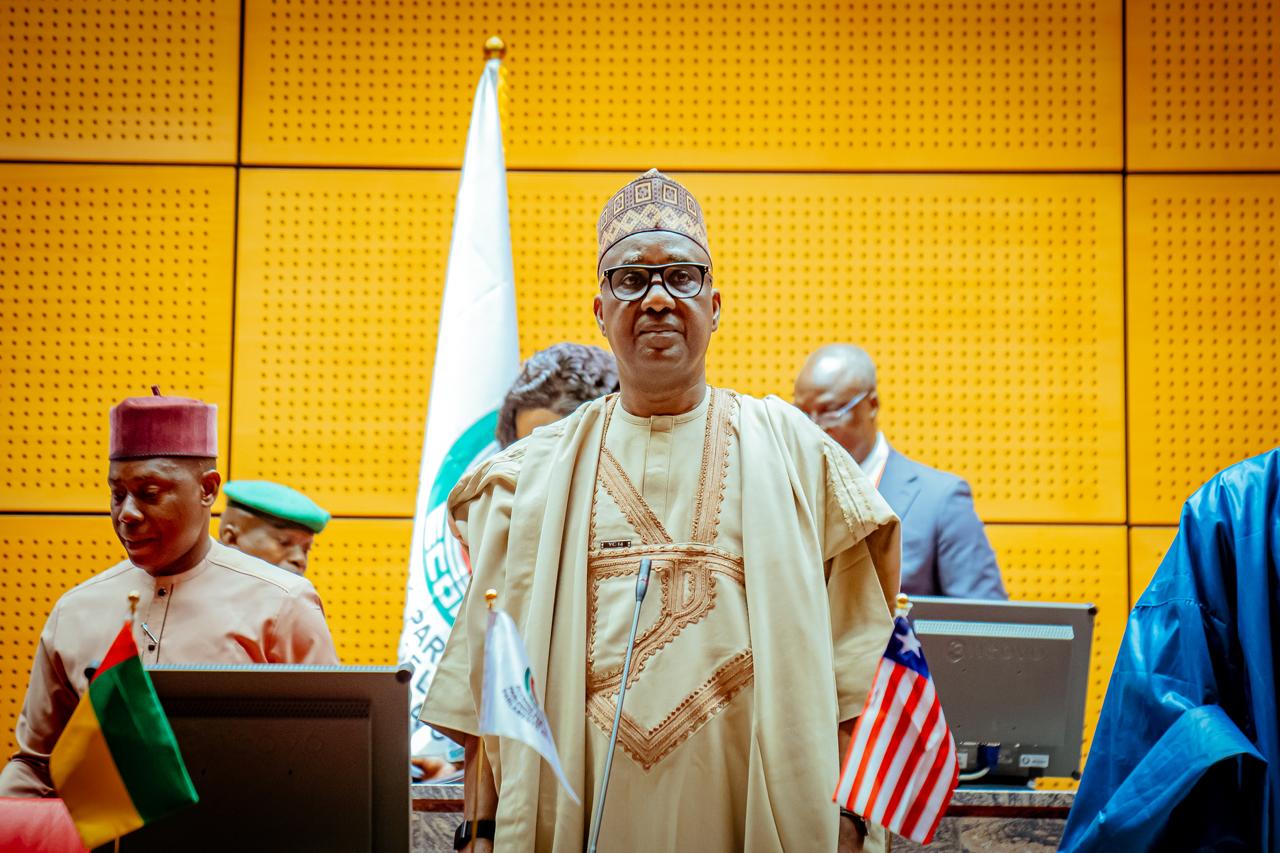
The Speaker of the House of Representatives, Rt. Hon. Abbas Tajudeen, has said that unconstitutional changes of government in West Africa require a direct and measured response, noting that citizens across the sub-region continue to reject military rule.
Abbas made the remarks on Monday in Abuja while delivering an address at the opening of the 2026 First Ordinary Session of the ECOWAS Parliament (Sixth Legislature).


He said the region was at a critical point where democratic systems were under close scrutiny, not only over elections but also over whether governance was delivering tangible results that citizens could trust.
“Across West Africa, democratic systems are under close examination. The concern is no longer limited to the conduct of elections. It extends to the broader question of whether democratic governance is producing outcomes that citizens can recognise and trust,” he said.
The Speaker pointed to declining voter participation and weakening public confidence in institutions in several ECOWAS member states, alongside a series of unconstitutional takeovers that he said reflected deeper institutional strain.
“Electoral legitimacy must be matched by governance outcomes,” Abbas stressed. “Security, economic stability, and fairness in public administration are no longer aspirational goals; they are the basis on which citizens evaluate the state’s credibility. Where these are absent, the space for disruption expands.”
He urged the ECOWAS Parliament to move beyond its deliberative role and become a stronger platform for aligning democratic practice with citizens’ expectations. This, he said, includes advancing proposals to grant the Parliament enhanced legislative authority, greater oversight capacity, and a more direct role in regional decision-making.
“A more empowered Parliament would enhance accountability within the Community, deepen citizen representation at the regional level, and provide a stronger democratic anchor in times of stress,” he stated.
Abbas also highlighted the role of national parliaments in sustaining democracy, noting that their effectiveness determines how citizens experience governance. He said the Nigerian House of Representatives had prioritised legislative productivity, oversight discipline, and public engagement under his leadership.
As part of efforts to strengthen inter-parliamentary ties, the Speaker called for the institutionalisation of parliamentary friendship groups across the sub-region to complement the work of the ECOWAS Parliament. He noted that Nigeria’s House had already established such groups with over 40 countries to promote legislative cooperation and dialogue.
He outlined three priorities for the region: ensuring that democratic systems deliver measurable outcomes, holding political leadership to account, and translating regional agreements into sustained action.
Abbas said ECOWAS had already established frameworks to support democratic stability, but emphasised that the focus now must be on implementation through early warning mechanisms, peer review processes, and technical support for member states.

