
There are some government projects that are completed, commissioned and soon forgotten. Then there are projects that carry an idea bigger than the building itself.
The Barefoot Renewable Energy College in Osara, Kogi State, belongs to the second category.


The groundbreaking of the Barefoot Renewable Energy College in August 2024 marked an important step in turning the idea into reality. What began as a vision was gradually becoming an institution.
The recent commissioning of the college by Vice President Kashim Shettima further elevated the significance of the project.
At first glance, it may appear to be another government institution. But look closer and a bigger story emerges—a story about Nigeria’s energy future, the power of human capital and the possibility of preparing Nigerians for an economy that will increasingly depend on renewable energy.
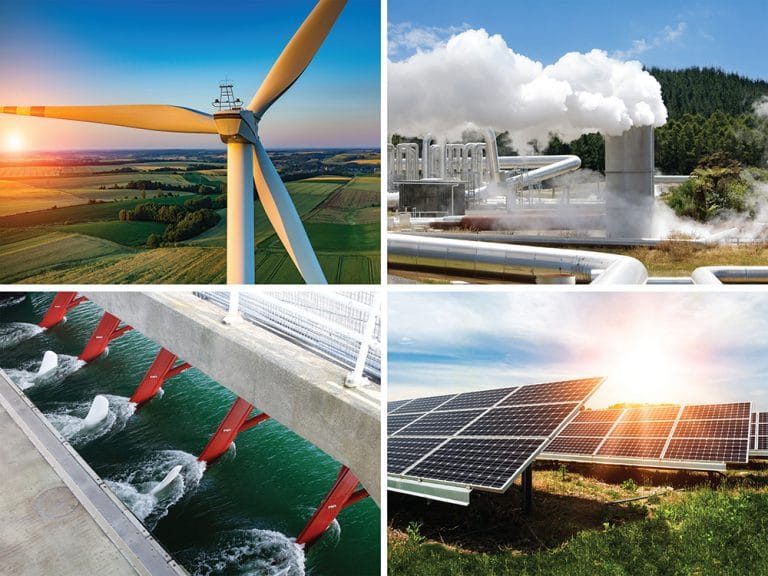
Nigeria’s transition to renewable energy should not be regarded simply as an environmental agenda. It is an economic agenda, a social agenda, a youth employment agenda and a rural-development agenda.
The country must build the people who will design, install, operate, maintain and innovate around the energy systems of tomorrow.
That is where the Barefoot Renewable Energy College becomes significant.
A NEW CHAPTER AT THE ENERGY COMMISSION
President Bola Ahmed Tinubu appointed Dr. Mustapha Abdullahi as Director-General and Chief Executive Officer of the Energy Commission of Nigeria (ECN) in 2023, and he brought to the position considerable experience in energy, engineering, technology and renewable energy development.
Since assuming office, Dr. Abdullahi has increasingly projected the Energy Commission as an institution that must go beyond policy documents and technical meetings to pursue practical interventions capable of affecting people’s lives.
His approach has placed considerable emphasis on renewable energy, energy efficiency, research and development, technical capacity, innovation, partnerships and the localisation of energy technology.
The philosophy behind the Barefoot Renewable Energy College took inspiration from the one associated with the Barefoot College movement in India, which demonstrated that people from rural and underserved communities could acquire practical renewable energy skills and become agents of transformation in their own communities.
Therefore, energy knowledge should not belong only to engineers in major cities or experts working in laboratories. A young Nigerian in a rural community should be able to learn how to install and maintain solar systems.
FROM ENERGY CONSUMERS TO ENERGY ENTREPRENEURS
Perhaps the most exciting possibility is the opportunity to change the way young Nigerians see the energy sector.
For many years, the electricity sector has been perceived as an industry dominated by government agencies, large corporations and highly specialised professionals.
Renewable energy can change that.
A young graduate can become a solar entrepreneur. A technician can establish a solar installation company. A small business owner can provide renewable energy services to communities that are not adequately served by the national grid.
This is where energy policy meets employment creation.
A SUSTAINABLE VISION FOR NIGERIA
The most important thing about Dr. Abdullahi’s renewable energy agenda is that it connects energy to the broader question of national development.
When a rural health centre has electricity, lives can be saved. When a small business can operate without spending a large portion of its income on diesel and petrol, its chances of survival improve.
When farmers have access to reliable energy for processing and storage, agricultural losses can be reduced. When industries have dependable power, productivity improves.
In other words, energy is connected to almost every aspect of development.
President Tinubu’s administration has placed the idea of Renewed Hope at the centre of its development agenda. But hope must ultimately become tangible.
For the Nigerian who wants electricity to run a business, hope means reliable power.
The Barefoot Renewable Energy College reflects the growing importance attached to renewable energy, technical skills and Nigeria’s transition towards a more diversified and sustainable energy future.
The significance of the Barefoot College lies not merely in its location in Osara or the distinction attached to its establishment as Africa’s first institution of its kind.
Its significance lies in the possibility that it can help Nigeria produce a generation of skilled citizens capable of driving the country’s renewable energy future.
For Dr. Mustapha Abdullahi, the challenge now is to ensure that the vision continues to grow beyond the commissioning ceremony. For the Federal Government, the responsibility is to provide the institutional support required for the vision to succeed. For the private sector, there is an opportunity to invest in the human capital and technologies of a new energy economy.
And for Nigerians, particularly young Nigerians, there is a message worth hearing: The future of energy is changing. Nigeria must not merely watch that future arrive. Nigeria must have the people capable of building it.
- Emma Isa is a Public Affairs Analyst and Management Consultant [email protected]

