
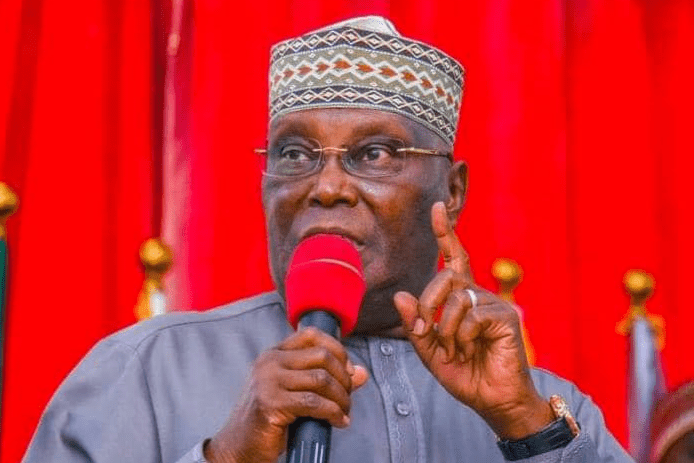
There is something instructive in how the Nigerian government has responded to Atiku Abubakar’s call to restore a targeted fuel subsidy. Rather than meet the proposal with a transparent account of where three years of “savings” have gone, government officials have reached for volume instead of arithmetic, insisting, hoarsely, that the gains of subsidy removal must not be reversed. The obvious question Nigerians are entitled to ask is simple: which gains, exactly, after three years?
That question deserves a straight answer, not a lecture. A government confident in its record would not need to shout down a challenger. It would simply point to the evidence in cheaper transport, tamer food prices, visible infrastructure, a currency that has found its footing. Three years after subsidy removal became the defining act of this administration, much of that evidence remains elusive for the ordinary Nigerian. Against that backdrop, Atiku’s intervention, whatever one makes of his own political motives, has forced a conversation the government appears far more comfortable avoiding than having.


The latest escalation only reinforces the point. A presidential aide has now claimed that reversing subsidy removal would cost the country some ₦19.1 trillion annually, thrown into the public square without a breakdown, a source document, or any verifiable methodology behind the number. This is not the first such figure to surface in this debate, and each one seems to arrive bigger and less substantiated than the last. Nigerians have grown used to round, alarming trillions being cited as settled fact whenever a policy is under threat, only for no ledger to ever be produced. If the number is real, publish the workings. If it is not, Nigerians deserve to know that too.
But even granting the aide’s figure the benefit of the doubt, assuming, without conceding, that the cost really is that enormous, the calculation does not end there. A frightening number on a government spreadsheet has to be weighed against the frightening number Nigerians already live with: the cost of transport to work, the price of a bag of rice, the wages that no longer stretch to the middle of the month. Between an alarming projection and the lived, present hardship of households, it is not obvious which one should carry more political weight. A government that wants to win that argument on the merits should be doing the sums in public, not brandishing a single unverified figure as though it settles the matter.
None of this absolves Atiku of his own inconsistency. He was an early champion of subsidy removal, and a reversal five months from an election invites fair scepticism about timing and motive. But questioning a rival’s sincerity is not a substitute for defending one’s own record, and the government has spent far more energy on the former than the latter. When a presidency’s sharpest rebuttal to a policy challenge is character assassination and an unverified fiscal scare figure, it has effectively conceded the argument on substance.
Nigerians did not sign up for reform as an act of faith; they were promised that hardship would eventually yield tangible relief. Three years on, that promise remains largely aspirational, and a government that cannot show its work should expect to be challenged and should treat that challenge as an invitation to persuade, not an insult to be crushed. Bullying may silence a rival in the short term, but it rarely satisfies a hungry electorate.
Ultimately, the issue is bigger than Atiku Abubakar. It is about whether government can still persuade Nigerians that its reforms are working. If the administration wants citizens to support difficult economic decisions, it must demonstrate not merely that the policies are theoretically sound, but that they are producing tangible results.
Come 2027, Nigerians will not vote on slogans. They will vote on their lived experience. And no amount of political bullying can permanently substitute for economic results.
- Mr Abdulkadir is a legal consultant and can be reached via [email protected]

