
Power has a strange way of deceiving the man who possesses it.
When people begin to bow, officials begin to obey, crowds begin to applaud, and decisions begin to affect thousands or even millions of lives, a leader can easily forget one simple truth:


You were not the first to occupy that seat, and you will certainly not be the last.
If power were permanent, those who occupied our offices yesterday would still be there today.
But they are gone.
And one day, we will all be gone.
That is why power must never be exercised without conscience—and, above all, without the fear of Allaah.
Allaah has forbidden oppression. The fact that you have the authority to do something does not mean that doing it is right. The fact that people cannot challenge you does not mean that you will never be challenged.
There is a court before which no political influence, wealth, connection, security detail or title will matter.
It is the court of the Almighty.
Some of the people affected by our decisions may never have the opportunity to confront us. Some may be too poor, too powerless or too afraid to speak. Some may suffer quietly. Some may spend sleepless nights asking Allaah to deliver justice against those who wronged them.
And some may simply say:
“Allaah will judge between us.”
Never underestimate those words.
The person you ignored may have a Lord who heard him.
The person you humiliated may have a Lord who witnessed it.
The person whose livelihood you destroyed may have a Lord who recorded it.
And the person whose tears you caused may have a supplication that reaches Allaah while every door on earth appears closed.
So before you sign that document, approve that policy, demolish that property, remove someone’s livelihood, or make a decision that will profoundly affect people’s lives, stop and ask yourself:
Is this truly necessary?
Is there a less destructive alternative?
Have I considered the suffering this decision may cause?
And if I stand before Allaah tomorrow, will I be able to justify what I did today?
Leadership is not a licence to be cruel.
Political authority is not permission to destroy people simply because you can.
A leader can be firm without being heartless.
A leader can enforce the law without humiliating people.
A leader can solve difficult problems without unnecessarily destroying livelihoods.
A leader can exercise authority while still wearing a human face.
Indeed, perhaps the greatest test of leadership is not what you do when people are watching, but what you choose to do when you know you can get away with it.
History has witnessed powerful men who made others tremble, only for their own power to eventually disappear.
The palaces remained.
The offices remained.
The institutions remained.
But the men left.
Some eventually experienced consequences in this world. But worldly consequences do not cancel the possibility of accountability in the Hereafter.
So, whoever you are and whatever position you occupy, remember:
Yesterday, you were not there.
Tomorrow, you will not be there.
Your successor may reverse your decisions.
Your name may eventually disappear from the headlines.
Your photographs may gather dust.
Your office may be occupied by another person.
But what you did with the trust Allaah gave you will remain recorded.
One day, the convoy will stop.
The sirens will be silent.
The guards will no longer surround you.
The office will belong to someone else.
And you will stand before the One who gave you that power in the first place.
On that day, there will be no public relations team.
No political allies.
No propaganda.
No intimidation.
No appeal.
Only truth, justice and the judgement of Allaah.
Therefore, before you use power against another human being, remember that power is temporary, but accountability is eternal.
Use your authority wisely.
Be just when you have the power to be unjust.
Be merciful when nobody can force you to be merciful.
And remember the people beneath your decisions—not merely the statistics on your desk.
Because leadership is not ultimately about how many people fear you.
It is about how many people can stand before Allaah and testify that you treated them with justice when you had the power to do otherwise.
May Allaah protect us from abusing every trust He places in our hands, grant our leaders wisdom and justice, and protect the oppressed from oppression.
Aameen.
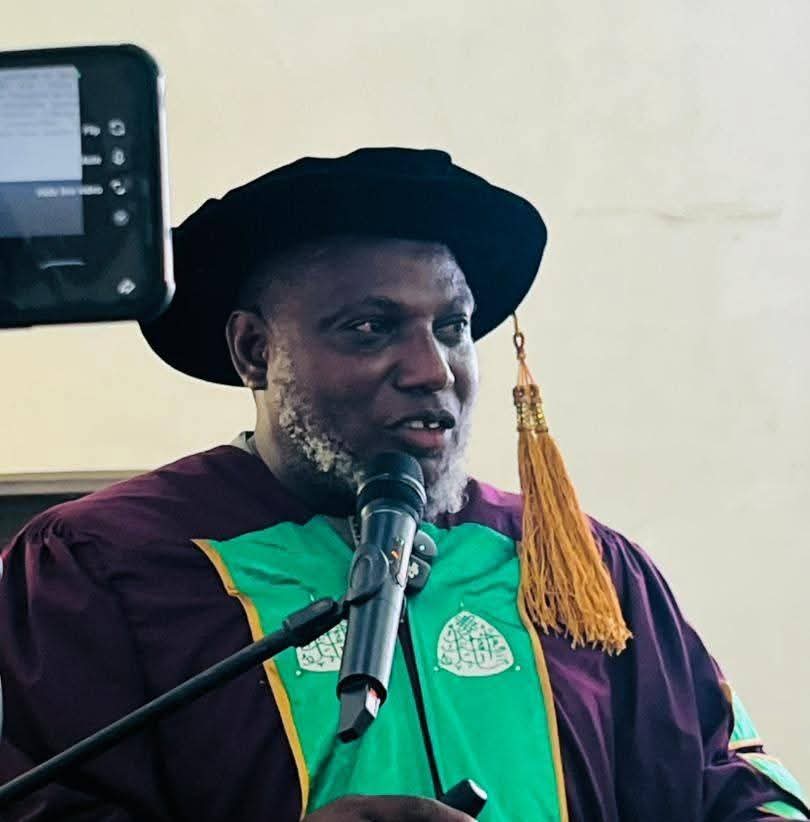
- Prof Nafiu Abdu is a professor of Soil Chemistry

