
In the last days of October, an important assignment took me to Katsina – and the commercial border town of Jibia. Over the last one and a half years, I have followed closely the aftermath of the peace deal with bandits that restored a sense of peace to the people of the area. The gains were pretty much visible everywhere when I arrived late October.
Back in 2023, when I first traveled there, the less than 50km stretch of road connecting the state capital, Katsina, to Jibia was one of the deadliest hotspots in the North West. To work around the attacks and kidnappings on the highway and ensure that life did not stop, people observed a routine while traveling. There were roughly eight hours for safe travels every day, from 9am to 4 or 5pm. Traveling late hours was a taboo or ticket to bandits’ captivity. People from Jibia would not go to Katsina until after 9am and vice versa. Likewise, anyone in Katsina trying to get to Jibia would perish the thought once they realized it was past 5pm. No one set out at dawn and no one returned home whenever they liked. Bandits ruled.


But the peace deal has removed all the hostilities. No bandit blocks the road anymore, no attacks or abduction of commuters.
Mindful of the new air of tranquility sweeping across Jibia and the route, I didn’t bother about arriving there around 4pm that Saturday in October.
I was so relaxed, comfortable and engrossed in what I went there for until around 8pm, when I started for Katsina in a chartered car.
The next morning, I took the same driver back to Jibia. Coincidentally, that day happened to be the town’s market day.
Since 2025, I have heard a lot about the various peace deals with different bandit groups operating in Katsina. From the stories, I learnt that bandits do go to markets in areas where a truce is in place. They buy and sell. In some areas, they go to see their girlfriends within the cities that they previously haunted. What they would not do is to bring their weapons when going to those places.
As we moved closer to Jibia, I started recounting some of the dramatic tales to the driver, of bandits freely riding bikes inside the town, shopping in markets and even visiting lovers in places they once tormented. “Yallabai,” Balarabe, my driver, said, “you will soon start seeing them along this road. Their camps are not far from this section of the road.”
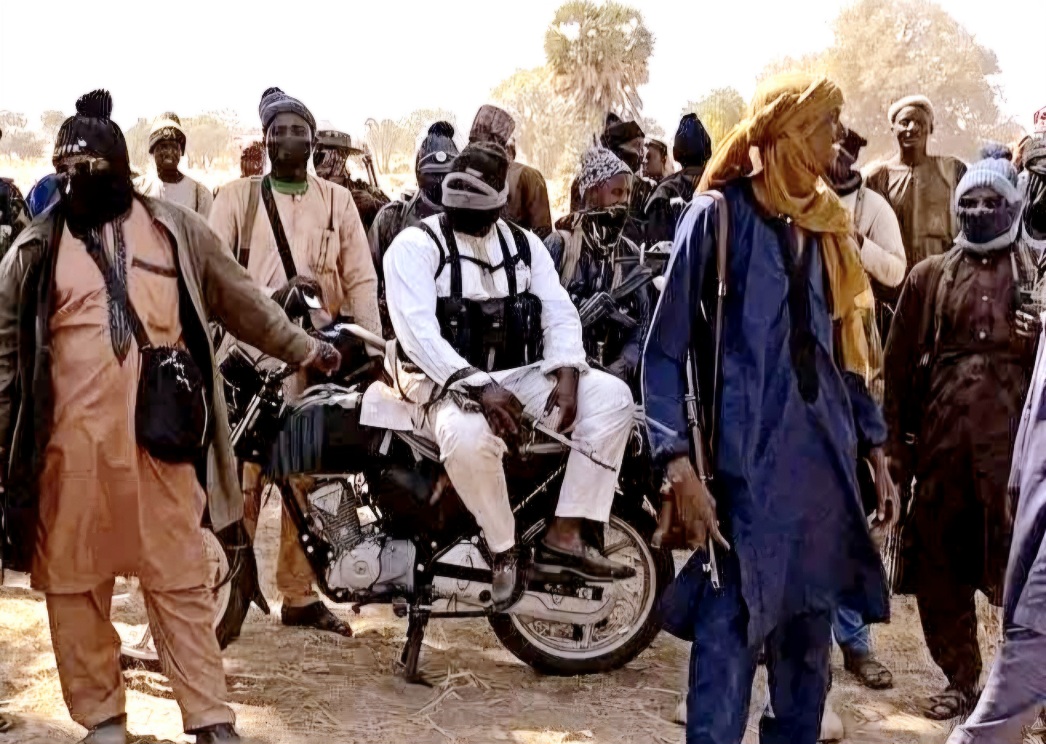
Then he started giving me tips on how to tell bandits from other people we would see along the way. Bandits ride new motorcycles. They are hairy, unkempt and almost dirty. They have sling bags (loaded with cash) hanging from their torso.
Just after a checkpoint, he stopped the description abruptly and asked me to look at a spot on the left side of the road. “There, one of them is riding a bike, with a rifle hanging on his back,” he said, almost stopping the car in the middle of the road for me to see. By the time my neck turned fully in the direction, I could only catch a glimpse of the bike’s taillight, veering left and disappearing into a corn or sorghum field overlooking the highway.
I said to myself, that counts as one still and asked him why would the person be bearing arms, clearly against the terms of the peace deal. The driver told me that bush leads to one of their dens, a short distance off. The deal did not stop them from carrying guns in the bush and that was a bush – in fact, technically their own bush, their home, he explained.
We had driven over 1.5km after the first sighting, when he exclaimed, “Yauwa,” almost screaming in excitement. “Ga wasu” (Right there, more are coming). Two odd-looking young men, both fitting his descriptions of bandits with the identifiable long, unkempt hair and dirty clothes, were approaching the road. The only features they lacked were the idealized bike and bags of cash. As I looked in their direction, they waved at us and we threw our palms wide open and waved vigorously in response. The driver told me he noticed one of them carrying a rifle, tucked under the back of his shirt, with the butt or muzzle giving him an elevated shoulder on one side. Well, we had already passed them. So, I didn’t bother to turn because even if I saw the rifle, I was not going to ask him to surrender it or report him to anyone. If I did, I would probably be the only person who was just learning that he had a gun. So, turning was pointless.
But the driver had a theory for the fellows. On market days, bandits around Jibia typically ignore the peace deal, block footpaths and rob people of phones and cash. Those ones we just saw were probably getting into position to launch such a mission. They would probably cross to the other side of the road and rendezvous with a third member of the daylight robbery party – who was likely waiting in the bush, on their getaway bike. Their targets could be the villagers going to the market. It made a lot of sense even though it still remained a hypothesis and I was not going to go down and verify. We moved on and I added the two to my list, making three.
After turning left at Magama junction, two men appeared right in front of us on a new bike, winding hair strands curled under sweater caps and sling bags bouncing off their torso. I laughed and Balarabe, the driver, laughed, too.
We followed behind them, driving slowly into the middle of the Jibia market. I had plenty of time to check them against Balarabe’s checklist. They were all present. See finish!
They turned left and we parked at a filling station. Now, I had counted five “bandits”.
The market was bursting at the seams with a massive crowd. The driver led me on foot to my appointed meeting point. I was so eager to share my experience with my hosts that I didn’t even wait for a seat to be set before I started talking. When I mentioned the five “bandits” I counted along the way, they became puzzled, not at my finding, but the number. If I stayed until evening, I would probably count up to 150, right in the market.
But what I found most shocking about my trips to Jibia was not the five “bandits”. It was the array of our security agencies who mounted checkpoints along the route and collected bribes from poor passengers, residents and drivers, who might still be robbed, probably by those two bandits we saw trying to cross the road to set up an ambush.
Extorted by security agents and robbed by bandits. That, perhaps, is a story for another day.

