
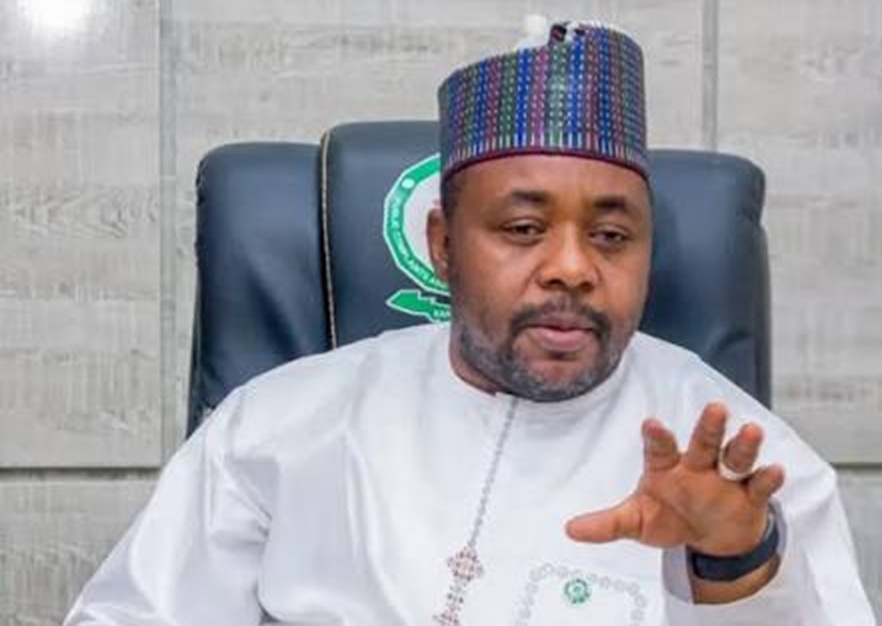
The name Muhuyi Magaji Rimin Gado is a lawyer who serves presently as Chairman of the Kano State Multi-Agency Task Force on Drug Abuse and Illicit Trafficking. Many say he is loquacious, that he loves the camera too much, that he likes showmanship. Say all of that and even more. There is no denying the fact that Muhuyi, as popularly called by the people in Kano, is delivering on his mandate.
Today in Kano, illicit drug and substance dealers, barons, suppliers, sponsors of thuggery, and their protectors in high places are afraid. That fear speaks to the measure of Muhuyi’s work.


When Kano State Governor Abba Kabir Yusuf declared a public health emergency on drug abuse on July 22, 2026, and inaugurated the Muhuyi-led Task Force, many people dismissed it as just another committee. “We have seen task forces inaugurated with fanfare, photographed, and forgotten,” some people said. Others said “we have seen governors make big speeches about drugs while notorious joints and dealers continued to operate openly, as if they had licences.”
But Muhuyi is proving these cynics wrong. In just over four months, the task force has arrested 1,760 suspects and secured 890 convictions. Some 63 cases are awaiting trial. About 690 convicted persons are serving sentences in various correctional facilities, while others have been sent for rehabilitation, fined, or given community service.
Still, the numbers only tell half the story. The real story is who is being arrested, and what is being seized. No fewer than 3.18 million pregabalin capsules were seized in a single operation at Apple Avenue, Nomansland. Before that, it seized 870,000 capsules from a pharmaceutical company over suspected diversion. In total, by late November, the task force said it had intercepted approximately 4,080,000 capsules of pregabalin from an illicit diversion chain before they could reach vulnerable youths.
Pregabalin has become a silent killer of Kano’s youth. It is a controlled, prescription drug, but on Kano’s streets it has become the most abused substance. According to the task force, eight out of every 10 suspected drug users arrested in Kano were either found with pregabalin or admitted to using it. As Muhuyi has repeatedly lamented, pregabalin, which is difficult to find in legitimate pharmacies in Kano, is the most common drug on the streets.
While raiding joints is important, Muhuyi sees it as unjustified to stop at the users. “I cannot in good conscience continue to go after the victims (users) while the perpetrators (dealers) are given shield by those who have a statutory responsibility to protect them,” he said recently.
For decades, the drug war has been a war against the poor boy on the street, the thug, the scrap collector, the addict. Our security agents arrest the victim and leave the importer, the manufacturer, the distributor, the pharmacist who signs the papers, and the politician who protects them. Muhuyi reversed that logic. He is now going after the supply chain. That is why some people are uncomfortable.
These are not questions of showmanship. They are questions of accountability. And Muhuyi is asking them publicly, on camera, with documents in his hand, and suspects before him. That is exactly what a public official should do when he suspects that the regulators themselves have been compromised.
Yes, his methods may not go down well with some. He leads journalists to sealed premises. He holds press briefings with seizures displayed. He names companies. He names agencies. He speaks in plain, angry language. Some call that showmanship. But it is more a case of transparency.
Kano has suffered for too long from quiet corruption — deals done in offices, licences signed in silence, drugs moved in trucks at night, while officials issued polite press statements about “ongoing investigations.” Muhuyi has brought the fight into the open. He wants the public to see the drugs, to see the faces, to know the names. That is what will serve as deterrence.
When a young boy in Dala sees that even a former local government chairman can be arrested for allegedly selling and administering fentanyl injections to youths, he learns that no one is untouchable. When a gang sponsor is tracked all the way to Port Harcourt and arrested, every other sponsor learns that distance will not save him.
And yet, for all the toughness, Muhuyi has shown a remarkable level of compassion.
In September, the task force rescued 43 children from the Race Course area, where some had been collecting scrap and instead of being paid, were given rubber solution and other intoxicants. Two men were later convicted. The children received medical care and counselling, and some were reunited with their families. In November, the task force evacuated more than 66 children from different locations across Kano who reportedly tested positive for prohibited substances.
Also, about 125 youths have been referred to the Kano Reformatory Institute in Kiru. First-time offenders who test positive for a single substance undergo counselling and are reunited with their parents. Those who need intensive care are channelled into rehabilitation.
The task force has set an ambitious target to rehabilitate, train and reintegrate 10,000 youths. It is deploying AI for surveillance and tracking of dealers. It is equipping a rapid-response centre with ICT and a 24-hour toll-free line where residents can report and get a response within 30 minutes. It has donated equipment to the NDLEA to strengthen inter-agency collaboration.
Muhuyi needs the support of all to be able to succeed. Drugs fuel thuggery. Thuggery fuels elections. The ‘yan daba who terrorise neighbourhoods are not acting alone. Someone gives them drugs. Someone gives them money. Someone gives them protection. Someone uses them to snatch ballot boxes, to intimidate opponents, to settle scores. That is the danger now. Politicians must not compromise and frustrate his work because of politics.
The Kano State House of Assembly must move quickly to give the Muhuyi-led task force a solid legal framework that outlives any governor or chairman. As commentators have rightly argued, Kano’s fight against drugs has outgrown a task force. It needs an institution. It needs a budget. It needs protection from political interference.
The governor must continue to give Muhuyi full backing, even when the fight touches the powerful. The security agencies must continue to work as one team, not as rival empires. Parents, imams, pastors, traditional rulers, teachers, journalists and other members of the public must stand behind this work. Parents are already voluntarily bringing their drug-dependent children to the task force. That is trust, and it must not be betrayed.
Let us be honest about what is at stake. Kano is losing a generation. Pregabalin, tramadol, cannabis, exol-5, pentazocine, methamphetamine, rubber solution, fentanyl — these are not “youth exuberance.” They are chemical weapons deployed against our children. They cause madness, kidney failure, liver damage, death. They cause phone snatching, kidnapping, rape, gang wars, and political violence. They destroy families before they destroy the state.
If one man, with a multi-agency team, has shown that it is possible to arrest, convict, seize millions of capsules, rescue children, and chase sponsors across state lines, then Kano owes him support, not sabotage. Call him a showman if you want. But in Kano today, showmanship that saves children is better than quiet professionalism that lets them die.
- Ibrahim writes from Fagge, Kano

