
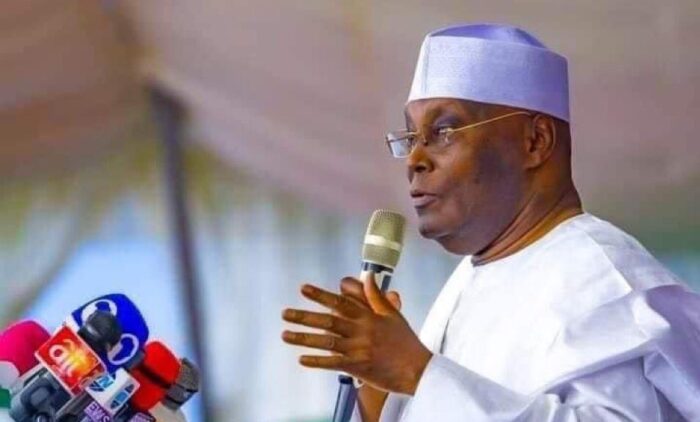
Former Vice President Atiku Abubakar has ignited a fierce debate with his pledge to “bring back subsidy” if elected in 2027. The Presidency has called it “retrogressive” and “fiscal desperation”. Nyesom Wike has labelled him a “voodoo economist”. The APC has accused him of desperation. But here is what is being lost in the noise: Atiku is not actually proposing to resurrect the old import subsidy regime.
His actual proposal, the Atiku Economic Recovery Plan (AERP), is a production subsidy for Nigerian refineries, not a return to the open-ended import subsidy that was removed in 2023. Under his plan, qualifying refineries would receive domestic crude at preferential prices, subject to strict production, efficiency, and transparency conditions. The subsidy would operate within a predetermined annual fiscal ceiling approved through the federal budget.


As Atiku himself put it: “We will move subsidy from importation to production, from middlemen to Nigerian refineries, and from unverifiable claims to verifiable barrels”. This is not the old subsidy. This is something different and it deserves to be debated on its merits, not dismissed with slogans.
The government’s own numbers raise serious questions
The government has finally provided a breakdown of the N15.8 trillion in subsidy savings generated between June 2023 and December 2025. The Federal Government received N5.43 trillion, states received N6.52 trillion, and local governments received N3.88 trillion. But here is the problem: the government spent N30.64 trillion during the same period. Of this, N9.39 trillion went to wage adjustments, N9.37 trillion to external debt servicing, and N6.5 trillion to infrastructure. The N9.39 trillion spent on wages alone exceeded the Federal Government’s entire N5.43 trillion share of the subsidy savings.
The government argues this proves the reforms were necessary. But it also proves something else: the subsidy savings did not create a surplus. They were absorbed and then some by higher costs.
Meanwhile, Atiku has challenged the government to account for approximately N30 trillion in Federation revenues, deductions, savings, and transfers that he says remain unexplained. The Allied Peoples’ Movement (APM) has also rejected the N15.8 trillion figure, insisting the actual savings exceed N27 trillion. As Atiku put it: “Transparency is not achieved by attaching convenient accounting labels to trillions of naira. It is achieved by opening the books”.
The cost of living crisis is real and unresolved
Whatever the fiscal numbers say, the lived reality for Nigerians is devastating. The cost of maintaining a healthy diet has risen by 119 per cent since subsidy removal. A report found that subsidy removal raised the cost of living and poverty levels by about 63 per cent. Petrol prices are six times higher than when Tinubu took office. It now costs more than double to make the staple jollof rice.
The government admits the reforms have come with “significant costs”. But it has yet to convince Nigerians that the benefits are worth the pain.
A smarter way forward
Atiku’s proposal is not perfect. It raises legitimate questions: How would it be funded? How would it interact with the Petroleum Industry Act? Would it discourage investment in refineries?
But his instinct is correct on two counts:
First, Nigerians deserve transparency. The government must fully account for every naira of subsidy savings. As Atiku rightly asked: “Where is the money? Where has the subsidy money gone? Has it been used to improve healthcare, education or security?”
Second, the cost-of-living crisis cannot be ignored. Whether through production subsidies, targeted cash transfers, or massive investment in public transport and agriculture, the government must do more to cushion the pain.
The choice before Nigeria is not simply between subsidy and no subsidy. It is between an opaque system that breeds waste and a disciplined economic instrument that delivers measurable benefits to citizens. Atiku is right about the question. But his answer to a production subsidy that still requires government spending must be scrutinised for feasibility, sustainability, and real impact on the poor.
Conclusion
Atiku’s proposal is not the old subsidy. It is a different model one that at least attempts to address the transparency failures of the past and the cost-of-living crisis of the present. The government’s dismissal of his plan as “desperation” is not a serious engagement with the issues. Nigerians deserve better than slogans from either side. What we need is a genuine debate about how to balance fiscal discipline with human welfare, how to ensure transparency in public spending, and how to build an economy that serves all Nigerians not just the powerful.
That debate has not yet begun. It must.
- Hayatudeen Maccido Mohammed is Chairman of the Initiative for Good Governance Advocacy (IGGA) and writes from Zaria, Kaduna State.

