
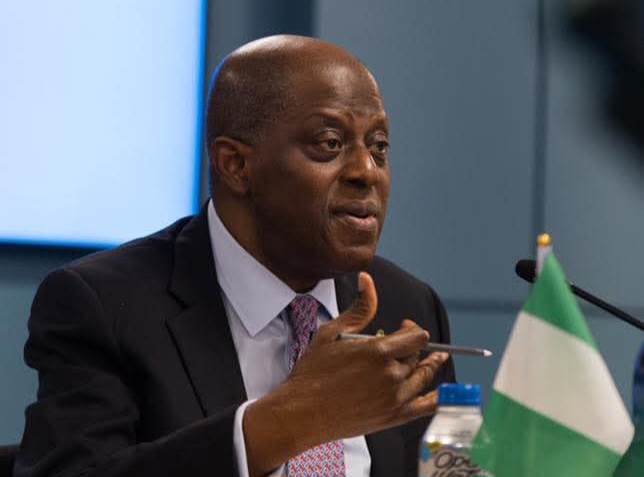
The revocation of 46 Microfinance Bank licences by the Central Bank of Nigeria (CBN) expectedly generated mixed reactions. But some of the reactions were mere attempts to play to the gallery.
Some of the concerns, however, deserve a factual response because they show ignorance, or at best self-delusion. Let’s look at the concern raised by some Civil Society Organizations in Kano and Kaduna over the matter, for instance.


The CSOs, under the banner of the African Centre for Civil Rights, Social Justice and Good Governance alongside the Concerned Forum of Civil Societies, described the CBN’s action as a blow to financial inclusion efforts, adding that Kano State was disproportionately affected, with 13 of its 40 licensed MFBs shut down.
But the statement, signed by Comrade Bashir Shehu and Hajiya Lami Adamu Garba, did not stop there. It warned that the closures would worsen economic hardship in rural communities where residents already struggle with access to formal banking services. Though they agreed that the CBN has a mandate to ensure financial stability, they insisted that the apex bank’s actions must be balanced against the socio-economic realities of vulnerable populations.
While urging the Kano State Government and legislators to intervene urgently, the CSOs listed several demands, which include immediate reimbursement of depositors through the Nigeria Deposit Insurance Corporation (NDIC), promotion of financial literacy, and reforms that strengthen rather than weaken microfinance institutions.
To be fair to the CSOs, there are other critics who argued that the timing and scale of the action could deepen financial exclusion. But it is a known fact that the CBN, especially under Mr. Olayemi Cardoso, has shown a keen interest in expanding financial inclusion. Sadly, when inclusion is pursued without safety, it will amount to exploitation.
The reality is that CBN’s action of July 1, 2026 was not an attack on the poor or on the North, as the CSOs tried to paint the development. It was a necessary regulatory intervention to protect the very vulnerable people CSOs claim to defend. The apex bank had explained that the affected MFBs had either become insolvent, failed to render statutory returns, or breached prudential guidelines.
The revocation, it must be restated, was done under Sections 12 and 13 of the Banks and Other Financial Institutions Act, BOFIA 2020, with the approval of the CBN Board. Cardoso signed the order after the affected 46 MFBs failed to meet basic regulatory requirements. These include insufficient assets to meet liabilities, closure of operations without CBN approval, inactivity and cessation of financial intermediation, failure to commence operations within 12 months of licence approval, and failure to maintain minimum capital funds unimpaired by losses.
The African Centre for Civil Rights, Social Justice and Good Governance as well as the Concerned Forum of Civil Societies should know that these are not technicalities. They are the guardrails that keep depositors’ money safe. Microfinance banks exist to serve low-income earners, rural dwellers, and small-scale traders — people who can least afford to lose their savings. Allowing insolvent or dormant MFBs to keep taking deposits in the name of “presence” would be like keeping a leaking roof over people’s heads because “at least there is a roof.” The result will inevitably lead to collapse, lost deposits, and deeper poverty.
For the financial inclusion argument, we all need to understand that true inclusion means access to safe, sound, and sustainable financial services. When an MFB cannot meet capital requirements or file statutory returns for years, it becomes a liability to the system and to its customers. Even without the press conference by the CSOs, the CBN had directed affected depositors to approach the NDIC for reimbursement. That safety net exists precisely for moments like this.
Letting weak institutions continue operating in the name of inclusion will lead to a bigger crisis later. Nigeria has been here before. When regulators “looked away” to avoid shutting down failing banks, thousands of poor Nigerians lost life savings. Preventing that is not anti-inclusion. It is pro-people.
In addressing the Kano angle, we should consider quality over quantity. Yes, Kano was heavily affected, with 13 of its 40 licensed MFBs on the revocation list. That concentration reflects a regulatory problem, not regional targeting. The argument that the closures “cripple an already underserved zone” assumes that any MFB, regardless of solvency, is better than no MFB. That is not true. An insolvent MFB that cannot pay depositors or grant loans does not provide service. It provides false hope and eventual loss.
So, keeping 13 non-compliant banks open would not expand access. It would erode trust. When one MFB fails and depositors lose money, the reputational damage spreads to all MFBs in that community. People retreat to informal lenders with predatory rates — the exact outcome the CSOs are warning against.
What rural Kano and Kaduna need are fewer but stronger, well-capitalised and well-governed MFBs that can lend, pay, and stay in business. Quantity without quality is what drives financial exclusion in the long run. If we prioritise the number of banks over the soundness of service, we create breeding grounds for failed loans, capital erosion, and eventual collapse. That is what pushes people back to loan sharks.
The National Association of Microfinance Banks, NAMB, as the apex body of all licensed MFBs, must also see this clampdown as an opportunity to raise standards across the sector, not to defend non-compliance. The CBN’s decision is painful in the short term, especially for communities with limited banking options. But the long-term effect is to preserve trust in the microfinance sector and protect poor Nigerians from losing their hard-earned money.
With over 1,008 licensed microfinance banks nationwide, Nigeria does not have a problem of too few institutions. It has a problem of weak institutions. By removing 46 non-compliant MFBs, the CBN is cleaning the system so that the remaining and new MFBs can serve rural Nigeria safely and sustainably.
- Nasir is based in Abuja

