
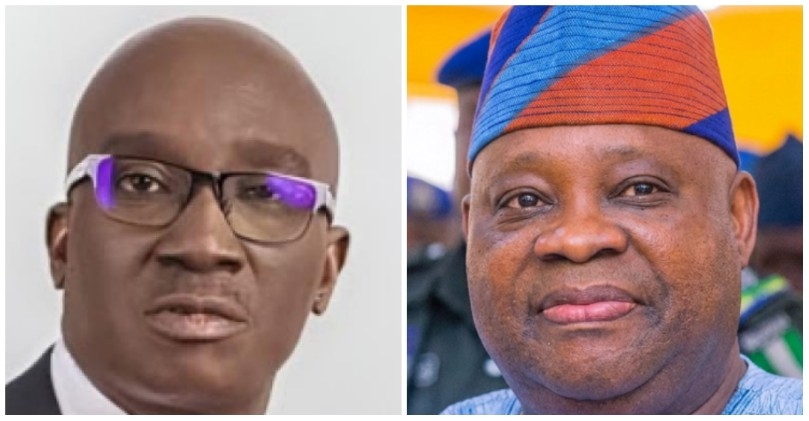
Like Adeleke’s second term, like Obaseki’s second term, the just-concluded election in Osun State is a textbook example of a heated election. The latest election shares some similarities with what Nigerians witnessed in 2020 when the then Governor of Edo State, Godwin Obaseki, was seeking re-election. Both were more than ordinary governorship elections that conventionally come a few weeks after presidential election in Nigeria. They were elections in which the entire nation invested undivided attention and waited keenly to see what would happen at the polls, at the collation centres and at the Independent National Electoral Commission’s announcement of the winner or otherwise. However, the question of what happens to the ordinary citizens who added substance to the election by standing firmly to ensure their votes are counted, and what the elected governor does with the state’s resources after such a much-talked-about election, are often not discussed.
While the just-concluded Osun State election will certainly be the last major election in Nigeria before the 2027 general elections, there were three other governorship elections between the 2020 Edo election and the 2023 general elections: Ondo in 2020, and Ekiti and Osun in 2022. Yet none arguably attracted the same level of attention from ordinary citizens, national and international observers, and the media that the Edo election attracted in September 2020, despite the fact that the 2022 Osun election went on to unseat an incumbent governor, Gboyega Oyetola, of the then ruling APC and bring Ademola Adeleke into office.


The circumstances surrounding the latest Osun election were somewhat different. Coming as the last scheduled governorship election before the 2027 general elections, it naturally became an important electoral test and a window into what Nigerians might expect in 2027.
What could be said to have made the Edo 2020 governorship election unique and attracted more attention than the subsequent elections was, in part, the dramatic turn of events that preceded it. Godwin Obaseki, in the PDP, was contesting against his rival, Osagie Ize-Iyamu, of the APC, who in 2016 was in the PDP while Obaseki was in the APC. This was facilitated by the fallout between Godwin Obaseki and Adams Oshiomhole, who brought Obaseki in 2016 as his political godson.
They fell out, as it is seemingly an unwritten political rule that often befalls any political bond built on godfatherism. At the time, Oshiomhole was the immediate past national chairman of the APC and had Obaseki disqualified from the party’s governorship primaries. Obaseki joined the fierce opposition, the PDP, contested against the wishes of the influential Abuja bigwig, and won in what the majority of analysts described as an “Obaseki vs Oshiomhole” election instead of an Obaseki vs Ize-Iyamu election.
In the case of the August 2026 Osun election, to some people, it is an interesting testing ground for the upcoming 2027 general election, which, by all indications, is going to be one for the history books. A lot has changed in Nigeria’s political landscape, and therefore a lot is expected, with citizens expecting the latest Osun election to mirror the 2027 general election. That is why even international media and observers, as in the case of Edo in 2020, were highly interested in it.
It is for the same reason that some people and analysts believe that some influential figures who could have altered the election results at the expense of the voters’ choice decided to let the wishes of the Osun people prevail so that Nigerians would have a semblance of hope in INEC and in the absence of interference from Abuja.
At the point of convergence between the two historical elections, moreover, both had incumbent governors contesting against rivals who happened to belong to the national ruling party, the APC. Both elections also happened during periods when the daily lives of typical low- and middle-income Nigerians were characterized by untold hardships caused by hasty or poorly designed and executed national policies. For that reason, Nigerians rallied around the incumbents, supporting them vigorously and hoping they would defeat those belonging to the national ruling party. And that is what happened in the two elections compared here.
However, what is mostly and sadly treated as an afterthought after such elections are conducted is the question of good governance, which should be the first thing to come into consideration in the first place. Metrics and indicators of development and good governance were arguably against Obaseki during his second term despite the support he garnered in Edo and across the country. So also, when Adeleke came into office for his first term and defeated Oyetola, he wasn’t cited among the relatively best-performing governors in the league of the likes of Sanwo-Olu, Zulum, El-Rufai, Makinde and the rest, which he should ideally have been.
Therefore, the noise, the unusual interest, the undivided attention and the endless discussion about the Osun State election and what will come next shouldn’t end on social media, radio stations, video channels and newspapers with election observation and concern about who wins or loses. It should extend to ensuring that good governance manifests in the lives of citizens.
Repaying the people of Osun, and wherever such elections come to pass, should translate into ensuring that basic amenities for living in rural communities, suburban areas and cities are provided. It should mean creating an enabling environment for sustainable economic ventures for low-income citizens to keep moving upward on the mobility ladder.
- Isah Kamisu Madachi is a policy analyst and development practitioner. He writes via [email protected]

