
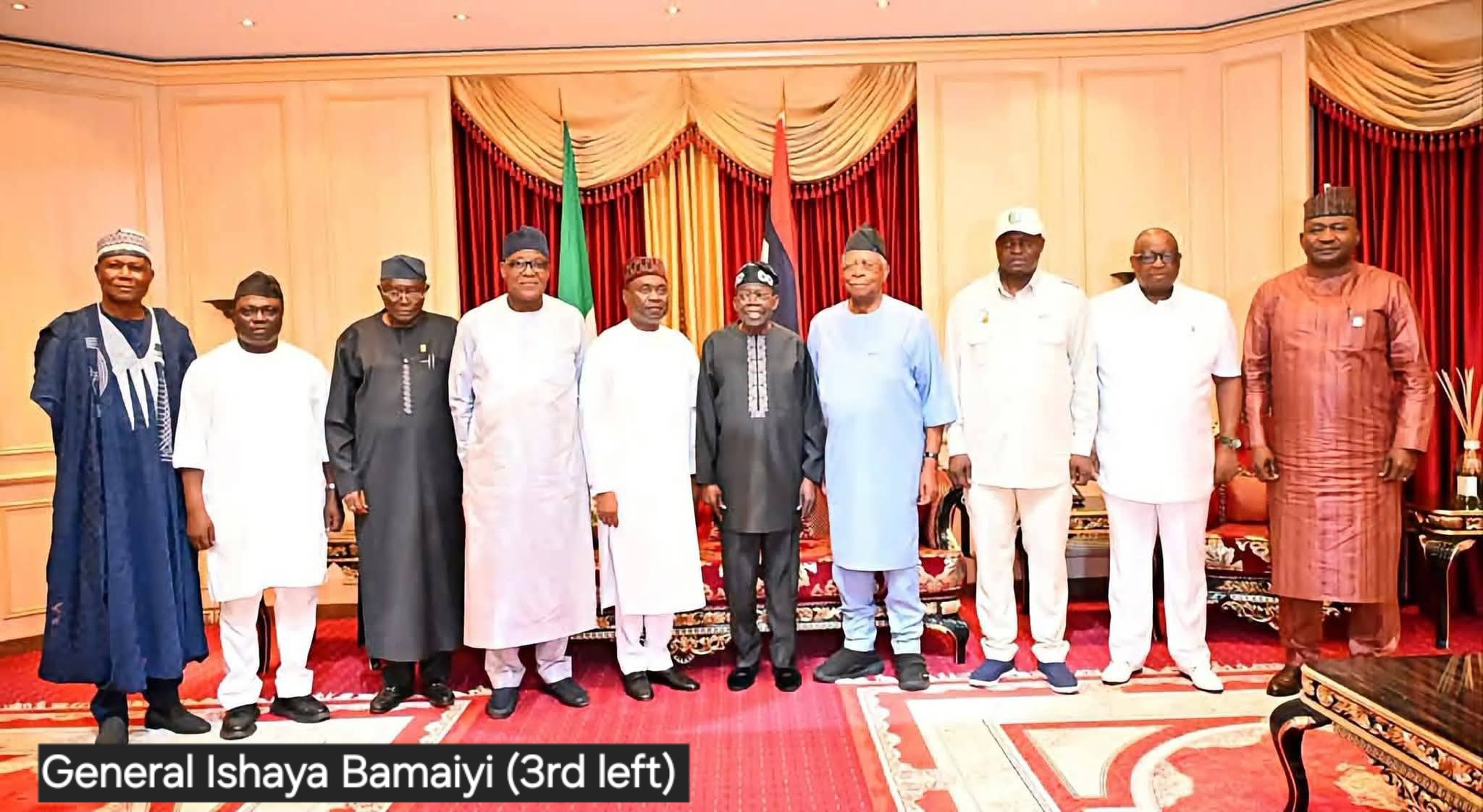
Seeing Lt. Gen Ishaya Bamaiyi (rtd) at the Presidential Villa yesterday [Friday], brought back to memory two things he did as Chief of Army Staff that have stuck to my mind till date.
Some time between 1997 and 1998, in the heat of General Abacha’s attempt to transform into a civilian leader, at a time the nation’s various political divides were organizing and falling over themselves to endorse his political ambition. During that period, General Abacha approved furniture allowance for all members of the nation’s armed forces.


Barracks went into a frenzy, rumours flew about the amount that the C-in-C approved. Everybody speculated various humongous figures.
To prepare us to receive the largesse and spend it wisely, the COAS (pronounced COWAS) undertook to visit all army formations across the country.
On the day he would arrive at the then Giginya Barracks in Sokoto State, all the elements of the then 1 Brigade and 26 Batallion mustered on the 26 Batallion parade ground.
Normally, any unit the COAS was visiting would rehearse a special Quarter Guard drill in his honour, removing of head dress and say a lot of prayers, asking God to shield it from anything that the army chief may disapprove about them. Because courting his anger could spell hell for the unit commander, officers and the men.
So, the battalion 2/ic who was a major, promptly stepped on the parade ground, as we awaited Bamaiyi’s arrival and warned everyone to bury any thought of asking the chief any question, so as not to offend him.
“Even if he requests you to ask questions, don’t ask. If you ask any question, I will lock you up in the guardroom,” he warned, raising his voice.
Well, I didn’t even think any of the more than 200 soldiers assembled that day were more interested in asking a question than in hearing about Abacha’s ‘humongous’ furniture allowance. Then Gen Bamaiyi arrived and addressed us.
He spent time speaking about the C-in-C’s uncommon generosity of approving the allowance for all military personnel. I’m sure if we were civilians listening to him, we would have shouted “Sai Abacha” electrified by the power of money. He then warned us “not to go about drinking Burkutu on credit” and to instead make good use of the money.
When he finished his speech, he extended the bait that we were warned not to take, thus: “Does any of you have question?” Without even waiting for the chief’s question to sink, a 63NA soldier, Corpral Oche, raised his hand and Bamaiyi recognised him to speak. I have forgotten what his question was, but it did not ruffle any feathers. Bamaiyi’s positive responsive to Corpral Oche took the air out of the battalion 2/ic’s threat to detain anyone who asked a question.
What became the subject of discussion in the barracks was Bamaiyi’s warning against extravagant spending. The warning sparked a new rumour: if the army chief had to come all the way to advise us against wasting the money, then it must be something truly humongous.
A few days later, the money was paid, every soldier received N3,000, an amount not even as much as the N3 083 that was being paid monthly as salary, at the time. The rumours died.
Luckily, nobody had consumed Burkutu on credit or maybe no such case was heard of. And nobody bought furniture because the amount was barely enough to pay for a simple wooden bench or good chair.
I was only about two years old in the army at the time and that episode was my first time of seeing a COAS. I kept asking myself if that is how army chief’s talk about something so small in such a big way. Other soldiers also asked various questions when discussing the humongous disappointment.
Then after about a year, I was deployed for “outside duty” of guarding the NITEL installation near Dogon Daji House, in the Sokoto metropolis. Coincidentally, one old Corporal Audu (we called him Baba), who was the guard commander, worked with Bamaiyi before his appointment to command the army. Baba had personally written a congratulatory letter to Bamaiyi shortly after he became the army chief and was not expecting a reply. Then one day, we were seated when someone brought Baba an envelope. He opened it and it contained Bamaiyi’s reply to the letter Baba wrote and had forgotten about. After appreciating Baba for taking the time to write and congratulate him, Bamaiyi appended his signature in red and wrote his name, Lt Gen Ishaya Rizi Bamaiyi.
That was, for me a young soldier, one humongous general writing to a small soldier. Until that moment, such act was unthinkable. If anything, he had proved himself capable of boosting the morale of his men.
Seeing him yesterday brought back all those memories.

