
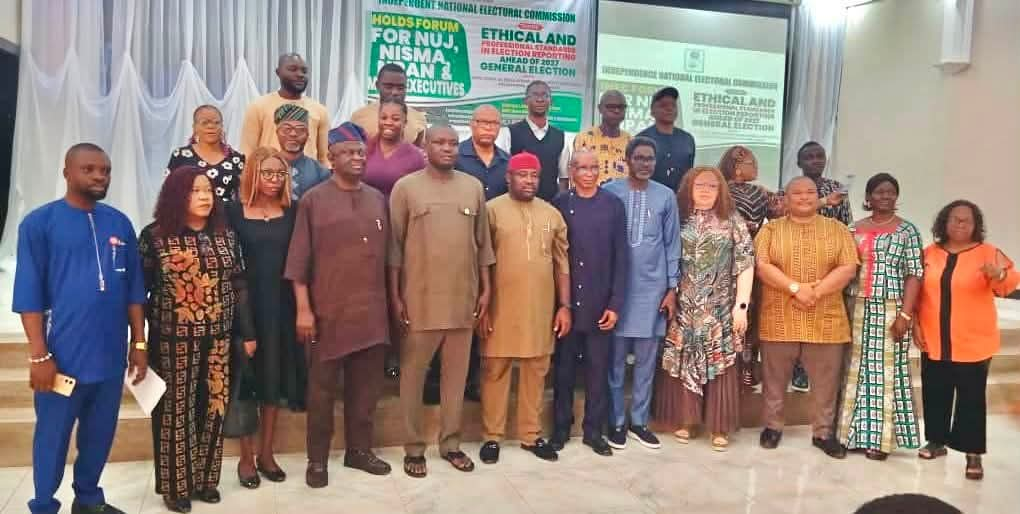
The Independent National Electoral Commission (INEC) has called on media organisations, journalists and social media analysts to uphold ethical and professional standards in election reporting ahead of the 2027 General Elections, warning that misinformation, disinformation and inflammatory political narratives could undermine public confidence and threaten peaceful elections.
The Commission made the call at a media engagement forum organised for the Nigeria Union of Journalists (NUJ), Nigerian Institute of Social Media Analysts (NISMA), Newspaper Proprietors Association of Nigeria (NPAN) and media executives, with the theme, “Ethical and Professional Standards in Election Reporting Ahead of the 2027 General Elections,” held at Hotel Sylvia, Enugu State.


Speaking at the event, the Resident Electoral Commissioner (REC), Enugu State, Dr. Chukwuemeka J. Chukwu, who represented the Chairman of INEC’s Information and Voter Education Committee, Mohammed Kudu Haruna, emphasised the critical role of the media in strengthening electoral integrity and sustaining public confidence in the democratic process.
He noted that the media remained a strategic partner in the electoral process, serving as a bridge between the Commission and the electorate through information dissemination, voter education, public enlightenment and accountability.
The REC cautioned journalists against publishing unverified reports, particularly those concerning election results, incidents at polling units, electoral materials and technological processes, stressing that speculation should never be presented as fact.
He further urged media practitioners to give adequate attention to voter education, especially on Permanent Voter Card (PVC) collection, voter accreditation, voting procedures, the Bimodal Voter Accreditation System (BVAS), electronic transmission of results and peaceful participation.
Dr. Chukwu also stressed the importance of inclusive election reporting, urging the media to give adequate representation to women, young people and persons with disabilities in electoral discussions and reportage.
In his opening remarks, the National Commissioner and Chairman of the Information and Voter Education Committee, Mohammed Kudu Haruna, represented by the REC, highlighted the responsibility of the media in shaping public understanding of the electoral process, noting that public confidence in elections largely depended on the credibility and accuracy of information available to citizens.
He warned against the amplification of inflammatory slogans such as “rig and die”, describing such expressions as dangerous to the safety of electoral officials, voters, party agents and observers.
He urged journalists to report such developments responsibly and provide the necessary context, while encouraging political stakeholders to embrace lawful channels for addressing electoral grievances.
The National Commissioner also called on media organisations to support voter education, investigate and expose vote buying, and help combat disinformation, including deepfakes and fake social media accounts.
Presenting the objectives and expectations of the forum on behalf of the Director, Voter Education and Publicity (VEP), Mrs. Victoria Eta-Messi, the Deputy Director, Information and Publicity, Mr. Wilfred Ifogah, said the engagement was designed to strengthen collaboration between INEC and media practitioners ahead of the 2027 General Elections.
He explained that the forum sought to promote a shared understanding of ethical election reporting, including accuracy, fairness, impartiality and verification, while providing participants with relevant information on the Electoral Act 2026 and the Commission’s technological innovations, particularly BVAS and the INEC Result Viewing Portal (IReV).
According to him, the engagement would also deepen media understanding of voting processes, strengthen efforts to counter misinformation, disinformation and hate speech, and mobilise media support for voter education, increased voter turnout, PVC collection and the fight against vote buying.
On the expectations, Mr. Ifogah urged participants to actively engage in the sessions and return to their respective newsrooms and media platforms as ambassadors of accurate and responsible election reporting.
He encouraged media organisations to establish dedicated election desks, strengthen editorial guidelines and introduce fact-checking mechanisms ahead of the 2027 electoral cycle.
He further urged journalists and social media analysts to verify election-related information through INEC’s official communication channels before publication, refrain from announcing results before official declarations by Returning Officers, and avoid amplifying inflammatory or violent slogans capable of endangering lives.
The forum also provided an opportunity for media stakeholders to express their concerns and make recommendations towards improving the relationship between the Commission and the media.
In his goodwill message, the Chairman of the NUJ, Enugu State Council, Comrade Obinna Ogbuka, welcomed INEC and participants to Enugu State, appreciating the Commission for choosing the state to host the engagement.
He acknowledged the existing mistrust surrounding INEC and called on media practitioners to support the dissemination of accurate information and balanced narratives about the Commission’s activities.
Ogbuka also urged INEC to sustain its training and capacity-building initiatives for journalists, noting the need to adequately equip media practitioners with the knowledge and skills required to discharge their responsibilities effectively.
The engagement also featured presentations by the Heads of Department of Legal, Information and Communication Technology/Voter Registration (ICT/VR), and Electoral Operations (EOPs), who provided participants with insights into the legal, technological and operational aspects of the electoral process ahead of the 2027 General Elections.
The presentations formed part of the Commission’s efforts to deepen media practitioners’ understanding of the Electoral Act 2026, electoral technology and the procedures guiding election administration, thereby equipping them with the necessary knowledge to provide accurate, balanced and informed election coverage.
The interactive sessions further provided an opportunity for participants to seek clarifications, engage the resource persons and make contributions on issues relating to electoral administration, technology, legal provisions and election-day operations.

