
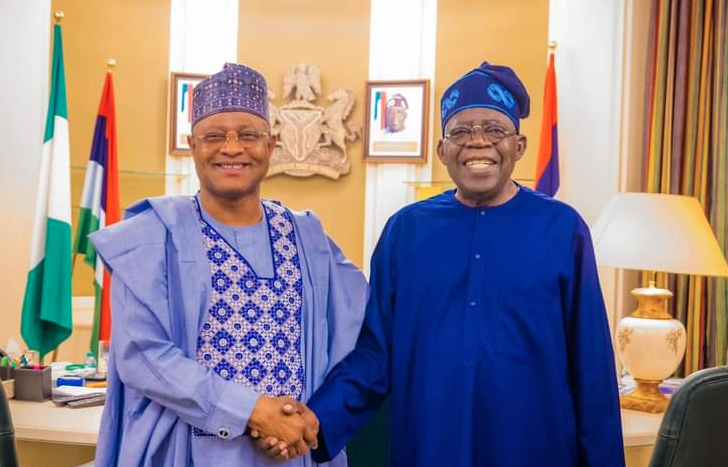
The increase in Federation Account allocations to states occasioned by the additional fiscal space created by the reforms of the Tinubu Administration should be assessed fundamentally by what states have done with them. Increased federal transfers are justified only when they are translated into greater public investment, stronger institutions and measurable improvements in the lives of citizens. Where states merely consume larger revenues without much to show for it, criticism is warranted. Where they deploy those resources to expand productive capital and improve public welfare, they provide compelling evidence for the wisdom of the reform.
Kaduna State offers one of the clearest demonstrations of this principle. The state’s recent trajectory shows not merely that federal allocations increased, but that the additional fiscal space was matched by an equally ambitious expansion of state investment across agriculture, transportation, water infrastructure, healthcare, education, skills development, community infrastructure, among others.


The story, however, does not end with FAAC. Kaduna also illustrates a second and equally important principle of cooperative federalism: states that demonstrate the willingness and capacity to invest their own resources provide the strongest justification for additional federal investment. Federal capital is most productive where it complements credible state investment rather than substitutes for it. Under Governor Uba Sani, Kaduna has consistently approached federal support not as a replacement for state responsibility but as an opportunity to multiply developmental impact through partnership. It is this dual alignment—between increased federal fiscal transfers and increased state investment, and between federal projects and state co-investment—that best explains Kaduna’s recent development trajectory.
This deserves emphasis because Nigerian political discourse has long underestimated the developmental value of intergovernmental cooperation, often dismissing it through partisan slogans or viewing cordial relations between different levels of government with suspicion. Yet no successful federation has prospered by encouraging institutional conflict between the centre and the constituent units. Most often, development accelerates when each level of government performs its comparative advantage while reinforcing the efforts of the other. Kaduna’s recent experience provides one of the clearest contemporary illustrations of this principle.
Perhaps nowhere is this clearer than in transportation. Recently, public attention has understandably been drawn to the Federal Government’s approval of the approximately ₦1 trillion, 50-kilometre Kaduna Light Rail Project, one of the largest urban transport investments currently planned anywhere in Nigeria. Yet that approval did not emerge in a policy vacuum. Before such huge federal commitment arrived, Kaduna had already embraced a multimodal transport strategy, leveraged previous support to introduce 100 subsidised Compressed Natural Gas buses that have already transported well over a million passengers free of charge saving residents ₦1.39 billion at the end of 2025, commenced the twenty-four-kilometre Bus Rapid Transit corridor linking Rigachikun to Sabon Tasha, and begun reorganising urban mobility around an integrated rather than fragmented transport system.
The significance of this sequence which should be emphasized is that the Federal Government did not intervene where nothing existed; it amplified a strategy the state had already begun implementing. Kaduna’s own investments demonstrated vision, commitment and institutional readiness, while the Federal Government supplied the financial scale that only the federation could provide. This further demonstrates that federal investment achieves its highest return where states have already shown both strategic direction and financial commitment. And here, political alignment became valuable not because it secured federal patronage, but because it enabled the two governments to pursue complementary investments within a shared transport vision.
The same relationship is evident in road infrastructure. The Federal Government’s ₦178 billion reconstruction of the 122-kilometre Mando–Kaduna–Birnin Gwari Road is restoring strategic agricultural and commercial corridors, reconnecting previously isolated communities and improving access to mineral-rich areas. Kaduna State has complemented this investment through sustained construction of township roads, rural feeder roads, drainage systems and key corridors such as the 35-kilometre Gadan Gayan–Gwaraji–Kujama Road, which links more than seventy-six farming communities across three local government areas to major markets. Rather than duplicating one another, these investments are mutually reinforcing: federal highways derive greater economic value from the state road networks that feed into them, while state roads become more productive when connected to strategic federal corridors. Together, they demonstrate how cooperative investment between both levels of government can produce an integrated transport network whose developmental impact far exceeds the sum of its individual projects.
Agriculture perhaps offers the strongest evidence that this partnership is rooted in policy rather than politics. President Bola Ahmed Tinubu’s administration has placed food security at the centre of Nigeria’s economic agenda through interventions such as the Special Agro-Industrial Processing Zones (SAPZ), fertiliser support, mechanisation programmes, expanded agricultural financing and targeted investments across strategic value chains. Kaduna responded not by waiting for federal intervention, but by undertaking one of the most ambitious agricultural investment programmes in its history. The state’s agriculture budget increased from ₦1.48 billion in 2023 to ₦23.4 billion in 2024 and further to ₦74 billion in 2025—an increase of almost 5,000 per cent within just two budget cycles. Few sectors anywhere in Nigeria have experienced public investment growth of that magnitude.
The expansion was not merely budgetary. Kaduna simultaneously distributed hundreds of trucks of fertiliser to smallholder farmers, enrolled 100,000 farmers into crop insurance, supported approximately 69,000 beneficiaries under the Tallafin Noma programme, deployed 500 power tillers, distributed 10,000 irrigation pumps, expanded dry-season farming, rehabilitated irrigation infrastructure and significantly increased mechanisation and extension services. These interventions reflected a governing philosophy that recognised agriculture not simply as a social sector but as the foundation of broad-based economic transformation.
The same philosophy extends to human capital development, where the alignment between federal and state policy has become institutional rather than episodic. Recognising that industrialisation depends as much on skilled labour as on physical infrastructure, the Tinubu administration has elevated technical and vocational education through the National Council on Skills, reforms to the National Skills Qualification Framework and a renewed emphasis on Technical and Vocational Education and Training (TVET) as a driver of productivity, enterprise and youth employment. Here too, Kaduna may be said to have responded by building one of the country’s most comprehensive subnational skills ecosystems.
Central to that effort is the establishment of the Kaduna State Institute of Vocational Training and Skills Development (KIVTSD), with purpose-built campuses strategically located in Rigachikun, Soba and Samaru Kataf. Designed to train thousands of artisans annually in industry-relevant trades, and adjudged best equipped of their kind in Nigeria, the institutes are intended to bridge the gap between education and industry demand by producing nationally certified technicians equipped for modern manufacturing, construction, mechatronics, ICT and other productive sectors. Complementing this investment, Governor Uba Sani inaugurated the Kaduna State Council on Skills, making Kaduna the first state in Nigeria to establish such an institutional framework in direct alignment with the National Council on Skills chaired by Vice President Kashim Shettima.
The relationship between institutional credibility and developmental outcomes is equally visible in Kaduna’s security recovery. Public discourse often reduces security to the deployment of troops, yet experience consistently shows that durable peace is rarely achieved through military operations alone. Security at scale remains constitutionally the responsibility of the Federal Government, and any fair assessment of Kaduna’s progress must acknowledge the sustained collaboration between the Presidency, the Office of the National Security Adviser, the Armed Forces, the Police and intelligence agencies. The gradual restoration of peace across large parts of Kaduna has been made possible by this sustained federal commitment.
Equally significant, however, has been the Kaduna State Government’s investment in peacebuilding, community engagement, conflict mediation and local intelligence through the implementation of the Kaduna Peace Model, which has itself received commendation from the Office of the National Security Adviser as a model worthy of replication. Rather than treating federal security operations and state-led peace efforts as competing approaches, Kaduna deliberately combined them into a single strategy. The reopening of farming communities, the return of displaced populations, the restoration of commercial activity along previously unsafe corridors and the renewed confidence of farmers to cultivate abandoned lands are products of this complementary approach.
The reconstruction of Tudun Biri following the tragic military drone incident provides perhaps another vital illustration of the character of this partnership. In circumstances that could easily have descended into mutual recrimination between different levels of government, both administrations instead chose coordinated reconstruction. Through its conflict recovery programme, the Federal Government delivered 133 housing units together with supporting resettlement infrastructure, while Kaduna State complemented those investments with a 25-bed primary healthcare centre, a six-kilometre access road, a modern skills acquisition centre, educational facilities and other community infrastructure. This demonstrated that even moments of profound national tragedy can become opportunities for collaborative statecraft when governments choose shared responsibility over political theatre.
Furthermore, healthcare constitutes yet another example. Federal healthcare reform initiatives have been reinforced by Kaduna’s sustained investment in healthcare infrastructure, including the upgrade of 255 PHCs to level 2 institutions, the rehabilitation of about 20 secondary healthcare institutions, the solarisation of facilities to guarantee uninterrupted service delivery, expanded recruitment of health personnel, and increased health insurance enrolment under the Kaduna State Contributory Health Management Authority. This relationship is instructive as the effectiveness of national health programmes ultimately depends upon functional state health systems, and Kaduna has deliberately strengthened its own.
The same pattern is evident in education. President Tinubu’s administration has significantly expanded access to tertiary education through the Nigerian Education Loan Fund (NELFUND), ensuring that financial constraints no longer permanently exclude qualified young Nigerians from higher education. Kaduna has complemented this national intervention through substantial investment in educational support at the subnational level. Over the past three years alone, the state has committed more than ₦1 billion to scholarship programmes benefiting thousands of students across tertiary institutions. The result is a more comprehensive human capital strategy than either level of government could have achieved independently.
Moreover, financial inclusion presents another compelling illustration of this alignment. The Federal Government has rightly recognised financial inclusion as a prerequisite for effective social protection, agricultural financing, digital payments and inclusive economic growth. Kaduna responded by becoming one of the first states to institutionalise this national priority through an Executive Order on Financial Inclusion. Since then, more than 2.5 million new financial accounts have been opened across the state, while almost 7 million residents have been enrolled on the National Identification Number platform. These reforms have significantly expanded the state’s digital public infrastructure, enabling more efficient targeting of agricultural support, social investment programmes, healthcare financing and financial services. Once again, Kaduna did not merely receive a federal programme; it invested in the institutional systems required to maximise its impact.
The state’s ₦93 billion multi-year water infrastructure programme further exemplifies this approach. Water supply systems across Kaduna, Zaria and Kafanchan are undergoing comprehensive rehabilitation and expansion through investments in pipelines, treatment facilities and distribution infrastructure. Similarly, substantial investments have been made in electricity distribution through the procurement and installation of hundreds of transformers, thousands of solar-powered streetlights and rural electrification initiatives designed to improve both household welfare and economic productivity. Project 255, under which ₦100 million has been allocated to each of Kaduna State’s 255 electoral wards for community-driven development, further demonstrates a governing philosophy that treats public finance as an instrument of long-term capital formation rather than short-term political consumption.
Taken together, these examples reveal a broader pattern. Increased FAAC allocations enabled Kaduna to expand its own investment effort, while that expanded investment effort strengthened the justification for even larger federal capital commitments. States that invest seriously become more attractive destinations for additional federal infrastructure because they possess both the institutional capacity and the complementary investments necessary to maximise developmental returns. Cooperative federalism, properly understood, is therefore not a relationship of dependence but one of reciprocal commitment, where each level of government increases the effectiveness of the other’s investment.
This pattern is precisely what the architects of Nigeria’s recent fiscal reforms intended to encourage. Increased FAAC allocations were never meant to become an end in themselves. Their purpose was to expand the developmental capacity of subnational governments by providing greater fiscal space for investment in infrastructure, productive sectors and human capital. Kaduna’s experience demonstrates that where this opportunity is seized with discipline and strategic clarity, increased federal transfers can become catalysts for transformative development rather than merely larger government budgets.
In Kaduna, such commitment to investment has been further reinforced by institutional reform. Independent assessments consistently place Kaduna among Nigeria’s leading performers in fiscal transparency, public financial management, ease of doing business and institutional accountability. The state ranked 3rd nationally in the Phillips Consulting State Performance Index, 2nd in the Presidential Enabling Business Environment Council’s Ease of Doing Business assessment, 1st in the Centre for Fiscal Transparency and Public Integrity’s rankings for control of corruption and fiscal transparency, achieved successive perfect scores in BudgIT’s fiscal transparency assessments, and has recorded one of the most significant improvements in national climate governance rankings.
It is therefore not surprising that Kaduna has increasingly emerged as a preferred destination for major federal infrastructure and development programmes. This is often interpreted solely through the lens of political alignment. But such an explanation is incomplete. Political goodwill may create opportunities, but institutional credibility determines whether those opportunities mature into investment. States that consistently demonstrate fiscal discipline, policy coherence and implementation capacity naturally become stronger candidates for large-scale national projects because they offer the greatest probability that public resources will generate measurable developmental returns.
And this ultimately returns us to the question with which we began. Were the increases in FAAC allocations under President Bola Ahmed Tinubu’s administration justified? Kaduna’s experience suggests that they were. The reforms achieved one of their central objectives: expanding the capacity of subnational governments to invest in development.
Kaduna’s experience, however, demonstrates a second proposition that is equally important. States that invest responsibly strengthen the case for even greater federal partnership because federal investment is most productive where it complements existing state investment rather than compensates for its absence. Federal capital should, hence, naturally gravitate towards jurisdictions that have demonstrated strategic clarity, institutional credibility, implementation capacity and a willingness to commit substantial resources of their own. Cooperative federalism therefore creates a virtuous cycle: increased federal fiscal transfers enable greater state investment, while greater state investment provides the strongest justification for additional federal capital commitments.
This is why the relationship between President Bola Ahmed Tinubu’s administration and the Kaduna State Government deserves to be understood in terms richer than partisan affinity. As has been demonstrated, the true measure of political alignment is whether it enlarges the capacity of government to improve the lives of ordinary citizens. Under President Bola Ahmed Tinubu and Governor Uba Sani, this becomes more evident as national reform and state leadership have increasingly converged to demonstrate what cooperative federalism can accomplish in terms of deepening public value creation when both levels of government invest alongside one another.
That, indeed, is the true significance of the Tinubu–Uba Sani Development Partnership.
- Abdulhaleem Ishaq Ringim is the Senior Special Assistant to the Governor of Kaduna State on Economic Matters.

