
For decades, Nigeria’s four state-owned refineries have been the perfect example of how not to run a national asset. Trillions of naira have been expended on seemingly futile turn-around maintenances, rehabilitation contracts, and emergency repairs. But is juice truly worth the squeeze? I doubt. All we have been subjected to is a cycle of excuses.
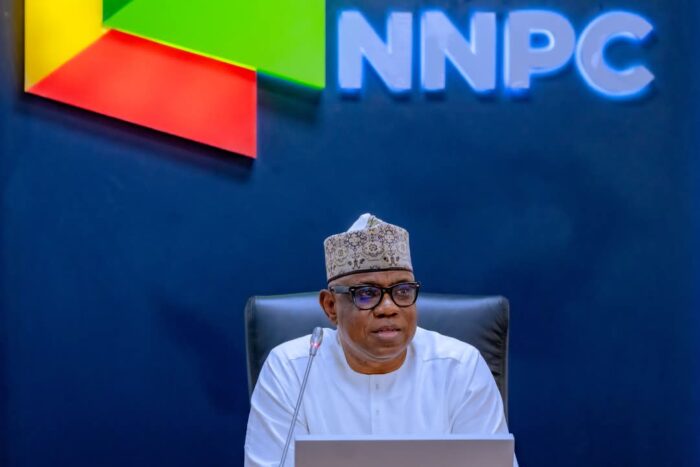
That cycle has to be broken because flogging a dead horse, no matter how hard, will not make it move. The Group Chief Executive Officer of the Nigerian National Petroleum Company Limited, Bayo Ojulari, knows this for a fact. He wants to be sure the horse is still breathing before deciding on what to do with. This is because breathing alone does not mean that a horse is well and able. It makes more sense to buy a new horse, rather than spend your money on one in the throes of death.


Speaking in Abuja during a recent briefing on NNPC Ltd’s 2025 Audited Financial Statements, Ojulari made a statement that should have been made 20 years ago by the leadership that preceded his. He made it clear that “We will not go ahead with the refinery if we cannot see a path to profitability. We want a refinery that is self-sustaining, profitable and sustainable.”
This may appear a simple, commercial and even logical statement to make. But in the context of Nigeria’s oil industry, and what we know of it, it is also revolutionary. Ojulari is absolutely right in what he is setting out to do.
Under the old model, NNPC borrowed money, paid contractors, supplied crude for free, paid for operations and maintenance, and then absorbed all the losses when the refineries failed to work. Neither the contractor nor the operator faced any consequences. Whether the refineries produced or not, their money was guaranteed.
This explains why Port Harcourt, Warri and Kaduna refineries, with a combined nameplate capacity of 445,000 barrels per day, have gulped billions of dollars in maintenance costs since 2000, yet could not produce petrol sustainably. The model incentivized failure and gave the impression that success is optional. Contractors got paid for attempting repairs, not for delivering products. Staff received salaries even as the refineries rot.
Ojulari’s new proposal, therefore, must be seen as the global best practice that it is. We really need a technical equity partnership where the technical partner takes equity and has a ‘horse in the race’. It is how successful refineries are revived around the world. The partner does not just build; he is a critical stakeholder. If the refinery fails, his investment also takes a hit. If it profits, he smiles to the bank. That alignment is what guarantees long-term performance, technology upgrades, and disciplined operations.
While critics will say Ojulari is stalling, the numbers show that he is only being prudent. Since coming to his position, Ojulari has displayed a rarely seen level of transparency and accountability. So he always tried to convince people with the robustness of his actions, rather operating in the dark.
At the same briefing, NNPC Ltd announced a 33% rise in Profit After Tax to N7.2 trillion in 2025, up from N5.4 trillion in 2024. Revenue hit N34.5 trillion, earnings per share stood at N35.9, and taxes, royalties and remittances to government rose 39% to N22.3 trillion. This does not suggest a company that is afraid of investment. This is a company that has finally learned how to manage money.
Even with crude price volatility and the removal of fuel subsidy which cut white-product volumes, NNPC improved operational efficiency. Crude and condensate production hit a five-year high of 1.77 million barrels per day at peak. Gas supply rose to a three-year high of 7.2 billion standard cubic feet per day. Pipeline availability — the bane of production for years — improved from less than 10% to over 90% reconciliation between wellhead and terminal, thanks to community surveillance, security reforms and new technology.
A company delivering this level of efficiency has earned the right to say gone are the days of wasting highly needed resources on another failed refinery model.
Another crucial point Ojulari raised has not been given the attention it deserved. Over 30 top engineers spent three months conducting intrusive assessments of the refineries at no cost to NNPC. Their finding revealed that if we proceed with the old rehabilitation scope, our refineries would be five to 10 years behind current technology on the day they restart. That would be catastrophic.
The refining business today is not what it was in the 1980s when these plants were built. Modern refineries operate at 120% to 140% of design capacity through bottleneck optimization, as Ojulari saw in China. They are fully digitized, with real-time monitoring, predictive maintenance, and petrochemical integration. Without petrochemicals — the production of polypropylene, polyethylene, and other high-value derivatives — no refinery is profitable on fuels alone anymore. Ojulari understands this. Nigeria cannot afford to rehabilitate refineries only to produce petrol and diesel at a higher cost than Dangote or imported products. We must build refineries that can compete.
Ojulari’s comments on crude supply to Dangote Refinery reinforce his commercial logic. He confirmed NNPC is sustaining supply under the naira-for-crude deal for a specified number of cargoes, but selling additional volumes in dollars because its obligations are in dollars. This transparency matters. It shows NNPC is no longer running a charity. It is managing a portfolio. It supports local refining, as mandated by the Federal Government, but it does so without bankrupting itself. The same principle must apply to its own refineries.
If Dangote, with 650,000 bpd capacity, can operate profitably, there is no reason Port Harcourt, Warri and Kaduna cannot. However, they have to be run like Dangote, not like a ministry or government department with all the attendant bureaucratic bottlenecks. NNPCL is now a commercially oriented limited liability company governed by the Companies and Allied Matters Act (CAMA), in line with the Petroleum Industry Act (PIA) 2021.
However, Ojulari’s efforts need to be explained to Nigerians who are understandably emotional about refineries. Ordinarily, our refineries are supposed to be sources of national pride. Politicians have used them to make cheap promises, giving timelines they couldn’t live up to. Ojulari is refusing to play that politics. He is choosing sustainability over sentiment.
To proceed without a clear path to profitability would be to repeat the sins of the past. We can not continue to award contracts, import photo-ops, announce mechanical completion, and then quietly shut down six months later. What Ojulari is proposing will take longer because they are a bit complex. It involves negotiating equity, agreeing on technology, and embedding optimization. But when the refineries eventually restart, they will stay on.
Ultimately, the refineries must not just work. They must make money. They must pay dividends to Nigerians who own NNPC Ltd. They must be able to fund their own maintenance, pay for their own crude, and compete in a market where Dangote and imports are already present. That is the only rehabilitation worth doing. Ojulari is right to draw that line. Thankfully, he has the backing of President Bola Tinubu and the NNPC Board. Nigerians must also give him the time to get it right, once and for all.
- Abdullahi Aliyu is based in Abuja

