
The question confronting the All Progressives Congress (APC) as it prepares for the 2027 general elections is no longer whether President Bola Ahmed Tinubu has political allies in government. It is whether those allies are matching their public declarations of support with the level of political mobilisation, visibility and grassroots engagement required to defend the President’s re-election bid.
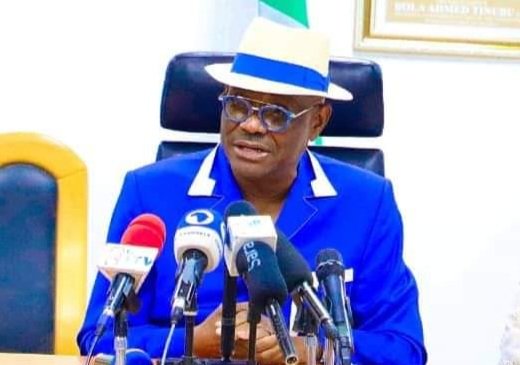
At the centre of this conversation is the Minister of the Federal Capital Territory, Nyesom Wike, whose political activities have continued to attract attention despite his membership of the Peoples Democratic Party (PDP).


On October 12, 2026, Wike publicly declared himself the field commander of Tinubu’s re-election campaign in the FCT and Rivers State, unveiling a cross-party mobilisation strategy involving APC and PDP stakeholders. He also called on political actors to work together in support of the President.
That declaration raises an important question for the APC establishment: which of the party’s governors and ministers are demonstrating comparable public commitment to Tinubu’s re-election project?
Wike’s political visibility presents a challenge to APC leaders
Wike’s approach is built around political meetings, stakeholder engagement, alliances and an unmistakable willingness to place himself at the centre of public political conversations.
Whether one agrees with his methods or not, his activities have created a visible point of comparison for politicians within the ruling party.
The irony is that Wike is not an APC member, yet he has publicly assumed a coordinating role in Tinubu’s re-election effort in two politically significant territories. That puts pressure on APC officeholders to demonstrate what they are doing through their own party structures.
The argument is not that Wike should replace the APC’s political machinery. Rather, his activities should encourage party leaders to examine whether their own mobilisation efforts are sufficiently visible, coordinated and effective.
What are the APC governors doing?
The APC governors cannot fairly be described as inactive. Reports published in October indicate that party governors and regional leaders have been organising mobilisation efforts ahead of the 2027 elections.
For instance, the North Central Grassroots Mobilisation Network brought together governors, ministers, party officials and other stakeholders to coordinate political mobilisation, reconciliation and community engagement. A planned rally in Lafia, Nasarawa State, was part of that effort.
There are also reports that APC governors are considering a campaign arrangement that would place them and other party leaders at the forefront of nationwide mobilisation while allowing Tinubu to make selective appearances.
These activities demonstrate that mobilisation is taking place. The real issue is how consistently these initiatives are being sustained across states and how clearly their results are being communicated to the public.
Governors have considerable political responsibilities within their respective states. Their contribution to a presidential campaign should therefore be assessed through verifiable activities such as ward-level engagement, party organisation, stakeholder meetings, public communication and coordination with the national campaign council.
Ministers must move beyond statements of loyalty
The same standard should apply to federal ministers.
A minister’s support for the President should not be measured solely by public praise, attendance at political gatherings or statements defending government policies. Ministers who participate in campaign mobilisation should be able to point to concrete engagements, clearly defined responsibilities and measurable contributions.
The APC’s revised presidential campaign council list includes Wike, Minister of Aviation Festus Keyamo and several governors and other political leaders. The list also assigns campaign responsibilities to different political figures.
These appointments provide an organisational framework. The next test is implementation.
Ministers and governors entrusted with campaign duties must demonstrate how they are engaging party members, communicating government policies, addressing public concerns and helping to organise the party’s campaign at the grassroots.
The APC should turn Wike’s challenge into an opportunity
Wike has previously criticised APC governors over their political approach, describing them as politically lazy in a September 2026 dispute over the proposed Rainbow Coalition. That was his assessment, not an independently established verdict on the governors’ performance.
Nevertheless, the controversy presents an opportunity for the APC to establish clear standards for political mobilisation.
Rather than become distracted by exchanges between individual politicians, the party should focus on coordination, accountability and performance. Each state campaign structure should have defined responsibilities, regular engagement with local party organisations and a transparent way of reporting its activities.
The campaign should also connect political mobilisation with substantive explanations of government policies. Nigerians facing economic pressures are entitled to ask questions about living costs, employment, security and public services. Addressing those concerns with credible information is an important part of democratic engagement.
The question is performance, not noise
Wike’s public profile makes him an obvious figure in the current debate, but visibility alone does not establish who has mobilised the most supporters or delivered the greatest electoral impact.
That distinction matters. A politician who frequently dominates headlines may be more visible than one who works through less public grassroots structures. Conversely, private meetings and official appointments cannot automatically be treated as proof of effective mobilisation.
The APC therefore needs evidence rather than competing claims. Which governors are holding regular ward meetings? Which ministers are taking responsibility for campaign assignments? Which state structures are engaging communities? What activities have been completed, and what measurable progress has followed?
Those are the questions that can establish whether the party’s political machinery is functioning as intended.
Conclusion: APC leaders must demonstrate their commitment
The central lesson from Wike’s latest declaration is that political support becomes more meaningful when it is translated into organised activity.
APC governors and ministers have an established party structure, access to political networks and formal responsibilities within the campaign council. Their task is to demonstrate how those advantages are being used to organise the party and engage Nigerians ahead of 2027.
Wike’s declaration should therefore be treated as a challenge to political organisation, not as conclusive proof that every APC governor or minister has underperformed.
Ultimately, the question is not who makes the loudest declaration of loyalty to Tinubu. It is who can demonstrate consistent engagement, effective coordination and verifiable results within their assigned responsibilities.
For the APC, the priority should be to ensure that its campaign council functions as more than a list of prominent names. Its members must turn their assignments into visible, accountable and substantive political work.
Olumide Bajulaiye is the Publisher Daily Dispatch Newspaper

