
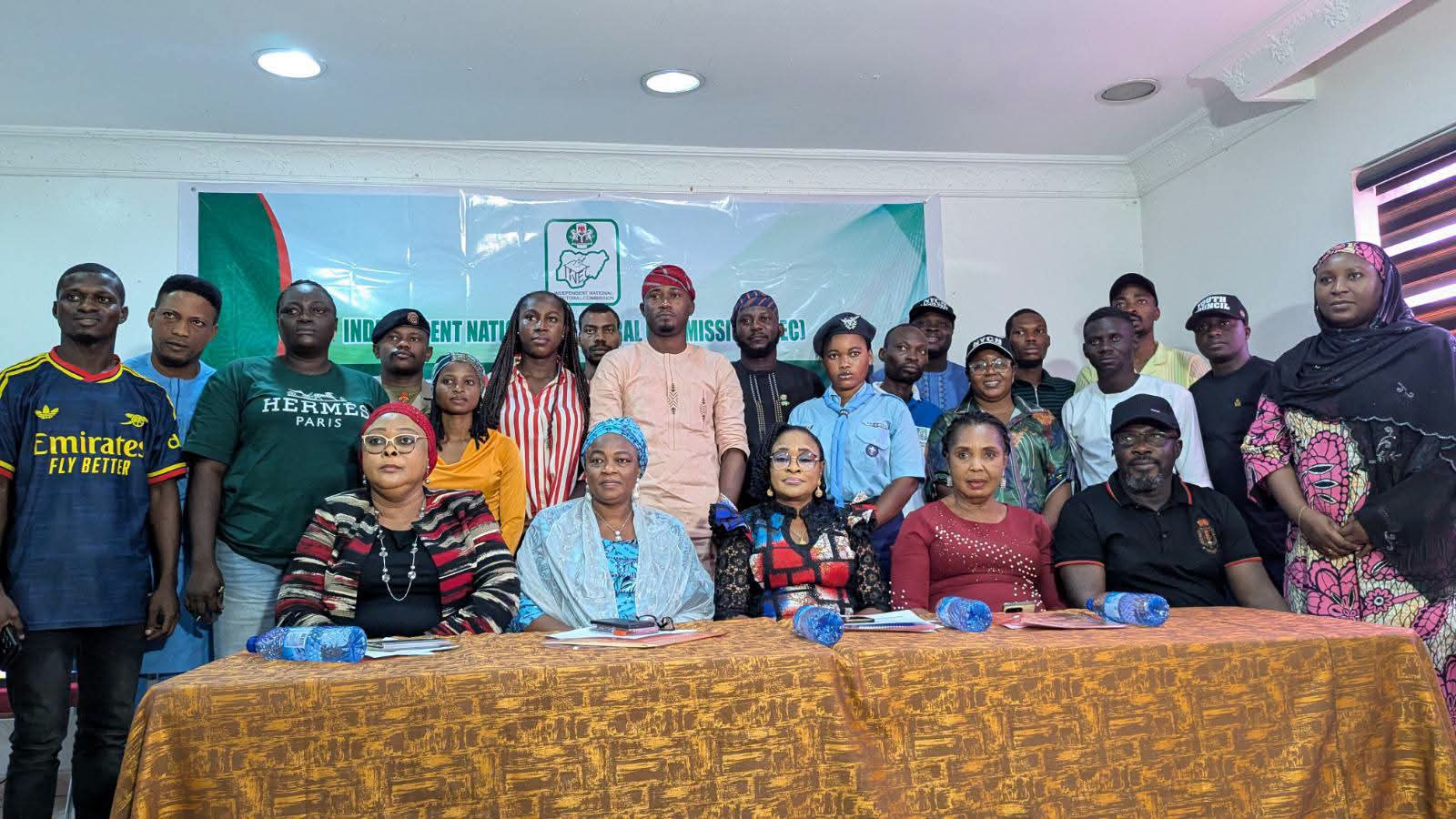
The Independent National Electoral Commission (INEC) has intensified efforts to promote peaceful participation ahead of the 2027 General Election, engaging identified youth organisations across the six geopolitical zones and urging young Nigerians to reject electoral violence, political manipulation, hate speech and misinformation.
The call was made on Tuesday, November 17, 2026, during a Zonal Youth Engagement with identified youth groups, organised by the Commission’s Gender and Inclusivity Department at Presken Hotel, Allen Avenue, Lagos.


The Resident Electoral Commissioner (REC), Lagos State, Prof. Ayobami Salami, who was represented by the Administrative Secretary, Lagos State, Olori Tadese Adenike, mnipr, described young people as critical stakeholders in Nigeria’s democratic development, noting that their choices and actions before, during and after elections would significantly influence the credibility and peaceful conduct of the 2027 General Election.
Delivering the REC’s welcome address, Olori Tadese urged young people to reject recruitment and manipulation by political actors to perpetrate violence, intimidate voters or destroy electoral materials. She stressed that no political ambition was worth the life of any Nigerian and no electoral victory justified the destruction of communities or the future of young people.
She said the engagement was designed to change the negative narrative surrounding youth involvement in elections by equipping young Nigerians with the right information, knowledge and values to become ambassadors of peace, defenders of democratic principles and active partners in the electoral process.
The Administrative Secretary further urged participants to embrace issue-based political participation, respect opposing political opinions, reject voter intimidation and accept electoral outcomes through lawful and constitutional means.
She also drew attention to the provisions of the Electoral Act 2026, cautioning that electoral offences such as vote buying and selling, ballot box snatching, voter intimidation, impersonation, obstruction of electoral officials, destruction of election materials and incitement to violence attract legal consequences.
On the growing influence of social media, she advised young people to verify information before sharing, rely on credible and official sources and avoid circulating unverified reports capable of creating tension and undermining public confidence in the electoral process.
In her presentation on “Objectives of Zonal Engagement with Identified Youth Groups Ahead of the 2027 General Elections,” the Deputy Director, Gender and Inclusivity Department, INEC Headquarters, Mrs. Habiba Jatto Abdulkareem, explained that the initiative was designed to strengthen collaboration between INEC and youth organisations, promote civic responsibility and provide a platform for constructive dialogue on issues affecting youth participation.
She observed that despite their numerical strength, young people were sometimes exploited by political actors for negative purposes during elections, resulting in violence, loss of lives and destruction of property.
She said the Commission was committed to repositioning young Nigerians as active stakeholders in the electoral process rather than instruments of anti-democratic forces.
The engagement featured presentations by key officials of INEC Lagos State and invited resource persons on electoral preparedness, youth participation, electoral offences and the application of technology in elections.
The Head of Department, Voter Education and Publicity (VEP), INEC Lagos State, Esther Emeh, delivered a presentation on “2027 General Election: INEC State of Preparedness,” highlighting the Commission’s preparations towards the forthcoming elections.
Similarly, the Head of Department, Legal Services, INEC Lagos State, Bolanle Babajide, addressed participants on “Electoral Offences and Penalties,” drawing attention to prohibited electoral practices and the legal consequences of violations.
The Head of Department, Information and Communication Technology (ICT), INEC Lagos State, Muyiwa Yusuf, also spoke on “BVAS and New Technology in Election,” highlighting the application of technology in the electoral process.
An invited resource person, Engr. Adigun Ibrahim, delivered a presentation on “The Roles of Youth in Promoting Positive Narratives, Non-Violence and Active Participation in the 2027 General Election,” emphasising the responsibility of young people to promote peaceful political engagement, positive narratives and responsible participation in the democratic process.
Another presentation by the Assistant Director, INEC, Bukar Maikwada, titled “The Power of Youth and the Positive Use of Technology for Accurate Information Dissemination to Promote Peaceful Conduct of the 2027 General Election,” challenged young Nigerians to deploy their digital influence responsibly.
Maikwada noted that a single smartphone, social media post or messaging application could influence thousands of people within minutes, making young people powerful agents of either positive change or social disruption.
Presenting data on youth participation in voter registration, he disclosed that the 2022 Continuous Voter Registration (CVR) exercise recorded 37,060,399 registered youths, while the three phases of the 2026 CVR recorded a cumulative 9,324,349 newly registered youths.
He identified five critical areas where young people could make a difference: promoting credible information and rejecting fake news; using social media to encourage peace and tolerance; rejecting hate speech and political violence; deploying technology for voter education; and using Artificial Intelligence responsibly.
He particularly warned against the misuse of Artificial Intelligence to produce manipulated videos, fabricated photographs and false audio recordings capable of misleading voters or inciting violence.
The INEC official urged youth organisations across the six geopolitical zones to use their digital skills and community networks to promote voter education, political tolerance, national unity and inclusive electoral participation, particularly for persons with disabilities.
The programme also featured goodwill messages from the Director, National Orientation Agency (NOA), Lagos State, Dr. Mustafa Adedeji Tukur, represented by the Deputy Director, Mrs. Ngozi Obi, and the Lagos State Coordinator of the National Youth Service Corps (NYSC), Christiana Salmwang.
In her goodwill message, the NOA representative commended INEC for the initiative, noting that youth involvement in the electoral process must go beyond social media discussions and translate into responsible civic engagement.
She encouraged young Nigerians to obtain their Permanent Voter Cards (PVCs), participate peacefully in electoral activities and reject vote buying, voter apathy, political intimidation, hate speech and misinformation.
She also reaffirmed NOA’s commitment to leveraging its nationwide operational structure to promote civic responsibility, national consciousness and democratic values.
In her closing remarks, the Director, Gender and Inclusivity Department, INEC Headquarters, Mrs. Lakunuya Dorothy Bello, commended the participants, both physically present and those who joined virtually, for their contributions and active participation.
She urged the youth representatives to translate the knowledge gained into practical action by educating their peers, challenging misinformation, discouraging electoral violence and encouraging eligible citizens to participate in the electoral process.
Bello emphasised that the engagement should mark the beginning of stronger partnerships and sustained conversations between INEC and youth organisations towards ensuring peaceful, inclusive and credible elections.
The programme forms part of the Commission’s stakeholder engagement initiatives aimed at strengthening youth participation, promoting democratic values and mobilising young Nigerians as partners in ensuring a peaceful and credible 2027 General Election.

