

As Nigeria approaches the 2027 elections, one thing is clear: the country does not need another career politician offering recycled promises. What Nigeria truly needs is a reformist president with the courage, clarity, and competence to tackle the country’s deep political, economic, social, and cultural dysfunctions.
Unfortunately, the current leadership has shown little appetite for meaningful reform. The president appears more interested in consolidating personal power than fixing a failing system. The opposition, meanwhile, seems equally preoccupied with winning the next election rather than reshaping Nigeria’s future. No one is having a serious national conversation about the urgent, structural reforms needed to rescue the country.

Only a few voices, like Peter Obi, speak the language of change. But even he has mostly focused on economic reform, often leaving out political restructuring, social justice, and cultural renewal. If Nigeria is to rise, the country needs leadership that sees the full picture and is bold enough to act on it.
Nigeria is in crisis across every major sector. Security continues to deteriorate. Armed groups terrorize citizens in the Northeast, Northwest, and North Central. Kidnappings, banditry, communal clashes, and terrorism remain widespread. The Nigerian state is slowly losing its ability to protect its people. Rural communities live in constant fear, and urban centers are not spared.
Economically, inflation has eroded incomes, and unemployment, particularly among youth, remains dangerously high. Reforms like fuel subsidy removal have hurt ordinary Nigerians more than they have helped them. Despite our enormous potential in agriculture, technology, and manufacturing, Nigeria’s economy is still overly dependent on oil. Government revenue remains weak, and public debt is rising.
In the social sector, education and healthcare are underfunded and unreliable. Corruption continues to block opportunities, and the youth feel alienated from a political system that does not serve them. Many of Nigeria’s brightest are leaving the country, creating a dangerous brain drain.
Politically, governance is reduced to power-sharing among elites. Major political parties focus on zoning formulas, ethnicity, and patronage rather than ideas and problem-solving. There is little or no debate about constitutional reform, electoral credibility, or strengthening institutions outside primordial or other sentiments.
These are not isolated issues. They are symptoms of a deeper national decay. And surface-level solutions will not fix them.
Too often, Nigerian politicians and analysts reduce reform to purely economic issues. Yes, the economy matters, but the problems facing Nigeria go beyond GDP or budget deficits. They are about governance, trust, equity, and national cohesion. Other countries have proven that deep, holistic reform is possible and essential.
In China, economic transformation was accompanied by cultural reform. The government invested in a sense of national identity, discipline, and long-term planning. Cultural values were aligned with development goals to drive social unity and productivity. In Iran, the state has used language, religion, and national heritage as tools to foster identity and resistance. While these models are not without flaws, they show that culture matters. Even Rwanda, recovering from genocide, used national values and reconciliation to drive social and political recovery.
For Nigeria, reform must go beyond the economy. It must also address how Nigerians relate to one another, how they view public service, and what national values unite us. A true reformist must not only grow the economy but also reshape the Nigerian mindset from entitlement to merit, from tribal loyalty to national duty, from corruption to accountability.
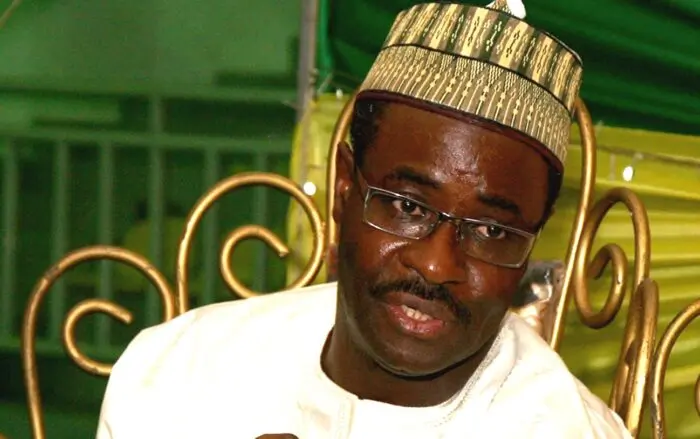
Reformist leadership is not a fantasy. Nigeria has individuals with the vision, skills, and integrity to lead such change. Figures like Dr Akinwumi Adesina and Malam Mohammed Hayatudeen, both respected technocrats and politicians, represent the kind of competent, forward-looking leadership the country needs.
But the truth is this: Nigeria is not short of reformists. There are hundreds of Akinwumi Adesinas and Mohammed Hayatudeens across the country and in the diaspora. They are technocrats, professionals, academics, and civic leaders who have the competence and patriotism to rebuild Nigeria. What they lack is political access in a system designed to exclude such voices. If the country is serious about change, the current political class must step aside for national interest and let such individuals lead.
Nigeria’s youth are ready for a different kind of leadership. In 2023, millions of young voters supported Peter Obi not because he was perfect, but because he represented a break from the old order. That moment showed that when given a credible alternative, young Nigerians are willing to engage, organize, and vote. If a truly reformist candidate emerges in 2027, one who offers real answers on jobs, education, governance, and national unity, young people will rally again.
The 2027 elections are not just about who becomes president. They are about what kind of country Nigeria wants to be. If another politician from the old guard takes power, expect more of the same: more insecurity, economic mismanagement, and disillusionment. But if Nigeria chooses a reformist, committed to deep structural change, then the country can finally begin to recover.
Nigeria is ready for reform. In fact, it is long overdue for serious reform. The people are exhausted by recycled elites and broken promises. A reformist president in 2027 would not only introduce better policies. That person would offer a new national direction. They would challenge the old assumptions, reject the politics of tribe and religion, and focus instead on competence, integrity, and unity.
There are hundreds of Nigerians who can lead this transformation. What they need is political space, popular support, and a new kind of politics that prioritizes purpose over reward. The opposition must unite behind these reformist candidates wherever they may come from, and the youth must demand them.
Without reform, there will be no recovery. And without recovery, Nigeria’s future will continue to drift. The choice in 2027 is between the comfort of the familiar and the risk of renewal. The country must choose renewal.

