
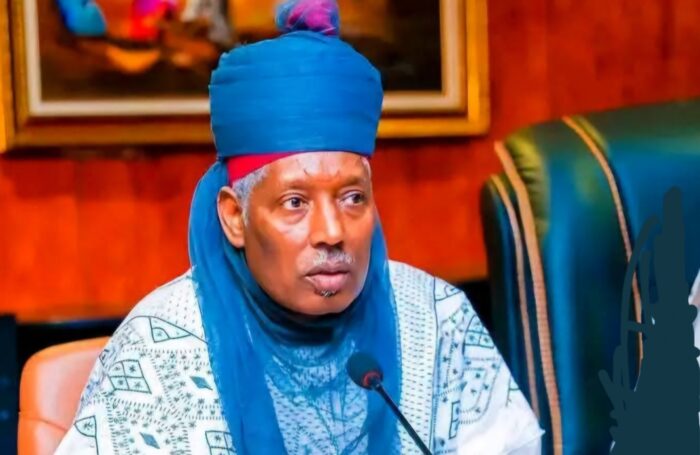
- Breaking the Cycle of Poverty with New Thinking
For decades, traditional approaches have failed to lift Northern Nigeria out of poverty. The stark reality is that while the poverty rate in Southern Nigeria is around 30%, it hovers above 60% in the North, with some northern states like Zamfara and Sokoto suffering poverty rates above 80%. Continuing on the same path will only perpetuate this trajectory – clearly not a recipe for different results. If Northern Nigeria truly desires to break free from this cycle and reshape its future into a socioeconomic powerhouse, it must fundamentally change its approach. This needed paradigm shift boils down to one core principle: embed digital infrastructure, technology, and innovation (including artificial intelligence) into every facet of development strategy. In the 21st century, technology is no longer optional or a luxury – it is the critical enabler of progress. Embracing this will mean the difference between stagnation and a future of prosperity.
The Digital Infrastructure Imperative


Modern economies are built on digital highways just as much as physical ones. Yet Nigeria faces a glaring digital divide: as of 2023, national internet penetration was about 48%, but access in rural and northern areas lags far behind. Over 60 million Nigerians – more than the entire populations of Ghana and Rwanda combined – remain offline and cut off from the digital world’s opportunities. This is a dangerous gap that threatens to leave Northern Nigeria further behind as the global digital and AI economy surges toward a $15.7 trillion market by 2030. In fact, experts warn that unless we urgently invest in digital infrastructure and connectivity, Nigeria risks missing out on its share of this coming AI driven prosperity. Bridging the connectivity gap isn’t just a tech issue – it’s an economic lifeline.
Research shows that a mere 10% increase in broadband penetration can boost GDP by around 1.5%. By expanding affordable broadband and smartphone access across Northern Nigeria’s towns and villages, we lay the groundwork for growth in every sector – from agriculture and small businesses to education and healthcare. Equally important is reliable power infrastructure to keep the digital networks running. Without electricity and internet access, communities remain isolated from knowledge, markets, and services in today’s digital age. Bridging this digital divide is non-negotiable. It must be treated with the same urgency as building roads or power lines. As one industry leader put it, “Access to technology must not be a privilege, it is a right. Every Nigerian has a right to progress and to participate fully in the global digital economy.”
For Northern Nigeria, this means prioritizing investments in fiber-optic networks, rural telecommunication towers, community internet hubs, and renewable energy to power them. It means fully implementing Nigeria’s National Broadband Plan and innovative solutions (like satellite broadband for remote areas) to connect every last mile. Such efforts, combined with policies that encourage telecom operators to expand service to underserved regions, will open the doors of opportunity to millions. The payoff is immense: farmers gaining real-time market prices via smartphones, students accessing online educational resources, entrepreneurs reaching customers far beyond their locale – in short, a more inclusive and dynamic economy.
Technology in Every Sector: Catalyzing a Socio-Economic Revolution
Investing in digital infrastructure creates the platform, but how Northern Nigeria leverages technology across its key sectors will determine its leap into prosperity. To truly industrialize and become an economic powerhouse, technology and artificial intelligence should be harnessed in every domain of development – from traditional industries like farming and mining to social services like education and healthcare. Northern Nigeria’s vast potential in Mining, Agriculture, and Power (MAP) – the very theme of this year’s regional summit – can only be fully unlocked by infusing modern technology and innovative thinking into these areas. It’s time to go beyond business-as-usual and usher in Tech-Empowered Development.
Consider the following critical sectors and how a digital paradigm shift can revolutionize them:
Agriculture 2.0: Agriculture remains the backbone of Northern Nigeria’s economy and livelihood but yields and incomes have long been limited by outdated practices. Embracing digital agriculture can change that. Imagine widely adopting precision farming tools – from drones and sensors that monitor soil and crop health, to AI-driven analysis of weather and satellite data guiding planting decisions. These technologies help farmers optimize fertilizer and water use, predict pests or droughts, and significantly boost crop yields and reduce losses. Mobile apps and internet access allow farmers to get real-time market prices and weather updates, so they can make smarter decisions on when and where to sell or what crops to plant. The result is better productivity and higher incomes. Digital marketplaces can connect rural farmers to urban buyers directly, eliminating middlemen and expanding their reach. In short, technology can transform subsistence farming into smart, profitable agribusiness.
Smart Energy & Power: Northern Nigeria’s development is crippled by energy poverty – an unreliable grid and low access to electricity in many communities. Technology offers a two-fold solution: modernize the grid and leapfrog with renewables. Investments in smart grid systems can improve efficiency in power distribution, reducing the rampant losses and outages. By using sensors and IoT devices on transmission lines and transformers, utilities can predict faults and balance loads effectively, ensuring more consistent power supply. At the same time, the region’s abundant solar potential should be harnessed through solar farms and decentralized renewable solutions. Here too, innovation plays a role – for instance, AI algorithms can optimize energy storage and distribution from solar mini-grids in rural areas. Bringing reliable power to all corners of the North will energize industrialization and enable tech adoption (since even the internet and mobile networks depend on electricity). From small businesses that can then run machinery to hospitals that can power life-saving equipment, the socio-economic benefits of electrification cannot be overstated. Technology is literally lighting up communities and powering industries in ways once only imagined, and Northern Nigeria must fully tap into this trend.
Mining and Industry: The northern region is rich in solid minerals and has untapped industrial potential. Rather than continuing with primitive mining methods, the adoption of modern mining technology can make this sector a driver of growth. Drones and geological data software can help map mineral resources more accurately and sustainably. Automated and mechanized mining equipment can improve safety and efficiency, extracting resources with less waste. Furthermore, by leveraging data analytics, mining operations can minimize environmental impact and comply with regulations while increasing output.
The broader industrialization of the North – from agro-processing to manufacturing – also hinges on tech infusion. Embracing Industry 4.0 concepts like automation, robotics, and AI-driven process control in factories will ensure Northern Nigeria’s goods are produced at competitive quality and cost. In essence, technology can fast-track the North’s industrial development, creating jobs and value chains that keep more wealth within the region. Education and Human Capital: Perhaps most crucially, the region must invest in its people – the human capital who will sustain this transformation. Northern Nigeria has a young and growing population.
To convert this demographic into a dividend (rather than a liability), a paradigm shift in education and skills development is needed. This means integrating technology in education at all levels. E-learning platforms can bring quality instruction to remote schools lacking teachers, while educational radio and TV programs supplemented by mobile apps can reach nomadic and rural children. Importantly, youth should be equipped with digital literacy and STEM skills from an early age. Coding programs, robotics clubs, and tech hubs should sprout not only in cities but in semiurban centers. The goal is to nurture a generation of problem-solvers and innovators who can thrive in a digital economy.
Advanced skills training is equally vital – universities and vocational institutes in the North should partner with tech companies to offer courses in software development, data science, artificial intelligence, and other in-demand fields. The payoff will be a workforce ready to attract and drive industry in the region. Nigeria’s tech sector is already booming nationally (contributing 18.44% to GDP in Q2 2022, far exceeding the 6.33% from oil and gas), and Northern Nigeria can tap into this boom by producing talent and entrepreneurs from its states. In fact, with the right investment, the country’s large youth population – many of them in the North – can be transformed into a globally competitive workforce equipped with skills in AI, data science, and software development.
This will not only attract investment to the region but also spur homegrown tech startups addressing local challenges (from fintech solutions for farmers to ecommerce connecting northern artisans to national markets). Ultimately, no infrastructure reform can succeed without investing in people; as the NNDC has emphasized, sustainable industrialization depends on bridging the digital divide and investing in local tech talent.
Governance and Service Delivery: A digital paradigm shift must also permeate governance and public services in Northern Nigeria. Many of the region’s social challenges – from inaccessible public health and education services to bureaucratic bottlenecks – can be improved with e-governance and digital solutions. State governments should digitize their records and processes, enabling things like online business registration, electronic land records, and digital IDs for citizens. This increases transparency, cuts corruption, and makes it easier for people and investors to interact with the government. Critical services like healthcare can leverage telemedicine – connecting rural clinics with doctors in cities via video – to bridge the doctor shortage in remote areas. Likewise, social interventions (education, poverty alleviation programs) can use data analytics to target the neediest households more effectively. Embracing data and AI in policy-making allows for evidence-based decisions and efficient allocation of resources. For example, analyzing data on school enrollment, crop yields, or disease outbreaks in real-time can help authorities intervene promptly where needed.
In short, technology can help government do more with less, extending the reach of services to all communities and ensuring no one is left behind. Importantly, digital governance also fosters inclusion: when citizens can access information and services via their phones, it empowers them and builds trust in institutions. Northern Nigeria’s leaders should champion this tech-driven transparency and efficiency, sending a strong message that the region is not stuck in old ways of doing things.
By integrating technology in these and other sectors (such as transportation, financial services, and security), Northern Nigeria can trigger a socio-economic revolution. The region has unique strengths – a large population, fertile land, strategic location – but only a fresh approach will convert these into shared prosperity. Each success in one sector will have spillover effects on others: for instance, electrifying villages (power sector) improves schools and clinics (education/health sector) and enables small agro-processing businesses (agriculture/industry sector) to thrive. This synergy is why technology must be leveraged across the board rather than in silos. A digitally-driven Northern Nigeria would not only uplift its people out of poverty but also become an engine of growth for the entire nation – a true socio-economic powerhouse within Nigeria.
Enabling the Transformation: Policy and Partnerships
Making this vision a reality requires more than just individual effort; it calls for an enabling environment and collective action. First and foremost, the government (at federal and state levels) must provide visionary leadership and policy support. It is encouraging that Nigeria has recently launched a National Artificial Intelligence Strategy (NAIS) to guide the adoption of emerging technologies. Northern Nigeria’s states should align with and localize such strategies – for instance, developing regional policies that incentivize tech startups to set up in Kaduna, Kano, Maiduguri and other northern cities, or offering tax breaks for agritech and renewable energy projects in the North. Public-private partnerships will be indispensable: the private sector brings innovation and efficiency, while government can provide scale and direction.
We need to see collaborations between telecommunications companies and state governments to expand network coverage, between universities and tech firms to train talent, and between development agencies (like the NNDC) and foreign partners to fund critical infrastructure. In this light, it’s notable that the New Nigeria Development Company (NNDC) itself stands ready to catalyze investment through collaborative partnerships and policy advocacy – a role that should be amplified and supported by all northern stakeholders.
Additionally, regulatory frameworks must be reformed to accommodate fast-paced innovation. From fintech to telemedicine to e-commerce, startups need a conducive environment with clear, supportive regulations. Northern Nigeria can become a sandbox for innovation by streamlining bureaucratic processes and improving ease of doing business in its states. Initiatives like technology parks, innovation hubs, and special economic zones focused on ICT can attract investors and entrepreneurs to the region. Human capital development must also be sustained through policy – e.g., scholarship programs for STEM students from the North, or incentives for tech experts (including those in the diaspora) to work on northern projects. Crucially, an inclusive approach is needed to ensure technology truly serves all citizens. This means paying attention to digital literacy and affordability so that even the poorest can take advantage of new tools.
Government and civil society should roll out training programs in rural communities to teach basic digital skills – how to use the internet, smartphones, and online services. Likewise, targeted initiatives like providing subsidized devices or community internet centers can help bridge access for low-income families. Without such measures, there’s a risk that technology could deepen inequality by primarily benefiting the urban elite; policies must guard against that by focusing on rural and marginalized groups. As one BusinessDay analysis warned, innovation without inclusion could end up “leaving behind the very people [new systems] are meant to serve.” Ensuring that women and girls in the North have equal access to digital tools and education is another priority, as empowering half the population will multiply the development gains.
Finally, regional cooperation among the northern states can amplify impact. States should share best practices and perhaps jointly invest in large projects (for example, a trans-state broadband backbone or a common tech incubator fund). This kind of unity, coupled with constitutional or institutional support for regional development commissions, can drive a more coordinated and effective transformation. The challenges – from desertification to insurgency – do not stop at one state’s border, and neither should the solutions. A paradigm shift in thinking means breaking out of parochial silos and working together towards the collective upliftment of Northern Nigeria.
Conclusion: Embracing Innovation to Secure Northern Nigeria’s Future
In summary, Northern Nigeria stands at a crossroads. Down one path is the status quo – a future where the region continues to lag, weighed down by poverty and unemployment. Down the other is a bold new trajectory – one where Northern Nigeria becomes a hub of innovation, enterprise, and prosperity. The difference between these outcomes lies in boldly doing things differently. We cannot keep doing the same things and expect a different outcome. The world is changing rapidly through digital transformation, and Northern Nigeria cannot afford to be left behind.
By placing technology and digital infrastructure at the heart of every development initiative, the region can leapfrog intermediate stages of development and address its challenges head-on. From smart farms to powered-up industries, from digitally literate youth to efficient e-governance, the possibilities are vast. We have seen glimpses of what is achievable – for instance, Nigeria’s tech sector already outpacing oil in GDP contribution, or AI tools being proposed to tackle problems like financial inclusion and healthcare. These trends must be amplified in the northern states.
This transformation will not happen overnight, and it will not happen by default. It requires conviction, collaboration, and courage to break from old molds. As we deliberate on Northern Nigeria’s future, the charge is clear: innovate or stagnate. The good news is that the North is brimming with latent potential – entrepreneurial youth, natural resources, vibrant culture – and technology is the key to unlocking that potential. If we commit to this paradigm shift, then in the years to come we will see a Northern Nigeria that is not just catching up, but leading: a region where prosperity is shared, where the economy is diversified and knowledge-driven, and which contributes robustly to Nigeria’s overall development.
It’s often said that you can’t use an old map to explore a new world. The journey to a prosperous future for Northern Nigeria will certainly traverse new terrain – digital highways, innovation hubs, and smart networks. Let us then embrace this new map with determination. With technology as our ally and the will to do things differently, Northern Nigeria can rewrite its story from one of endemic poverty to one of inclusive growth and opportunity. The time for incremental change has passed; now is the time for a radical digital-driven transformation.
By adopting this new mindset and leveraging every tool that modern technology offers, Northern Nigeria will indeed become the socio-economic powerhouse it is destined to be – achieving results once thought impossible, and proving that with a paradigm shift in approach, different results are absolutely within reach.
- Being the text of a goodwill message by Lamis Shehu Dikko (Ajiyan Katsina) Chairman, New Nigeria Development Company (NNDC) at the Northern Nigeria Investment & Industrialization Summit 2025 taking place at the Ladi Kwali Hall, African Continental Hotel, former (Sheraton Hotel) Abuja

