
Climate-wise, the many policies and actions recently announced and committed to by government bodies in Nigeria — the launch of the various components of the emerging carbon market, the just-concluded Nigeria Youth Climate Change Summit organised by the National Council on Climate Change (NCCC), and the number of calls and admonishments from federal and sub-national governments to citizens on World Environment Day to prioritise planting trees as an effective way to mitigate the already increasingly manifesting climate change challenges — are something that calls for commendation. On the surface, these collective policies and actions have signalled serious commitment to climate action. But the reality of the common man in Nigeria tells a different story.
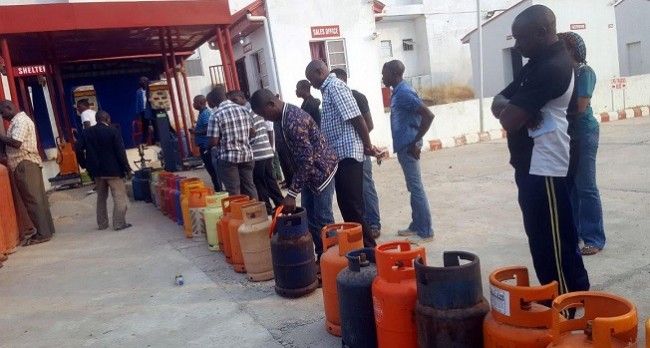
Early this year, a kilogram of cooking gas was sold at around ₦1,200. That price was an all-time high, with consumers complaining about unaffordability; but as time went on to the current price, it is now being sold at ₦2,000 across Nigeria. Reports from various cities and suburbs have been pouring out of media outlets, with citizens, especially low-income earners, lamenting how they abandoned their cooking cylinders for charcoal and firewood as an alternative. Some have acknowledged the inconvenience of their newfound ways of cooking and the effects on their health, but they cannot help it; they have to survive. Low-income Abuja residents, living in the Federal Capital Territory, are also rapidly adapting to the new reality caused by the exorbitant hike in cooking gas prices. Sellers of charcoal and firewood have revealed how booming their business is becoming across the FCT, with prices rising significantly as demand increases.


From 2020 to 2025, Nigeria reportedly exported wood and charcoal worth over ₦772 billion, according to the National Bureau of Statistics. In 2025 alone, from January to September, it exported over ₦243 billion worth of those products. This happened in what can be categorised as an informal, unregulated market. And that is just for the export figures.
In terms of local consumption, figures from 2018 placed Nigeria’s wood and charcoal production at 4.2 million tonnes annually, preceded only by Brazil and Ethiopia with 5.5 million and 4.4 million tonnes respectively. India, with almost twenty times Nigeria’s population, ranked fourth. Within Nigeria, however, I have yet to come across a reliable estimate of the revenue or volume generated from domestic wood and charcoal production and consumption, even as over 70% of both urban and rural households remain largely dependent on firewood and charcoal for cooking.
To put this in context, Nigeria lost around 1.14 million hectares of tree cover between 2001 and 2021, mainly as a result of wood and charcoal production and consumption. In land mass terms, it has lost an area the size of Lagos, Enugu, and the FCT combined to deforestation in twenty years, while afforestation and reforestation policies lag behind. This is a major setback to the policies put forward to tackle deforestation and its effects, and to Nigeria’s broader commitment to climate action. The Reducing Emissions from Deforestation and Forest Degradation (REDD+) strategy is being weakened. The Nigerian government’s pledge at COP26 to end deforestation by 2030 is being undermined. The clean cooking policy targeting 2030 is being jeopardised.
At a time when climate-induced challenges keep intensifying, manifesting in different forms of environmental disruption that claim lives, displace people en masse, and destroy property, this development ought to be deeply disturbing. Apart from conflict, climate change is emerging as the second leading cause of displacement and migration across the world, with Africa recording one of the worst cases. In some instances, even the multidimensional, lingering conflicts within Nigeria are consistently linked to the effects of climate change.
Nigeria cannot afford to let the gains recorded in climate action commitments by both state and non-state actors over the years be undone simply because of an unexplained and unaddressed shift in the price of cooking gas. All hands must be on deck to ensure that cooking gas is made affordable and stable, for the common man in the city who is already used to it, and for his counterpart in the rural community who was perhaps only just introduced to it last year or last month. That is, if we are truly serious about addressing the climate change challenges being faced by Nigeria, and the world by extension.
- Isah Kamisu Madachi is a policy analyst and development practitioner. He writes via [email protected]

