
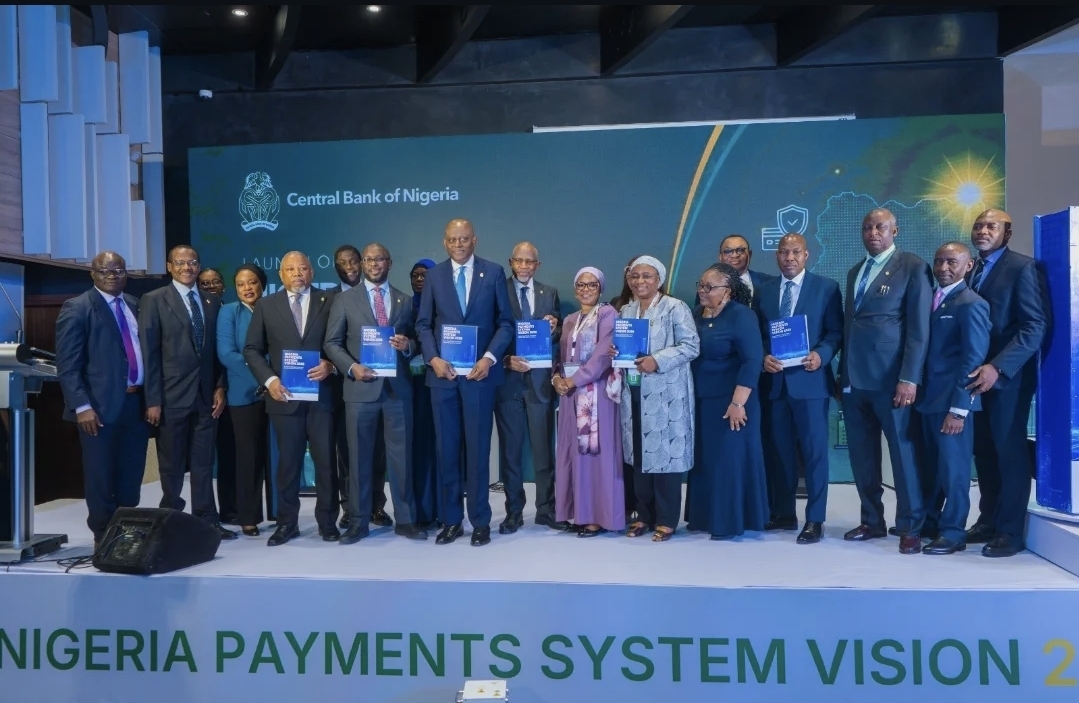
The Central Bank of Nigeria’s unveiling of Payments System Vision 2028, PSV 2028, in Abuja signals a deliberate push to move Nigeria’s payments landscape from rapid growth to structured maturity. CBN Governor Olayemi Cardoso framed it as a tool to deepen financial inclusion and strengthen digital payments nationwide. This framing matters, because payments infrastructure is no longer just about moving money. It is the plumbing of the digital economy, trade, and public trust.
Below are eight reasons why PSV 2028 is important right now:


- Deepening financial inclusion beyond account numbers
Nigeria has made progress on inclusion metrics over the last decade. But “having an account” is different from “using financial services daily.” PSV 2028 directly targets usage.
A focused payments vision forces interoperability, lower friction, and agent network expansion into rural areas. When digital payments work reliably at the market stall in Gusau or the farm gate in Benue, cash dependency drops. That means more women, youth, PWDs, and rural traders enter the formal economy without needing a bank branch.
This matters a great deal because financial inclusion drives income resilience. Households with access to digital savings, credit, and insurance can smooth consumption during shocks like fuel price changes or poor harvests. For Nigeria, where over 30% of adults remain financially excluded, closing that gap adds millions of people to the tax base, credit market, and social protection systems. PSV 2028, if executed, turns inclusion from a statistic into daily economic activity.
- Reducing cash costs and leakages
Cash is expensive. It costs CBN to print, banks to move, businesses to secure, and citizens to lose. PSV 2028’s push for digital payments nationwide attacks that cost structure. Digital payments create audit trails. Government revenues, from market dues to federal collections, become more transparent. Businesses reduce cash-handling losses and theft. Consumers spend less time queuing at ATMs or banks.
A loot at Nigeria’s cash-to-GDP ratio shows that it has been historically high compared to peer economies. Every 1% shift from cash to digital releases resources for productive use. For government, better traceability means less revenue leakage and improved targeting of subsidies and social interventions. For SMEs, it means faster settlement cycles and less working capital tied up waiting for cash.
- Strengthening trust in the payments system
Cardoso’s emphasis on “strengthening digital payments” addresses the single biggest brake on adoption: trust. Failed transactions, delayed reversals, fraud, and unclear dispute resolution have made many Nigerians hesitant. The PSV 2028 targets updated standards, stronger oversight of fintechs and banks, and clearer consumer protection rules. It likely includes service-level expectations for transaction success rates, fraud liability frameworks, and faster redress.
As often argued by financial experts, trust is the currency of digital economies. Without it, even the best app fails. With it, adoption accelerates exponentially. For Nigeria to compete in cross-border trade under AfCFTA, for instance, domestic users must first believe their local rails work. PSV 2028 can provide that baseline confidence.
- Enabling SME growth and digital trade
SMEs make up over 90% of Nigerian businesses. Most still operate in cash and face credit constraints because lenders cannot verify cash flows. PSV 2028 will expand acceptance infrastructure: QR codes, USSD, contactless, and agent networks. That gives small traders low-cost ways to accept payments. More digital transactions create data trails that fintechs and banks can use for credit scoring.
Again, access to credit is the difference between a roadside shop and a scaling business. Digital payment data becomes “collateral.” Beyond local trade, reliable digital rails let Nigerian SMEs sell online across Africa. If PSV 2028 aligns standards with regional systems, it lowers the cost of cross-border payments and helps Nigeria capture more of the $3 trillion AfCFTA market.
- Boosting innovation with clear rules
Nigeria’s fintech boom happened largely in regulatory grey areas. That spurred creativity but also consumer risks and regulatory arbitrage. A published vision to 2028 gives innovators a roadmap. Fintechs, banks, telcos, and startups can build products knowing what standards, APIs, security, and licensing expectations CBN will enforce. It reduces policy uncertainty.
Also, investors fund markets with clear rules. PSV 2028 can make Nigeria more attractive for fintech capital compared to peer markets with shifting regulations. Clear rules also let CBN balance innovation with stability, avoiding the “move fast, break trust” problem seen in some digital payment rollouts globally.
- Improving monetary policy effectiveness
The CBN’s core mandate is price and financial stability. Cash-heavy economies weaken monetary policy transmission. If a large share of transactions is off the books, policy rate changes don’t reach the real economy. More digital payments mean more transactions flow through regulated channels. That improves CBN’s visibility into money velocity and credit creation.
With inflation still a key challenge, better data and faster transmission make policy tools more effective. PSV 2028, in a way, supports the CBN’s inflation fight by shrinking the informal cash economy.
- Enhancing security and combating financial crime
Cash anonymity aids illicit flows, terrorism financing, and corruption – and Nigeria suffers. Digital payments, while not perfect, are easier to monitor. PSV 2028’s focus on stronger digital payments includes upgraded KYC, transaction monitoring, and collaboration with security agencies. The earlier FRSC “Operation Guduma” crackdown on fake number plates shows how fraud migrates across sectors. Secure payments reduce another avenue for economic crime.
A safer payments system protects citizens from fraud and protects Nigeria’s international reputation. That affects correspondent banking relationships, foreign investment, and Nigeria’s FATF standing.
- Preparing infrastructure for future demand
Nigeria’s population will near 240 million by 2028, according to estimates. Mobile penetration and youth digital adoption are rising fast. Payment volumes will multiply as a result. PSV 2028 is forward-looking, with plans for higher transaction volumes, 24/7 availability, and resilience against cyber threats. That means investments in NIBSS infrastructure, cloud capacity, and cybersecurity standards.
Planning now avoids the congestion, downtime, and failed transactions that erode public trust. It also positions Nigeria to handle real-time cross-border payments as regional integration deepens.
Cardoso’s resolve to deepen inclusion, strengthen digital payments
Governor Cardoso’s statement that it aims to “deepen financial inclusion and strengthen digital payments nationwide” is the right target. If CBN pairs the vision with strict standards, consumer protection, and ruthless focus on the last mile, PSV 2028 can be the bridge that moves Nigeria from a cash-dominant economy to a digital-first one by 2028.
For ordinary Nigerians, that means less time queuing, more businesses accepting payment, and more opportunities to save, borrow, and trade digitally. For Nigeria, it means a more transparent, productive, and connected economy. That’s why PSV 2028 matters beyond the CBN boardroom.
- Lawal Nasir is based in Abuja

