
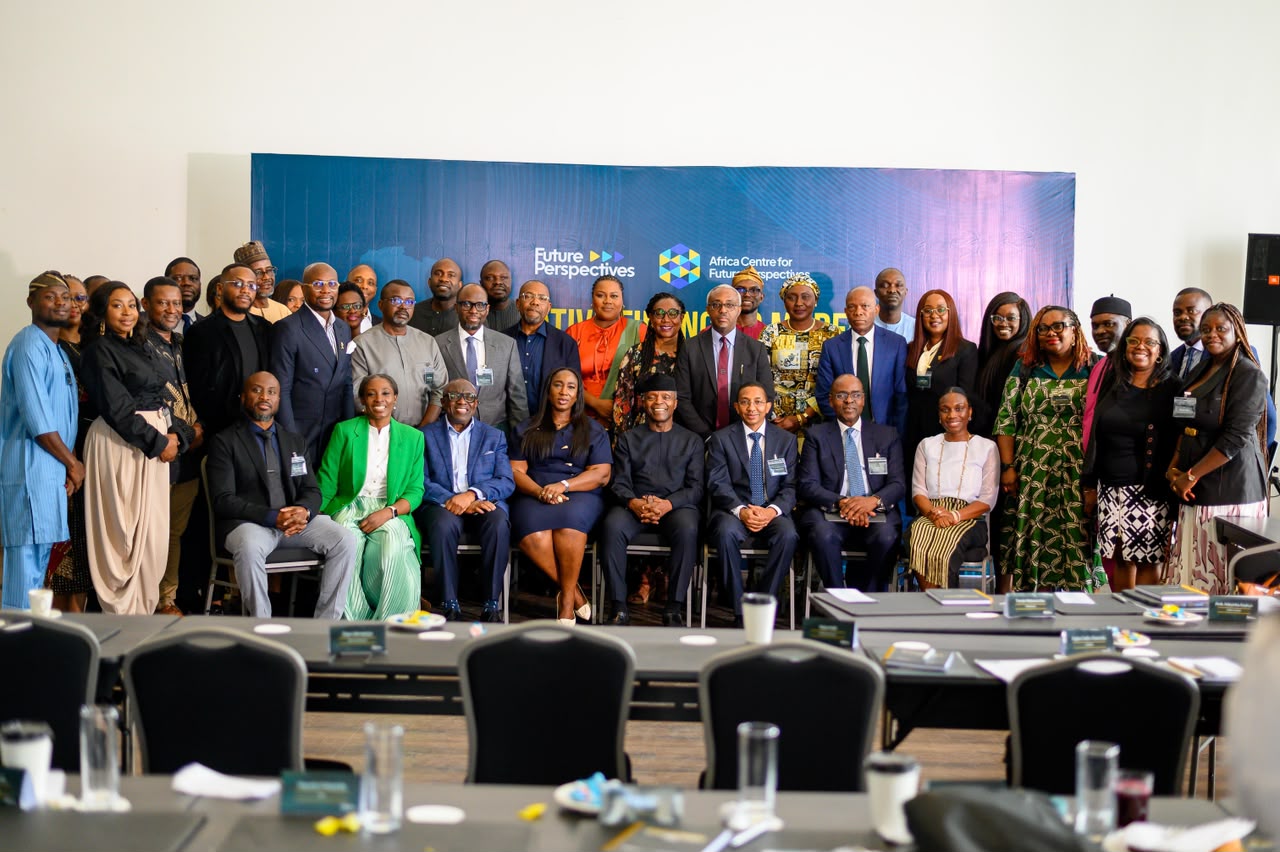
Future Perspectives, founded by former Vice President Prof. Yemi Osinbajo, SAN, in partnership with the Gates Foundation, convened a high-level roundtable on June 10, 2026, to address financing gaps in Africa’s healthcare systems.
The hybrid forum, themed “Innovative Financing Models for Africa’s Healthcare Systems,” brought together senior government officials, development finance institutions, investors, capital market leaders, and healthcare executives in Lagos to explore practical, sustainable funding mechanisms beyond government spending.


“Government Spending Alone Not Enough” – Osinbajo
In his opening remarks, Prof. Osinbajo stressed the urgency of rethinking healthcare funding, stating that “government spending alone can never address the scale of the challenge.” He noted that most Nigerians still rely on out-of-pocket payments and said the roundtable aimed to identify “practical ways to finance healthcare through innovative and sustainable mechanisms.”
Only 10-12% of Nigerians Insured
Delivering the keynote on behalf of Health Minister Prof. Muhammad Ali Pate, Dr. Abdu Mukhtar, National Coordinator of the Presidential Initiative for Unlocking the Healthcare Value Chain, PVAC, highlighted the access gap, revealing that “only 10 to 12 percent of Nigerians have health insurance.”
He said partnerships with Afreximbank and the European Investment Bank are helping to unlock billions in potential investments. He also flagged a “missing middle,” noting that many healthcare businesses need $2–5 million to grow but struggle to access capital.
Call for Patient Capital, Local Currency Financing
Speakers underscored the need for long-term, patient capital and stronger private sector participation. Bolaji Balogun, CEO of Chapel Hill Denham, said “government funding is wholly inadequate, and private capital is essential,” adding that capital markets provide “the deepest pools of capital and transparency investors need.”
Chishamiso Mawoyo, Senior Investment Officer at the International Finance Corporation, IFC, stressed the importance of local currency financing, stating that “healthcare providers serve local populations, so financing must reflect that reality.”
Dr. Tolulope Adewole, MD/CEO of MedServe, representing NSIA MD/CEO Aminu Umar-Sadiq, said “the bigger problem sits on the demand side,” citing affordability constraints in a low-income environment. He added that “collaboration is what will take us out of this challenge.”
Financing Must Deliver Impact
From a systems perspective, Ekenem Isichei, Deputy Director at Gates Foundation, cautioned that “financing must translate to real impact,” with resources measured by “lives saved and livelihoods improved.” He said philanthropy should “catalyze systems that unlock capital more effectively,” especially through blended finance.
Dr. Olumide Okunola, Senior Health Financing Specialist at the World Bank, added that “without strong public financing, everything else is limited,” and called for reduced reliance on out-of-pocket spending.
Dapo Akisanya, MD/CEO at AfyA Care, said healthcare “can be structured as a profitable and scalable sector,” but requires disciplined financing and ecosystem coordination, including impact investing and blended financing.
Closing the session, Yemi Asekun, Co-Founder of Future Perspectives, said “capital always follows capacity and management,” and noted that insights from the dialogue would be translated into “practical, actionable financing models,” including potential structures for a national healthcare investment platform.
The roundtable was moderated by Serah Makka, Executive Director for Africa at ONE and a Future Perspectives Board member. Other attendees included key players from CHAI, PSHAN, Coronation Capital, Africa Capital Alliance, Wema Bank, FirstBank, Access Bank, PharmaAccess, Evercare, Leadway Holdings, NHIA, and Johnson & Johnson, among others.
The event was announced in a press release issued on 29th June 2026 by Mohammed Brimah of Prof. Osinbajo’s media office.

