
- FG to begin targeted intervention in two high-stunting states
Governors of the 36 states of the federation have declared war on hunger by committing to launch a nationwide nutrition emergency.
This massive mobilisation will establish a powerful National Nutrition Intervention Fund to instantly advance Nigeria’s ambitious Nutrition 774 Initiative across every single local government area in the country.


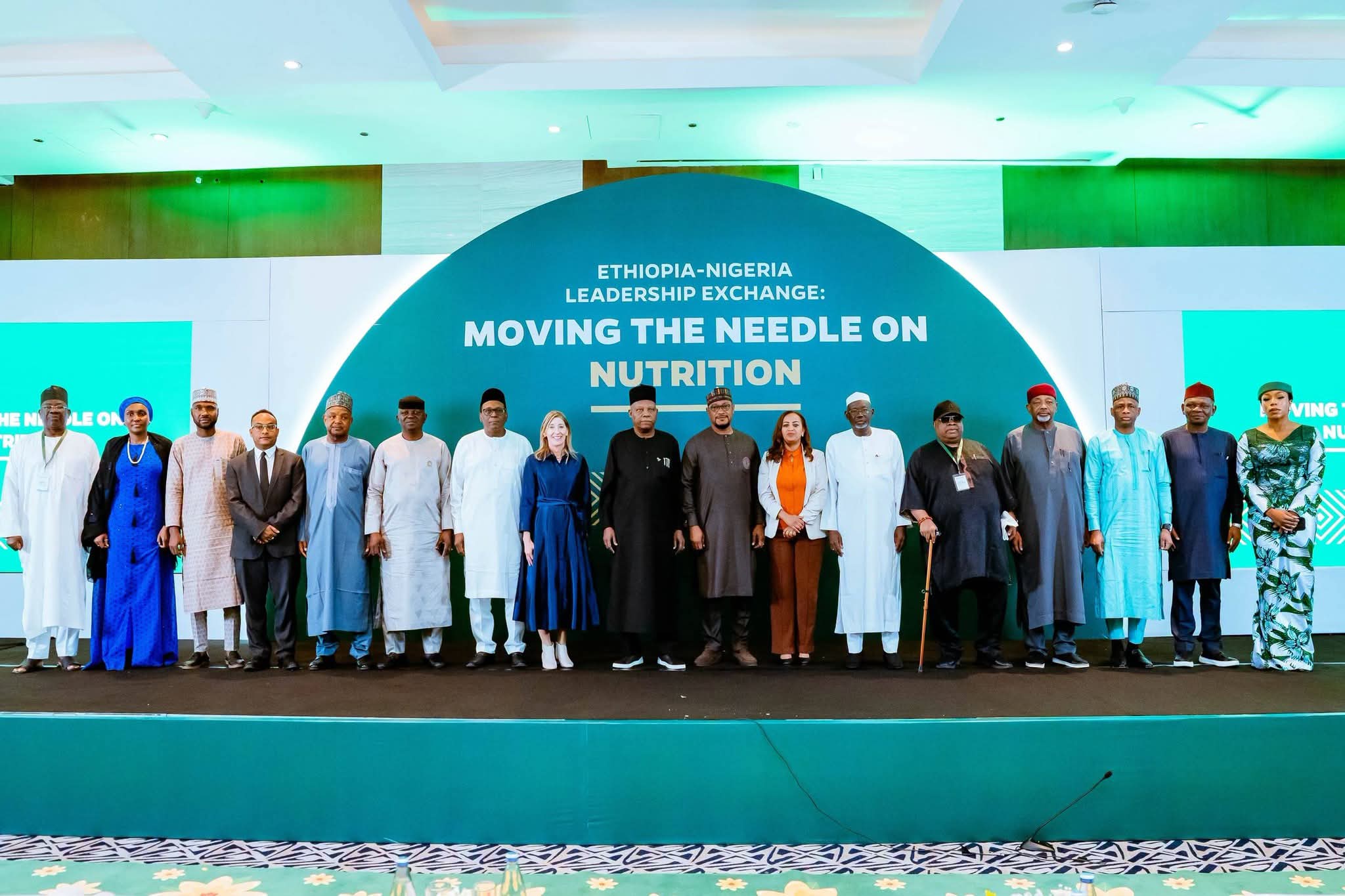
Zamfara State Governor, Dauda Lawal, announced this on Friday in Addis Ababa, Ethiopia, while reading the Nigeria Governors’ Forum (NGF) Addis Ababa Commitment on Nutrition at the Nigeria Country Session.
The commitment followed a three-day Nigeria-Ethiopia Nutrition Leadership Exchange, where the Nigerian delegation led by the Vice President, Senator Kashim Shettima studied Ethiopia’s experience in nutrition delivery, particularly through its Seqota Declaration.
While reading the NGF commitment at the session themed “From Lessons to Commitment: Accelerating Implementation of the Nutrition 774 Initiative,” the governors also pledged to strengthen domestic financing, deepen accountability at the grassroots, and institutionalize a unified framework for nutrition planning and budgeting, drawing lessons from Ethiopia’s experience in tackling malnutrition.
Speaking on behalf of the NGF, Governor Lawal said the exchange had reinforced the importance of sustained political leadership, effective multisectoral coordination, ownership at all levels of government, predictable financing, and the systematic use of data to drive decisions and accountability.
He noted that Nigeria’s Nutrition 774 Initiative already embodied many of Ethiopia’s principles, adding that the exchange provided practical lessons to strengthen the programme and deliver measurable results.
According to him, the key lessons included the need for a unified approach to planning and budgeting, stronger coordination across sectors, bottom-up planning, predictable financing, and the use of data and scorecards to measure performance.
“We are encouraged that Nigeria’s N774 Initiative already embodies many of the principles we have seen here in Ethiopia. “mThis leadership exchange has, however, provided important practical lessons on how these principles can be further strengthened and translated into results,” he stated.
The NGF also identified matching financing between the Federal Government and states as an important mechanism for aligning priorities, encouraging subnational investment and reinforcing shared accountability for nutrition outcomes.
Lawal recalled that, in the presence of Vice President Shettima, the three tiers of government signed the Nutrition Compact on February 20, 2025, to establish a common commitment to tackling malnutrition.
He said the compact was signed by the Chairman of the NGF on behalf of the 36 states, the President of the Association of Local Governments of Nigeria (ALGON) on behalf of the 774 local governments, and the Minister of Budget and Economic Planning on behalf of the Federal Government.
He explained that the latest commitment would reinforce the existing compact by adapting lessons from Ethiopia to Nigeria’s circumstances and translating them into concrete actions across the three tiers of government.
Under the commitments, the governors resolved to declare nutrition a national emergency, establish a National Nutrition Intervention Fund to catalyse implementation of the compact, and institutionalise “One Goal, One Plan and One Budget” for nutrition.
The proposed fund is expected to incentivise state-level leadership, encourage increased domestic investment, reward effective implementation and support measurable improvements in nutrition outcomes.
The governors also pledged to strengthen bottom-up planning by ensuring that nutrition priorities reflect needs at community and ward levels before being incorporated into local government, state and national plans.
They further committed to extending the National Nutrition Scorecard beyond the state level to include local government and ward-level performance indicators, strengthening accountability throughout the delivery chain.
The NGF also resolved to institutionalise the use of data for decision-making and performance management, including state-specific surveys and assessments to provide timely evidence for planning, resource allocation and corrective action.
Meanwhile, the Executive Director and Chief Executive Officer of the National Primary Health Care Development Agency (NPHCDA), Dr Muyi Aina, has disclosed that the Federal Government will begin targeted nutrition interventions in two states with a high burden of stunting before expanding the programme to other states.
Aina, who spoke on behalf of federal agencies, said the Nigerian delegation had learnt important lessons from Ethiopia’s agricultural transformation, early childhood development programmes and data-driven initiatives.
He identified clear vision and leadership, alignment across the three tiers of government, evidence-based prioritisation, rigorous measurement and disciplined execution as critical elements for achieving sustainable results.
According to him, the federal team would adopt a focused approach by selecting two states based on their stunting burden, defining clear objectives and developing multisectoral interventions tailored to their needs.
He said relevant ministers and federal agencies would work with the governors and their teams to identify sectoral priorities, determine the responsibilities of each tier of government and involve communities and development partners in the implementation process.
Aina explained that the plan would be costed, with the participating governments working towards a joint financing arrangement and establishing measurable indicators to track progress.
“We will track very rigorously progress in the execution of the plan,” he said.
The NPHCDA chief also proposed three- six- and nine-month review meetings with the Vice President, who is also Chairman of the National Council on Nutrition, to assess progress, address implementation gaps and guide the expansion of the interventions to other states.
He said the approach would enable the government to learn from implementation, make necessary adjustments and ensure that resources were directed towards interventions capable of producing measurable improvements.
On his part, the Coordinating Minister of Health and Social Welfare, Professor Muhammad Ali Pate, said the exchange had provided valuable lessons on translating political commitments into practical action and measurable nutrition outcomes.
Pate identified focused sectoral action, a clear implementation roadmap, performance matrices and accountability as critical to accelerating Nigeria’s response to malnutrition.
He said the Federal Government would work with states to turn the commitments made during the exchange into practical interventions, with progress reported to the Vice President through the National Council on Nutrition.
According to him, the combined efforts of federal and state governments, communities and development partners would be essential to achieving sustainable results.
Pate expressed confidence that Nigeria could adapt Ethiopia’s experience to its own circumstances, noting that the progress recorded by the East African country demonstrated the value of sustained political leadership and coordinated action.
He also expressed appreciation to the Ethiopian government and its officials for hosting the Nigerian delegation, describing the exchange as an opportunity for both countries to learn from each other.
The minister invited Ethiopian officials to visit Nigeria to study its ongoing initiatives and explore further areas of cooperation.
For her part, Ethiopia’s Minister of Health, Dr Mekdes Daba, commended Nigeria for its commitment to strengthening nutrition delivery and described the leadership exchange as a practical demonstration of African countries learning from one another.
Daba expressed appreciation to Vice President Shettima for leading the high-level delegation to Ethiopia, saying the visit reflected Nigeria’s determination to translate its nutrition ambitions into action.
She said the Nutrition 774 Initiative represented a significant national commitment, stressing the importance of starting with focused interventions, measuring results and expanding successful approaches.
The minister emphasised that commitments must ultimately translate into tangible improvements in the lives of citizens, adding that implementation, feedback and continuous assessment were essential to achieving lasting results.
According to her, Ethiopia is ready to provide technical support and work with Nigeria as it implements and expands the initiative.
She described the exchange as the beginning of a long-term partnership, expressing optimism that both countries would continue to share experiences and strengthen their efforts to tackle malnutrition.
Daba said the Nigerian and Ethiopian governments have a shared responsibility to demonstrate that African countries could draw on their own experiences to deliver development outcomes for their people.
Stanley Nkwocha
Senior Special Assistant to The President on Media & Communications
(Office of The Vice President)
10th October, 2026

