
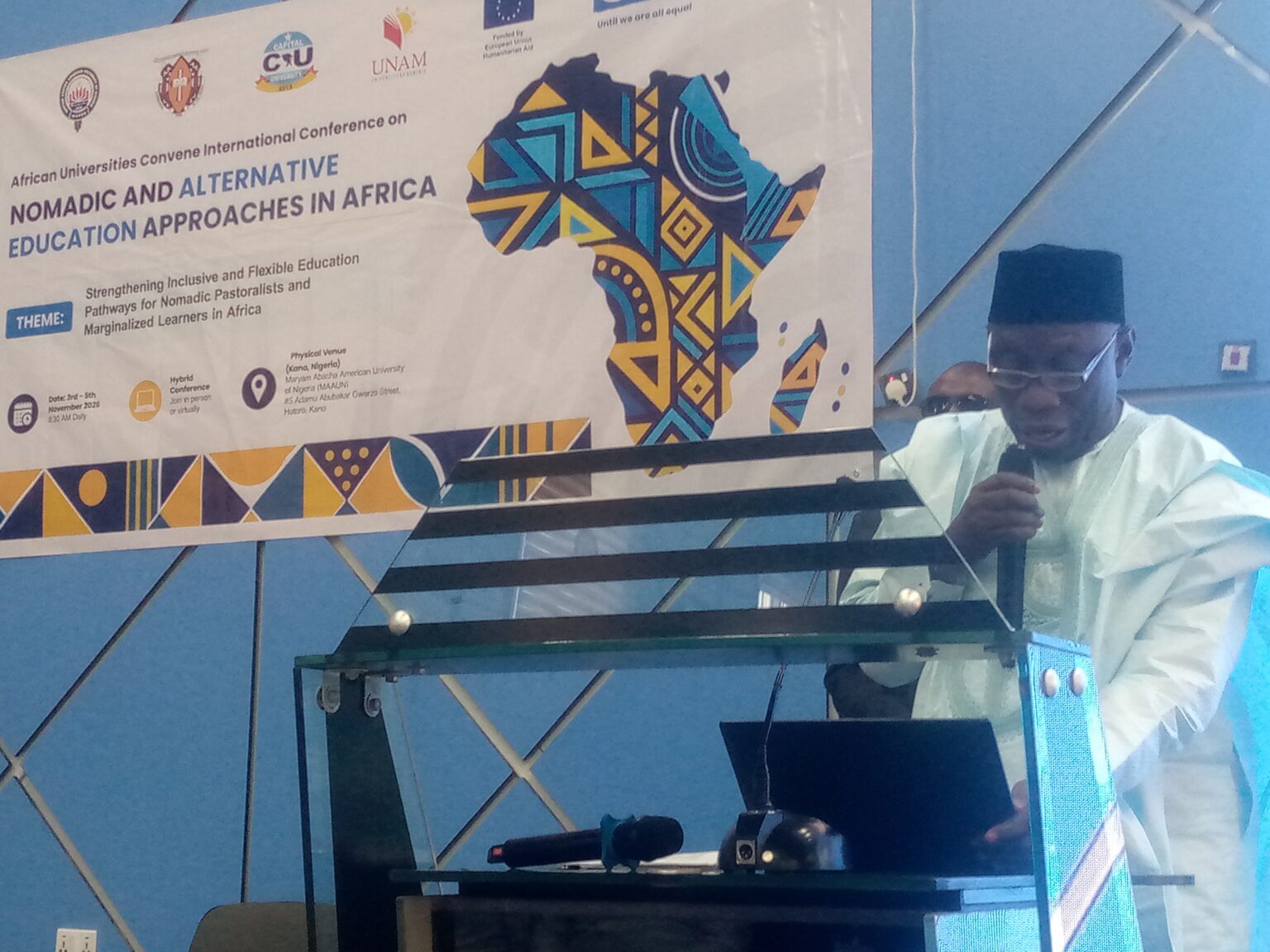
Maryam Abacha American University of Nigeria (MAAUN), Kano, and three other African universities, have formed a consortium for the development of nomadic and alternative education in the continent.
The consortium is aimed at boosting enrollment, retention and completion of nomads, pastoralists and other marginalised groups’ children in the formal education system.


The other universities are Catholic University of East Africa (CUEA), Kenya, Capital University of Somalia and the University of Namibia.
They made this known on Tuesday in Kano, at a three-day International Conference with a theme “Strengthening inclusive and flexible education pathways for nomadic pastoralists and marginalised learners in Africa”.
In a welcome address, Prof. Mohammad Israr, the President, MAAUN Kano, said education is a fundamental right and a powerful instrument for transforming society.
Unfortunately, he said, many nomadic pastoralists and marginalised communities across Africa still face significant barriers to accessing quality education.
“Our responsibility as universities and educational institutions is to develop inclusive, flexible, and innovative educational approaches that ensure no learner is left behind,” he said.
He revealed that the conference provides an important platform to exchange knowledge, share experiences, discuss practical solutions, and develop strategies for improving educational access among underserved communities.
In her keynote address, the Minister of State for Education, Prof. Suwaiba Sa’id-Ahmad, said that the conference theme speaks directly to the national responsibility and shared continental aspiration that every child has a meaningful opportunity to quality education.
Represented by the Vice-Chancellor, Federal University of Education, Zaria, Prof. Yahaya Bunkure, the minister said that for many of those children, the challenge is not only gaining admission into schools but remaining in education, completing the learning cycle and acquiring competencies relevant to their lives.
“For Nigeria, this is not merely an educational objective; it is a matter of equity, social justice, human dignity and national development.
“Our responsibility is to build an education system that responds to the diversity of our people, reaches children wherever they are and provides learning opportunities that enable them to participate in productivity in society,” she said.
The minister, therefore, urged universities across Nigeria and Africa to undertake rigorous research into the factors affecting access, participation, retention and learning among nomadic and underserved children.
The founder of MAAUN Group of Universities, Prof. Adamu Abubakar-Gwarzo, stressed the need for a new curriculum that would give nomads and pastoralists special consideration.
He said that would enable them to become civilised and contribute positively to the development of their countries, adding that nomads are among the group of people with the highest population in Africa.
The Vice-Chancellors of Catholic University of East Africa (CUEA), Kenya, and the Capital University, Somalia, presented their remarks virtually.
In their separate remarks, they stressed the need for every child in the continent to get equal opportunity to education irrespective of geographical locations, family occupation, and other circumstances.
They also emphasised the urgent need for African countries to come together to address the problem, saying that no nation alone can adequately address the challenges of nomadic education. (NAN)

