
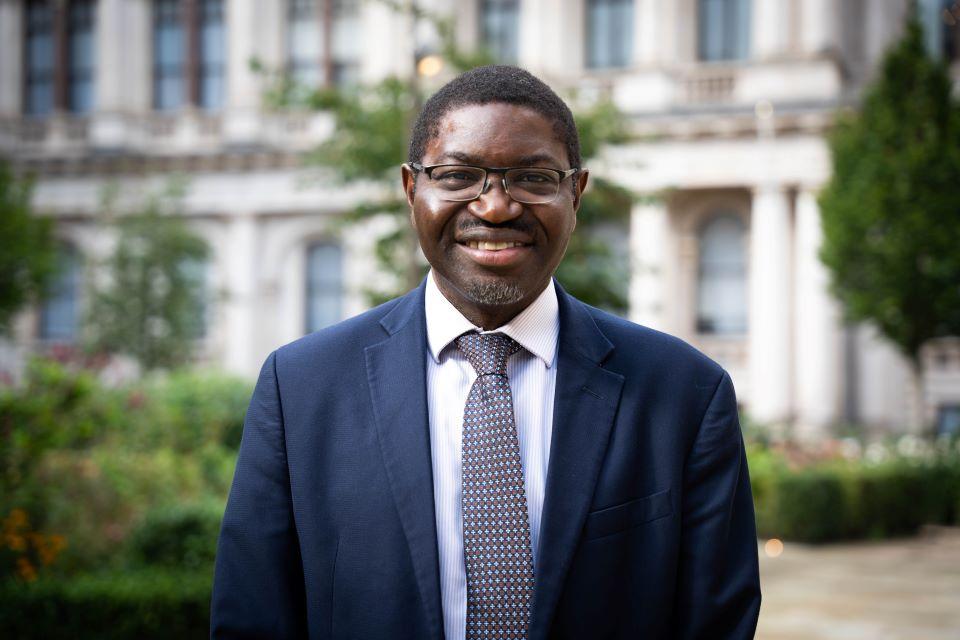
Nigerian-born international law scholar, Prof. Dapo Akande, has secured election as a judge of the International Court of Justice (ICJ), the United Nations’ principal judicial organ.
Akande was elected on Tuesday during concurrent voting by the UN General Assembly and Security Council at UN Headquarters, New York.


He contested as the United Kingdom’s candidate, having been nominated by its national group and supported by the British Government.
The UK Foreign, Commonwealth and Development Office confirmed his election, describing it as an important development for international justice.
“A new UK judge, Prof. Dapo Akande, has today been elected as a judge to the International Court of Justice (ICJ),” the department stated.
Akande was among four candidates who secured the required majorities in both UN organs during the first round of voting.
He reportedly received 11 votes in the 15-member Security Council, exceeding the eight votes required for election.
Nigeria’s Permanent Representative to the UN, Amb. Jimoh Ibrahim, congratulated President Bola Tinubu on Akande’s emergence.
Ibrahim described the development as another significant achievement for Nigeria’s international standing.
In a statement issued in New York, Ibrahim said securing Security Council membership remained Nigeria’s major outstanding ambition within the UN system.
He maintained that Akande’s election reinforced Nigeria’s growing diplomatic and professional influence, particularly in international law and justice.
However, ICJ judges exercise independent judicial responsibilities and do not represent their countries’ governments.
Akande will begin his nine-year tenure on Feb. 6, 2027, joining the 15-member court headquartered in The Hague, Netherlands.
He is the Chichele Professor of Public International Law at the University of Oxford, a Fellow of All Souls College and an International Law Commission member.
Akande obtained his law degree from the then University of Ife, now Obafemi Awolowo University, in 1992 and qualified as a Nigerian barrister and solicitor in 1993.
His international career includes advising governments and organisations on international law and participating in proceedings before international courts and tribunals.
The UK Government campaigned extensively for his election, with his candidature attracting 43 nominations from national groups across UN regions.
During the General Assembly’s Oct. 29 debate, British Justice Secretary, Alex Norris, praised Akande’s professional qualifications and independence.
“He would make a formidable contribution to its work,” Norris said while presenting Britain’s case for his election. (NAN)

