

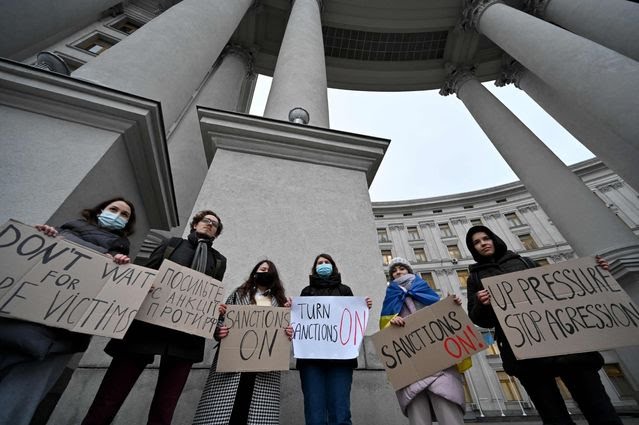
Russia’s assault on Ukraine triggered a surge of calls for Western allies to completely sever Russia from the global financial system by disconnecting it from the so-called Swift global payment system. Fear in places like the U.S. and Germany of potential collateral damage have kept it off the table so far, but as the invasion of Ukraine drags on, some hold outs are reconsidering. Germany and Italy, recently opposed to the move, are now open to it.
What is Swift?
The Society for Worldwide Interbank Financial Telecommunication, or Swift, is the financial-messaging infrastructure that links the world’s banks. The Belgium-based system is run by its member banks and handles millions of daily payment instructions across more than 200 countries and territories and 11,000 financial institutions. Iran and North Korea are cut off from it.


Why is Swift important for countries, including Russia?
Cross-border financing is critical to every part of the economy, including trade, foreign investment, remittances and the central bank’s management of the economy. Disconnecting a country, in this case Russia, from Swift would hit all of that.
Who is advocating for such a move?
U.K. Prime Minister Boris Johnson has lobbied other Group of Seven members to flip the switch. Other proponents include countries along the European Union’s border with Russia and some members of Congress, including California Democratic Rep. Adam Schiff, chairman of the House Intelligence Committee. The move, they argue, would help cripple Russia’s economy in a way that more targeted sanctions can’t.
Why are other countries resisting it?
Critics say there could be economic blowback, not just in Europe, which has deep trade ties and relies heavily on Russia’s natural gas exports, but also the rest of the world. Some former U.S. officials say the move could severely hurt Russia’s economy, but also harm Western business interests such as the major oil companies. President Biden, while ruling it out for now, said the option isn’t off the table completely.
At an estimated $1.7 trillion last year, Russia’s gross domestic product makes it the 12th largest economy in the world. Even if the global economy wasn’t hobbled by a three-year pandemic, rising inflation, supply chain disruptions and escalating East-West political tensions, losing 2% of global GDP and one of the world’s top oil exporters would inflict severe damage to it.
Additionally, using Swift as a weapon could erode the dollar-dominated global financial system, including by fostering alternatives to Swift being developed by Russia and the world’s second largest economy, China. That could undermine Western power, especially the diplomatic leverage that sanctions offer.
What have Western nations done instead?
Besides halting a new natural gas pipeline and hurting Russia’s ability to raise debt, Western sanctions so far have blacklisted many of Russia’s biggest banks, affecting the majority of the country’s banking sectors assets. Those sanctions ban transactions with the targeted institutions, cutting off their access to U.S. dollars and financing.
This article may be updated.
Write to Patricia Kowsmann at [email protected] and Ian Talley at [email protected]

