
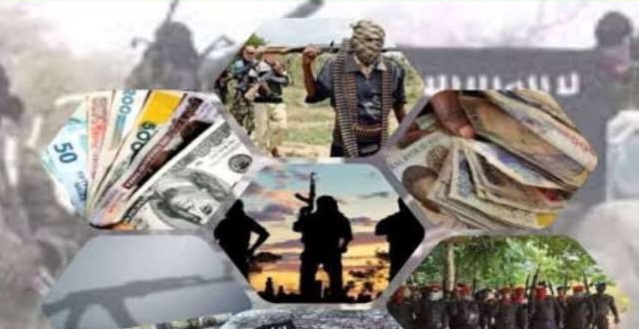
On September 8, 2026, the Central Bank of Nigeria (CBN) issued a terse but important press release. The headline “CBN Strengthens Supervisory Focus on Terrorism Financing Risk” sounds simple, but many Nigerians may have missed the fine details.
The Economic and Financial Crimes Commission is already investigating some personalities over alleged terrorism financing.


What the apex bank, which has a mandate to promote and regulate a sound, stable, and efficient financial system as part of its responsibilities, is saying in simple terms is that it has made terrorism financing supervision one of its current supervisory priorities. This means CBN examiners will now be paying extra attention to how banks and other financial institutions detect, block, and report money that could be used to fund terrorism.
Some of the questions many will want to ask are: Do Nigerian banks have systems capable of identifying customers and transactions that pose a terrorism financing risk? Are suspicious transfers being flagged in real time? Are banks blocking accounts of people and groups on terrorism watchlists? Are banks working with the Nigerian Financial Intelligence Unit (NFIU) in consequential terms? And why now?
The CBN didn’t cite a specific incident to suggest any recent lapse. But the move is part of Nigeria’s wider push to protect the financial system from “abuse by illicit actors” and the apex bank has a very important role to play in this stead. The bank also informed that “further supervisory engagement will be undertaken as appropriate” meaning more guidelines, sanctions, or audits may follow in the coming months.
Globally, terrorism financing is a top concern for the Financial Action Task Force (FATF), which monitors how countries fight money laundering and terrorism financing. Nigeria has been under pressure to strengthen controls and show results because terrorists and other criminal non-state actors are daily devising means to escape the watchful eyes of authorities across the globe in general, and target countries in particular.
By making terrorism financing monitoring a priority, the CBN is signaling to both local banks and international partners that it is serious about cutting off money to terrorist groups, bandits, and other criminal networks.
For the banks, the CBN made it clear that it will use a “risk-based supervisory approach.” This will automatically translate to CBN teams visiting banks and financial institutions to inspect records and systems, and also reviewing data and reports submitted by banks remotely. The goal is to ensure effective controls controls with regards to Anti-Money Laundering (AML), Combating the Financing of Terrorism (CFT), Counter-Proliferation Financing (CPF), and stopping money for weapons of mass destruction
What does this mean for you?
For most Nigerians, nothing changes in their day-to-day deal with banks. But some, especially new entrants, may notice tighter Know Your Customer (KYC) practices as banks may now ask more questions when opening accounts or for large transactions.
Transfers that look unusual could be flagged or delayed for review. There will also be more thorough sanctions screening, particularly where a customer’s name matches someone on a sanctions list, which can lead to temporary restrictions of accounts until cleared
This will not be limited to big financial institutions. Businesses, fintechs, and microfinance banks will also face stricter checks during CBN audits, because the bigger picture is to make sure Nigeria plays its expected role, with regards to domestic and international cooperation on financial integrity. Cutting terrorism financing is linked to the fight against banditry, kidnapping, and insurgency, because money is what keeps those operations running.
CBN not introducing new laws
With all these developments, the CBN is not introducing new laws. It is telling the banks thay they are being watched more closely with regards to terrorism financing. The banks and other financial institutions must therefore tighten their controls, or face consequences.
For Nigeria, it’s about protecting the financial system and showing the world that the country is closing loopholes that criminals can exploit to further destabilize the globe.

