
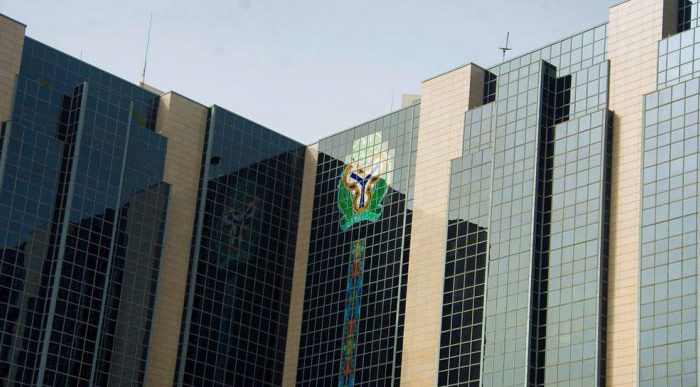
The Central Bank of Nigeria (CBN) recently opened applications for the second cohort of its Regulatory Sandbox Programme, with dedicated tracks for Virtual Asset Service Providers, VASPs, and Data-Enabled Financial Services. This is certainly a major pointer with regards to how Nigeria is working to shape the future of finance.
A regulatory sandbox is basically a “safe testing ground”. It allows financial institutions, particularly fintechs and startups, to test new products, services, and business models under the supervision of the regulator, with relaxed rules for a limited time, before they are rolled out to the full market.


By adding VASPs and data-driven finance as specific tracks, the CBN is directly responding to where innovation, risk, and opportunity are converging right now in Nigeria. There are key benefits not just for the system, but for innovators and fintechs as well.
As experts have noted, there is now a legal clarity and reduced regulatory uncertainty. For years, VASPs like crypto exchanges, wallet providers, and tokenization platforms have operated in a gray area in Nigeria. Banks were restricted from servicing them, and the rules were unclear. A dedicated VASP track will therefore give these companies a formal pathway to engage with the CBN, test their models, and understand what compliance will look like. That removes the fear of sudden enforcement and allows founders to build with confidence.
For data-enabled financial services companies — those using alternative data, AI, open banking APIs, and credit scoring — the sandbox provides clarity on data privacy, consent, and how financial details can be legally used and shared under CBN and NDPA guidelines.
There will also be faster time-to-market with supervised testing. Before now, getting full CBN approval can take years. This will now change as, in a sandbox, approved firms can launch a pilot to real customers under regulatory supervision. This means a crypto remittance app or an AI lending platform can prove product-market fit in 6-12 months instead of waiting indefinitely. It reduces the cost and time of compliance.
If you are a player in the sector, you will have access to regulatory guidance and mentorship, not just getting a license to test. You will get direct engagement with CBN policy teams, risk, and payments departments. This helps startups design products that are compliant by default, rather than building first and retrofitting compliance later. For many Nigerian founders, this is the first time they can co-create rules with the regulator.
Virtual companies and investors are risk-averse when regulation is unclear. A CBN sandbox admission is a strong signal. It tells investors: “This company is vetted and operating under regulatory supervision.” We saw this with Cohort 1 fintechs, many of whom raised follow-on funding after sandbox participation. For VASPs, this could unlock foreign investment that has been on hold.
For consumers and the Nigerian public, there are equally clear benefits. Millions of Nigerians already use crypto for remittances, savings against inflation, and payments. But most use offshore exchanges with no local recourse. By bringing VASPs into a regulated sandbox, the CBN creates a path for locally licensed, supervised providers. That means better KYC, fraud protection, dispute resolution, and consumer education. Nigerians get the benefits of digital assets without being exposed to unregulated platforms.
Data-enabled financial services are what make lending, insurance, and payments cheaper. So lending apps that use telco data and transaction history to give credit to people with no credit bureau score. Or health insurers that use wearable data to price premiums. The sandbox allows these models to be tested with real data, with safeguards. The end result is financial products tailored to Nigerians who are currently excluded.
Then you look at the area of financial inclusion, which is one thing the CBN is really serious about. With over 26% of Nigerian adults still financially excluded, according to Enhancing Financial Innovation and Access (EFInA), data-driven models can reach traders, gig workers, and rural users who have no traditional bank statements. VASPs can also serve the diaspora with low-cost remittances. The sandbox lets these inclusion-focused models prove they work before scaling nationwide.
When you also look at the Nigerian financial system and economy in light of CBN’s financial stability mandate, the benefits are enormous. A sandbox lets the bank observe risks in real time: liquidity risk in stablecoins, market manipulation in crypto, data breaches in open finance. If something fails in the sandbox, it’s contained. If it succeeds, it’s scaled with rules already written. This is far better than banning innovation and watching it happen underground.
Kenya, South Africa, and Mauritius have moved early on crypto and fintech regulation. Nigeria risks losing talent and capital if it continues to lag. By launching a VASP track, Nigeria signals to global exchanges, Web3 developers, and blockchain companies that it is open for business — but on its own terms. This can attract companies to domicile in Nigeria, pay taxes here, and hire Nigerian developers.
When data-enabled firms test in the sandbox, the CBN gets anonymized insights into how Nigerians borrow, spend, and save. That data helps design better monetary policy, fraud detection systems, and financial literacy programs. It moves policy from assumptions to evidence.
A regulated VASP and data-finance sector needs compliance officers, blockchain developers, data scientists, and cybersecurity experts. As companies scale out of the sandbox, they hire locally. It also forces universities and training centers to build curricula around these skills. Banks have been cut off from crypto. The sandbox creates a supervised way for banks to partner with VASPs for custody, settlement, and compliance. Similarly, banks can partner with data companies to improve credit scoring and fraud detection. Cohort 1 showed that banks and fintechs collaborate better when the regulator sets the rules.
Though most Nigerian banks run on old core banking systems, data-enabled services will force them to open APIs and adopt real-time data. The sandbox gives them a low-risk way to test these integrations before committing billions to system upgrades. And instead of reacting to the next FTX collapse or data breach, the CBN can watch risks emerge in the sandbox. They can test capital requirements for VASPs, stress-test stablecoins, and set cybersecurity standards for data firms before problems hit the mainstream.
Bringing VASPs into a regulated framework makes it easier for Nigeria Revenue Service (NRS) to track transactions and collect taxes. It also reduces capital flight through informal crypto channels.
By running a sandbox, Nigeria aligns with global best practice and avoids being grey-listed. It also gives Nigeria a seat at the table when global crypto rules are written.
So the CBN’s Cohort 2 sandbox is not just about “approving crypto.” It’s about building a controlled, innovative, and inclusive financial system. For innovators, it means clarity, speed, and funding. For consumers, it means safer crypto and cheaper credit.
For the economy, it means jobs, tax revenue, and global competitiveness. For the regulator, it means data, control, and stability.
By choosing VASPs and data-enabled finance as the focus, the CBN is targeting the two biggest forces shaping money in the next decade: digital assets and data. If executed well, this sandbox could be the foundation for Nigeria’s next wave of unicorns, and for a financial system that actually works for 200+ million Nigerians.
- Nasir is based in Abuja

