
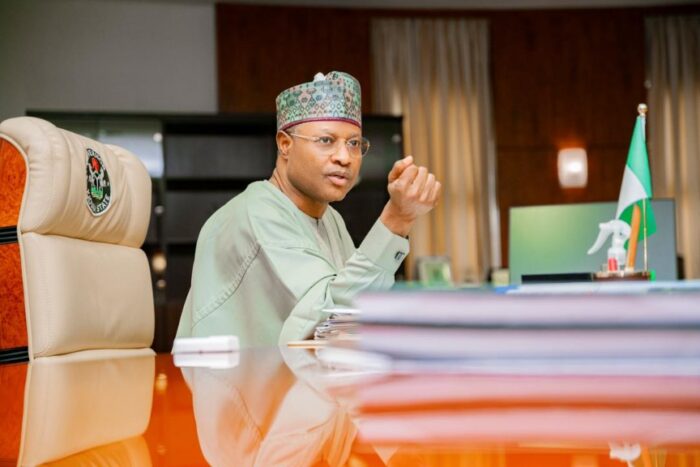
Governor Uba Sani has, from the very beginning, largely been viewed through a political lens—often at the expense of a fair and dispassionate assessment of the governance he is pursuing. We judge him not by the work he does, but by a prior political event far removed from the everyday business of governing. In the process, governance and politics became indistinguishable, and attention drifted away from the everyday work of government. We judged without knowing, and dismissed without examining.
This piece is therefore envisioned as much a genuine call for feedback as it is a factual and extensive expository exercise on the work being done by Governor Uba Sani in Kaduna State. It seeks to provide a counter-narrative, grounded in data, to the prevailing and largely politically motivated assessments of the Uba Sani administration, for the benefit of those who may genuinely be unaware of some of the major strides recorded by the government. It does not seek to engage those who have predeterminately made up their minds to see no good in the administration’s methods of public policy.

The foremost factor that defines the social contract is the responsibility of government to protect the lives and property of its citizens. By broad public consensus, citizens of Kaduna State—long victims of banditry, kidnapping, and cycles of ethno-religious crises—placed this responsibility at the top of their expectations of the new government. Consistent with the principal-agent relationship between citizens and their government, Governor Uba Sani therefore made security—identified by the principal (the citizens) as a priority—the foremost priority of the agent, his administration.
This commitment has been operationalized through the implementation of a structured and multidimensional security framework known as the Kaduna Peace Model. This integrated approach to tackling insecurity places justice, inclusion, intelligence, community consensus, early warning and response mechanisms, and intergovernmental cooperation at its core. The model has garnered both national acclaim and international validation. Kaduna’s foremost partner in this effort, the Office of the National Security Adviser (ONSA), has encouraged the domestication of this largely successful model in other states confronting similar challenges. Its multidimensional success has also attracted international attention, reflected in the review of travel advisories for the state by several foreign governments—most notably the United Kingdom, which lifted prior restrictions and moved Kaduna from the red to the amber category.
The model, which goes beyond tackling banditry to focus on ensuring a sustainable and peaceful environment in Kaduna State, has left clear imprints on the renewed peaceful coexistence among the state’s diverse ethnic and religious groups. Since 2023, no violent conflict has been recorded in the state, and work continues to reduce all forms of crime to their minimum level. The Governor has demonstrated a strong commitment to sustaining these gains through the continuous institutionalization of justice and inclusion across all spheres of public policy implementation.
One such significant sphere that has benefited from this approach is infrastructure development. The philosophy of the Uba Sani administration, as I understand it—particularly in this area—is one of deliberate recalibration: restoring balance, correcting long-standing disparities, and laying a durable foundation for inclusive growth across Kaduna State. At the onset of this administration, it became evident that nearly half of Kaduna’s Local Government Areas had received little to no meaningful infrastructure investment for over a decade. As the Governor himself has noted, in several largely rural LGAs, not a single kilometre of road had been constructed in more than twelve years. This stark imbalance—characterised by accelerated urban expansion on one hand and prolonged rural stagnation on the other—necessitated a decisive shift in development priorities.
To address this, the administration adopted a recalibrated and balanced infrastructure strategy that deliberately targets both ends of the state’s socioeconomic spectrum. This informed a strategic rural transformation drive anchored on connectivity, productivity, and access. Under Phase I, the government earmarked 85 roads, including bridges, covering a total of 785 kilometres, with 66 already completed—linking previously isolated agrarian communities to one another and to markets. Phase II will deepen this effort, adding over 50 additional roads spanning 550 kilometres to further strengthen Kaduna’s rural mobility backbone, bringing the total to about 140 roads covering more than 1,335 kilometres.
This renewed focus on rural infrastructure has not come at the expense of urban development. Urban investments have continued robustly. In response to Kaduna’s rapidly growing transportation demands, for example, the administration deployed 100 subsidised CNG buses, which moved more than 1.4 million passengers between July and December 2025, saving citizens an estimated ₦1.5 billion in transportation costs. It is also developing a 24-kilometre Bus Rapid Transit (BRT) corridor from Rigachikun to Sabon Tasha, to be serviced by 120 CNG buses.
Complementing this is the development of modern transport terminals to reorganise urban mobility. In March, Governor Uba Sani performed the groundbreaking of a modern interstate bus terminal in Kakuri, designed to consolidate multiple informal motor parks along the southern corridor into a single regulated hub. Now about 75% completed, the project is expected to improve safety, strengthen regulatory oversight, boost internally generated revenue, and create jobs.
Additional projects include the relocation of the Kawo Motor Park to a new Sobawa Motor Park to ease congestion, the construction of a world-class motor park at Millennium City along the Eastern Bypass, and the upgrading and digitalisation of trailer parks at Tafa and Maraban Jos, each designed to accommodate about 500 trucks. These interventions aim to improve logistics efficiency, reduce traffic disruptions caused by roadside truck parking, and create a safer and more organised transport system.
Further reinforcing Kaduna’s evolution as a modern city, the administration is advancing an ambitious 44-kilometre Light Rail Transit (LRT) network, with corridors linking Rigachikun to Sabon Tasha and Rigasa to Millennium City. This places Kaduna as the second city in Nigeria to operate both BRT and LRT systems, marking a decisive leap in urban mobility and climate-smart transport planning.
A complementary element of the administration’s urban development effort is environmental management. In January 2026, Governor Uba Sani launched Operation TSAPTA, a coordinated sanitation initiative designed to address the pressures of rapid urbanisation and population growth across Kaduna State. Implemented in partnership with the 23 local government councils and relevant state ministries, the programme is deploying modern waste management infrastructure while strengthening public health and environmental governance. Beyond sanitation, the initiative also advances economic inclusion, with over 5,000 women and young people already engaged and another 7,000 expected to be recruited, linking environmental stewardship with job creation and sustainable urban management.
Having restored a measure of balance between rural and urban investment, the government unveiled Project 255—a bold, community-led development model that allocates ₦100 million to each of Kaduna State’s 255 wards—as part of its programmes for the year 2026. This initiative establishes a permanent development floor, ensuring that no community—rural or urban, central or remote—will again be relegated to the margins or subjected to cycles of abandonment.
Housing has also remained a priority, with the government leveraging strategic partnerships with international and federal institutions to reduce the state’s housing deficit. Several projects illustrate this effort across different housing needs, including the Qatar Sannabil Project for victims of banditry and the Family Homes Funds (FHF) Social Housing Programme targeted at low-income households.
In addition, the government has unlocked large-scale development corridors through partnerships with local developers, such as the Nuru Suraj Ungwan Dosa New Extension and Urban Shelter’s Millennium City project. This renewed commitment to housing development has also attracted federal agencies—including the Nigerian Air Force, Nigeria Customs Service, NDLEA, and the Federal Housing Authority—which are currently investing in mass housing projects across Kaduna State.
Equally significant is the administration’s intervention in the water sector. Governor Uba Sani declared a state of emergency in Kaduna State’s water sector in 2023 after it became evident that the system had suffered severe infrastructure and service delivery decline. At the outset of the administration, several treatment plants were dormant, distribution networks had been severely damaged by past urban renewal projects, and overall water production had dropped to barely eight per cent of installed capacity. In response, the government began an extensive rehabilitation programme, including ₦5 billion spent on replacing pipes destroyed by vandalism and urban renewal works in Zaria and Kafanchan, as well as an ongoing ₦10 billion investment in the replacement of priority pipelines in Kaduna. The administration has also invested ₦1.4 billion in high-quality water purification chemicals and cleared ₦1.3 billion in electricity debts to ensure uninterrupted operation of pumping facilities.
Alongside infrastructure upgrades, the government prioritised the welfare and capacity of workers in the sector, recognising them as central to the success of the reforms. Salary arrears of over ₦900 million owed to staff of the Kaduna State Water Corporation were cleared, and the workforce has been fully integrated into the reform agenda. To further support staff welfare, the Governor approved the allocation of land for a mass housing project in Millennium City for water sector professionals. He also emphasised the importance of long-term sustainability through human capital development, announcing the allocation of land for branches of the National Water Resources Institute in Zaria and Kachia to bridge critical training gaps.
These interventions form part of a broader ₦93 billion four-year sector investment plan aimed at restoring reliable water supply across the state. Progress is already visible, with the rehabilitation of the Malali Water Works significantly improving water supply within Kaduna metropolis. Further improvements are expected once the Makera Water Treatment Plant becomes fully operational. Meanwhile, both the 150 million litres per day and 10 million litres per day Zaria Water Works are fully functional, while major repairs at the Kafanchan Water Treatment Plant have restored supply to the town and surrounding local government areas.
Similarly, while the administration finalises the domestication of the Electricity Act 2023—a landmark reform empowering states to regulate, generate, and distribute electricity within their jurisdictions—the Kaduna State Government has already commenced major interventions to expand access to reliable power and strengthen economic activity. Governor Uba Sani has emphasised that the central focus of the state’s electrification drive is to stimulate productivity, particularly for small and medium enterprises. This commitment was underscored during the flag-off of phase one of the distribution of 600 transformers and accessories across the 23 local government areas, alongside the deployment of 10,000 solar-powered streetlights.
Since assuming office, the administration has revived several abandoned electricity projects while initiating new ones. Under the previously stalled Indian Exim Bank initiative, solar mini-grid installations have been completed in 190 out of 225 Primary Health Care Centres, delivering 1.35 megawatts of clean energy. The government also restored 32 abandoned solar systems—21 in PHCs and 11 in general hospitals—leading to improved service delivery and measurable reductions in maternal and child mortality.
In addition, the long-abandoned 2×60MVA, 132/33kV substation at the Green Economic Zone in Maraban Jos has been completed, unlocking new industrial opportunities and strengthening Kaduna’s position as a competitive economic hub. Distributed energy projects are also underway across communities such as Chara, Gidan Kundi, Gora, and Hawan Mai Mashi, while the Damau solar model in Kubau, delivering 100 kilowatts, has brought electricity to about 450 households after a decade of darkness.
Across the three senatorial districts, the government has rehabilitated distribution networks and installed transformers to strengthen supply resilience. Key projects include network rehabilitation from Maraban Kubau to Kubau, from Makarfi through Tashan Icce and Tashan Yari, and from Lere to Saminaka and Unguwan Bawa in Zone One, alongside multiple transformer installations in Zaria, Sabon Gari, and Kudan.
In Zone Three, major interventions include the rehabilitation of lines from Kagarko Junction to Manchok, restoration of high- and low-tension networks in Unguwan Magata and Unguwan Doh, and reconstruction of the 69-kilometre Gada-Biyu to Kogun River corridor. Further works have also been completed along the Tafa–Jere–Kagarko high-tension line. To consolidate these efforts, Kaduna State signed a landmark Memorandum of Understanding with the Rural Electrification Agency in October 2025, while advancing several generation projects, including a 1.5-megawatt installation for Kaduna Polytechnic, an eight-megawatt allocation for Ahmadu Bello University, and additional generation initiatives in TRAPCO, Shika, and Makarfi to support urban growth and local manufacturing.
These reforms are anchored on stronger institutions, which the Uba Sani administration continues to build on the principles of fiscal discipline, transparency, accountability, and sustainability. At the same time, the administration has prioritised the welfare of public servants to strengthen the machinery of government. Governor Uba Sani recently approved a 70 per cent salary increase for staff of state-owned tertiary institutions, building on earlier reforms such as the implementation of CONHESS and CONPCASS for health workers, the adoption of CONPCAS and CONTEDISS for tertiary institutions, and the approval of a 65-year retirement age (or 40 years of service) for academic and non-academic staff.
The administration has also implemented the new national minimum wage and its consequential adjustments for local government workers, including those under SUBEB and the Primary Healthcare Board, effective October 2025. In addition, the administration has cleared over ₦13.5 billion of the more than ₦24 billion pension backlog inherited, while maintaining the timely payment of salaries—not missing a single month.
These institutional and public service reforms are beginning to reflect in independent assessments of the state’s performance. In recent months, Kaduna State ranked 1st in the 2025 Transparency and Integrity Index by the Centre for Fiscal Transparency and Public Integrity (retaining its position from 2024), 3rd nationally in the 2025 State Performance Index by Phillips Consulting (rising from 12th in 2024), and 3rd in the 2025 Subnational Climate Governance Ranking by the Society for Planet and Prosperity Nigeria (rising from 16th in 2024). These, among many others, represent efforts undertaken under the “SUS” component of the SUSTAIN Agenda—Strengthening Institutions, Upgrade of Infrastructure, and Safety and Security.
Taken together, the foregoing examples do not exhaust the scope of reforms underway. They merely illustrate the broad direction of governance under the current administration.
In the spirit of the opening reflection of this piece, these facts are not presented as a claim of perfection, but as material for a fairer assessment of governance. They invite citizens to look beyond the political noise that has often shaped early perceptions of the administration and to examine the record of governance with greater objectivity. The next episode of this series will focus on the “TAIN” component of the SUSTAIN Agenda—Trade and Investment, Agriculture, Investment in Human Capital, and Nurturing Citizen Engagement—continuing the effort to document and open the government’s work to informed scrutiny. Governance deserves to be examined on its merits, and accountability is strongest when it is grounded in facts rather than assumptions.
- Abdulhaleem Ishaq Ringim is the Special Assistant to the Governor of Kaduna State on Economic Matters.

