
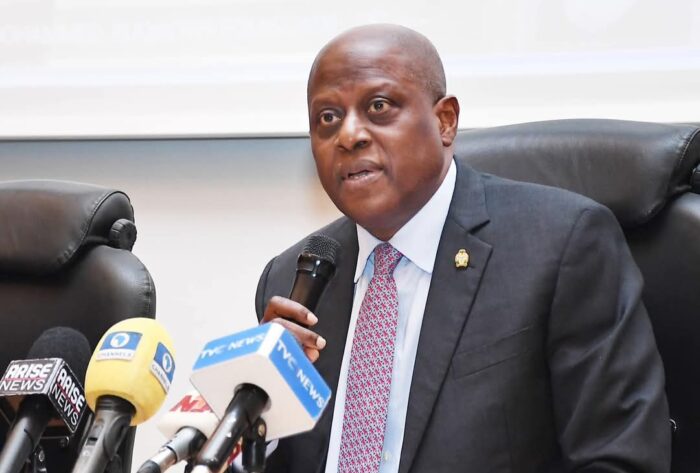
The Centre for the Promotion of Private Enterprise (CPPE) says economic reforms implemented by the Central Bank of Nigeria (CBN) deserve commendation.
Dr Muda Yusuf, Chief Executive Officer of CPPE, made this known in a statement on Sunday in Lagos, titled “Two Years of Yemi Cardoso as CBN Governor: Achievements and Emerging Concerns”.


Yusuf noted that within two years, the comprehensive transformation agenda had been geared toward restoring confidence.
He also said that the reforms had helped in strengthening governance, and repositioning the financial system to support inclusive and sustainable economic growth.
According to him, CBN Governor, Olayemi Cardoso, under his leadership has significantly transformed Nigeria’s financial system, delivering gains in transparency, credibility, and stability.
“The next phase of reform must focus on achieving a more balanced policy stance that supports growth while preserving macroeconomic stability.
“Addressing structural financing gaps and sustaining governance reforms will be critical for unlocking the financial sector’s full potential as a driver of inclusive economic development,” Yusuf said.
He examined the achievements, challenges and strategic priorities for the CBN moving forward.
He explained that Nigeria’s financial system had historically faced challenges, including foreign exchange market distortions, weak corporate governance, excessive monetary financing, and limited access to affordable credit.
“These issues contributed to macroeconomic instability, inflationary pressures, and suboptimal economic performance.
“The Cardoso-led CBN has sought to address these problems through bold reforms, focusing on transparency, stability, and credibility,” he said.
The CPPE boss highlighted Cardoso’s interventions in foreign exchange reforms, which introduced transparency and credibility in the FX market to improve liquidity and market efficiency.
He added that the apex bank made progress in improving governance and autonomy, financial system stability, banking sector resilience, inflation and macroeconomic stability, among other achievements.
He, however, warned against emerging concerns on aggressive monetary tightening, adding that, while necessary to combat inflation, the current stance was highly restrictive.
Yusuf said Monetary Policy Rate (MPR) at 27.5 per cent and Cash Reserve Ratio (CRR) at 50 per cent had pushed up the cost of funds.
He said elevated lending rates had suppressed private sector borrowing, particularly in manufacturing, SMEs, and other productive sectors.
According to him, there is growing risk that private investment can be displaced by high-yield government instruments.
He urged the CBN boss to balance price stability with growth, address structural financing gaps through targeted interventions, sustain governance and transparency gains and enhance policy communication. (NAN)

