
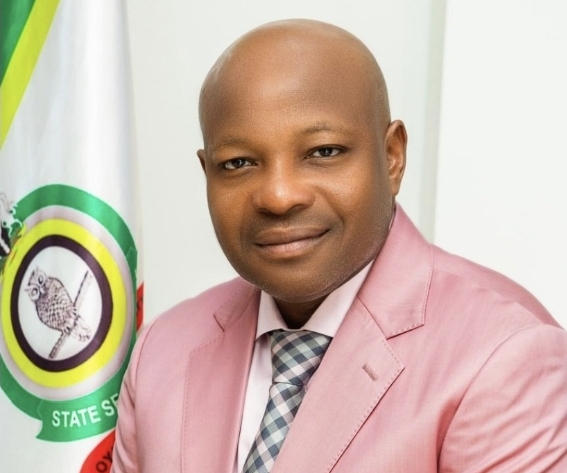
As a human rights activist and an advocate for the rule of law, I wish to for the second time, commend the Director-General of the Department of State Services (DSS), Oluwatosin Adeola Ajayi, for what I consider a remarkable demonstration of leadership, professionalism and commitment to justice.
The recent decision concerning Mustapha Marwana, a carpenter from Katsina who was arrested in connection with investigations into alleged terrorist activities, deserves particular attention.


According to reports, a thorough investigation conducted by a DSS investigation panel found no evidence linking Mustapha to membership, financing, logistics or operational activities of the Ansaru terrorist organisation. Following the outcome of the investigation, the Director-General ordered his immediate release and approved an initial ₦3 million compensation payment to assist him in addressing his immediate needs and rebuilding his livelihood.
Beyond the monetary value of the compensation, the significance of this decision lies in the principle it represents.
Security agencies have an extremely difficult responsibility. They must protect citizens, prevent terrorism and investigate serious crimes. In carrying out that responsibility, however, the rule of law requires that every person be treated with dignity and that individuals who are found, after proper investigation, not to have committed an offence should not continue to suffer the consequences of an allegation that has not been established.
An arrest may sometimes be necessary for the purpose of investigation. But where an investigation ultimately establishes that a person has no connection with the alleged crime, the State must also be willing to acknowledge the consequences suffered by that person and take reasonable steps to mitigate them.
That is why this intervention is important.
The decision sends a powerful message that security and human rights are not mutually exclusive. Rather, effective security is strengthened when it operates within the framework of justice, accountability and respect for human dignity.
It also demonstrates that professionalism within a security institution is not merely about apprehending suspects. It is equally about conducting impartial investigations, recognising when evidence does not support an allegation, releasing innocent persons without unnecessary delay, and taking responsibility for the human consequences of investigative actions.
I therefore commend the DSS Director-General for this exemplary intervention and for demonstrating a leadership approach that gives citizens renewed confidence in our security institutions.
This is not a criticism of the legitimate work of security agencies. On the contrary, it is a recognition that the credibility of any security institution is measured not only by how effectively it confronts criminals, but also by how fairly it treats those who are ultimately found to be innocent.
The compensation approved for Mustapha Marwana should therefore be viewed beyond the amount involved. It represents compassion, institutional responsibility and an acknowledgment that a person’s liberty, dignity, livelihood and reputation matter.
As a human rights activist, I welcome this development because it gives us hope that our security institutions can continue to evolve into institutions where security, professionalism, accountability and the rule of law work together.
I sincerely commend the Director-General, Oluwatosin Adeola Ajayi, for this commendable act of leadership.
We need more institutions that are strong enough to fight insecurity, but equally courageous enough to correct their mistakes, protect innocent citizens and uphold the dignity of every Nigerian.
This is the Nigeria we should continue to build: a nation where security protects liberty, justice guides power, and the rule of law remains supreme.
- Dantani is a lawyer and human rights activist

