
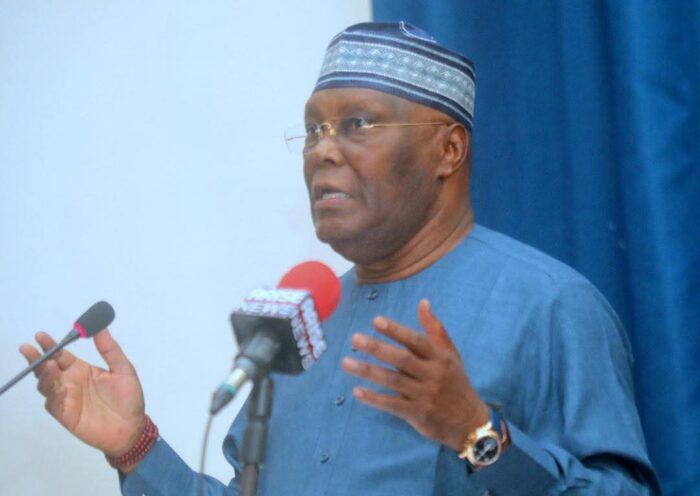
The Presidential candidate of the African Democratic Congress (ADC) and former Vice President of Nigeria, Atiku Abubakar, said he has been vindicated by the recent report by the United States Department of State highlighting concerns over fiscal transparency in Nigeria, with specific reference to the federal government’s failure to disclose revenues and expenditures.
Atiku, according to a statement by his media office, has consistently called out the Bola Tinubu-led administration for its failure to uphold the basic standards of fiscal transparency, accountability, and disclosure required in a modern democracy.


According to the US report, “the (Tinubu-led) government made its enacted budget and end-of-year report widely and easily accessible to the public, including online, but did not publish its executive budget proposal within a reasonable period.”
The report noted that “…budget documents did not provide a substantially complete picture of the government’s revenues and expenditures, or break down expenditures to support executive offices in the budget.”
It also aligns with Atiku’s concerns about discrepancies between Nigeria’s approved budget and the actual revenues and expenditures recorded during implementation.
“Actual revenues and expenditures did not reasonably correspond to those in the enacted budget,” the report said.
The report also criticised the Office of the Auditor-General, stating that it did not meet international standards of independence and did not publish substantive reports.
According to the US Department of State, the author of the report, the Tinubu-led government did not meet the minimum requirements for fiscal transparency during the period under review. The report specifically cited the failure to provide timely, detailed, and publicly accessible information on government revenues and expenditures, as well as the absence of credible audit trails.
This is precisely what Atiku Abubakar has been saying for years: that Nigerians are being kept in the dark about how public resources are generated and spent.
Atiku had maintained that without full disclosure of how public funds are earned and spent, Nigeria cannot attract investment, fight corruption, or build public trust.
“Transparency is not a slogan. It is the foundation of good governance,” he had said in one of his several interventions on the issue.
“This report confirms what we have been saying that Nigerians deserve to know where every kobo is coming from and where it is being spent. They are our resources and not the resources of President Bola Tinubu and his family and friends,” Atiku said.
The former Vice President stressed that fiscal transparency is a key benchmark for investors, donor agencies, and credit rating firms, reminding that our economy also relies heavily on foreign investment and multilateral support to fund infrastructure and social programmes.
He reiterated that publishing detailed, timely data on revenue from oil, taxes, and borrowing, and on how that money is spent is critical to restoring confidence amid rising debt and inflation.

