
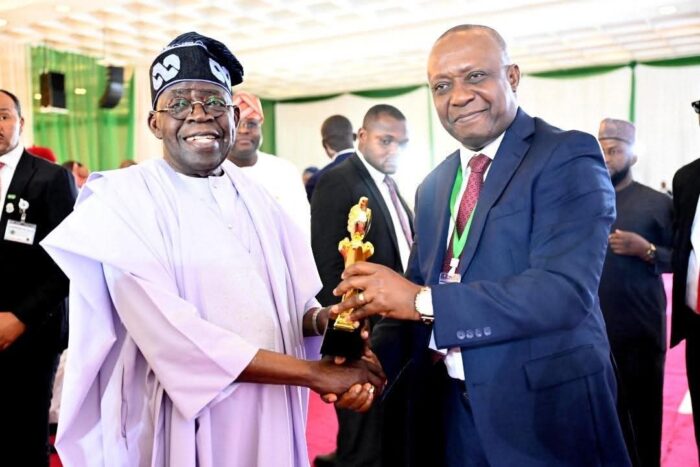
Annually, editors, under the umbrella of Nigeria Guild of Editors (NGE) gather to discuss critical national issues, professional matters and others, as part of the collective effort towards nation-building and societal development.
The 21st All Nigeria Editors Conference (ANEC) 2025 was another of such, held in Abuja with the theme “Democratic Governance and National Cohesion: The Role of Editors”.

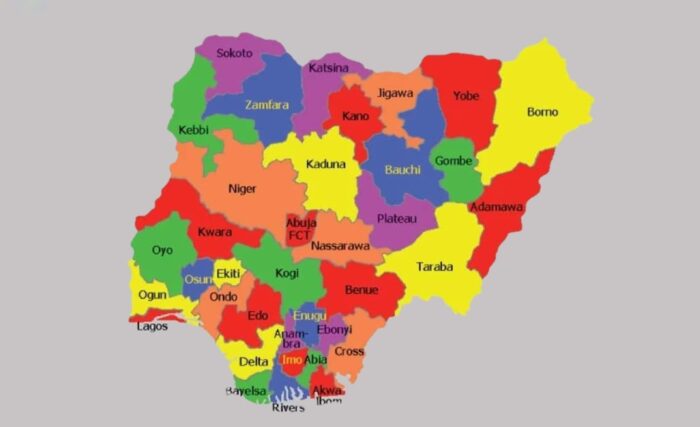
More than 500 editors from print, broadcast and online platforms converged on the Federal Capital Territory from Nov. 11 to Nov. 14 for the event, which had the sub-theme: Electoral Integrity and Trust Deficit: What Nigerians Expect in 2027.
The ANEC opened at the Presidential Villa Banquet Hall, Abuja, on Wednesday and moved to the NAF Conference Centre, Jabi, Abuja, on Thursday.
In the words of NGE President, Mr Eze Anaba, it was yet another forum of the elite professional body of editors for national reflection, dialogue, and professional renewal within the Nigerian media landscape.
This year’s conference, according to him, is a timely opportunity to reflect on and interrogate the role of the media in shaping a stable, just, and united Nigeria.
Anaba said the conference provided such questions as: “How can editors contribute to credible elections, national dialogue, peace-building, and inclusive governance?
“How can they adapt to new technologies and evolving newsroom realities without compromising ethical standards?’’
To him, these were questions that those present needed to ask themselves, among other matters.
He saw President Bola Tinubu’s presence, as Special Guest of Honour, to declare the conference open as signalling his administration’s recognition of the strategic importance of the media in nation-building and in deepening democratic governance.
Anaba would not let the opportunity offered by the President’s presence slip by, without making the best of it.
He highlighted the challenging environment in which the Nigerian media was operating and sought government intervention.
The NGE president said that press freedom remained under threat from economic hardship, insecurity, and some unfavourable laws, calling for reforms to ensure the survival of the media as both a business and a public good.
Anaba outlined key policy recommendations, including corporate tax relief for media houses, VAT exemption on media inputs, tax incentives for advertisers, and access to affordable financing for news organisations.
He proposed the creation of a Media Development Fund to support digital innovation and newsroom transformation, to be managed by an independent board.
Anaba called for the repeal of laws that hindered press freedom and the establishment of a Media Freedom and Safety Charter endorsed by the Presidency, Legislature, and Judiciary.
“We seek state-sanctioned protection of journalists carrying out legitimate work from arbitrary arrests or misuse of cybercrime laws,” he added.
He appealed to the President to recognise journalism as a public good deserving of targeted fiscal and legal support “not for patronage, but to strengthen the foundations of democracy.”
Tinubu listened carefully to the requests, promising that he would go with them in his pocket.
He urged the guild to uphold the highest standards of responsible journalism to strengthen democratic governance and promote national cohesion.
Tinubu described the media as central to the preservation of democracy and national unity.
The President urged editors to use their influence to strengthen public trust and deepen civic responsibility, describing the theme of the conference as timely.
He warned against the dangers of misinformation, especially in the age of social media, stressing that verification, balance and professional judgment must guide editorial decisions.
“Report boldly, but truthfully; critique government policy, but do so with knowledge and fairness.
“Your aim must never be to tear down, but to help build a better society,” he told the editors.
The Minister of Information and National Orientation, Mohammed Idris, urged editors to partner with government in telling the Nigerian story with truth, balance and optimism.
To him, constructive criticism is vital to the nation’s renewal.
Gov. Hope Uzodimma of Imo, who was keynote speaker at the event, said the press, the fourth estate of the realm, was akin to a goldfish that had no hiding place, especially as the 2027 elections approached.
He tasked editors never to abandon objectivity but practice it at the highest level.
According to him, it entails accuracy over speed, verification over vitality and context over click baits, which is a call to rigour.
From the academia to legal luminaries as well as experts in security matters, invited speakers and panellists dissected different topics, proffering solutions to knotty national issues.
“Election Disputes and Judicial Integrity: Navigating the thin line between Law and Politics” and “State of the Nation: Imperative of Economic and Political reforms in challenged nation” came under focus.
“Media, Terrorism and National Security: Addressing the Complexities” and “The Evolving Face of Journalism: Battling Misinformation, AI Disruption and Credibility Gap” were also critically examined.
Prof. Awa Kalu, a Senior Advocate of Nigeria, retired Gen. Lucky Irabor, a former Chief of Defence Staff, and Prof. Abiodun Adeniyi of Baze University gave insightful views on the subjects, which were further x-rayed by selected panellists.
To Irabor, the media remains indispensable in the counter-terrorism efforts in Nigeria.
He said that the increasing and complex nature of terrorism in Nigeria underscored the urgent need for stronger collaboration between the media and security institutions.
Also at the conference, National Chairman of All Progressives Congress (APC), Prof. Nantawe Yilwatda, insisted that the Tinubu-led administration was doing its best to improve the country’s economy and better the lives of Nigerians.
He appreciated media practitioners on how they had been helping the present administration since its coming on board in 2023.
He noted that the constructive criticisms by the media had helped in improving the quality of governance being offered by the administration.
Yilwatda commended the media for being the conscience of the society.
“Criticisms are big tools for improving the quality of governance,” the APC national chairman said.
He stressed the importance of continued partnership between government and the media to enhance good governance and the general well-being of citizens.
For Peter Obi, former governor of Anambra, the role of editors in placing the country where it should rightly be is vital.
Editors, according to him, are not just recorders of history but the conscience of the nation who shape narratives, correct distortions, and remind leaders of the truths they may prefer to forget.
Ex-Minister and former governor of Rivers, Rotimi Amaechi, was also on hand to lend his voice to ways of achieving a better country and the vital role of editors.
After the incisive discussions and engagements on Thursday, it was time to unwind, and more importantly, confer the rank of Fellows on deserving senior editors at a Gala night, held at Chida International Hotel, Utako, later in the day.
Indeed, the gala was a gathering full of fun, laughter, and not without glamour, as editors wined, dined and showcased some dance steps.
The gala saw the induction of new Fellows of the NGE, including former Editor-in-Chief of News Agency of Nigeria (NAN), Mr Ephraims Sheyin.
Other eminent senior journalists inducted as Fellows at the event were Arinze Azu, Casmir Igbokwe, Dr Sulaiman Ya’U Sule and Chief Ken Njoku.
Apart from the Fellows, some editors became members of the NGE.
The new NGE members include Oyetunji Abioye, Editor, Punch; Samson Folarin, Weekend Editor, Punch; Chioma Ugboma, Deputy-Editor-in-Chief, News Agency of Nigeria; and Anthony Nwizi, Director-General, Ebonyi Broadcasting Corporation.
Also inducted as members were Okah- Jonah Ibifuro, Director, News and Current Affairs, Bayelsa Broadcasting Corporation; Sunday Areh, Managing Editor, The Southerner; and Fagbule Temitayo-Francis, Editor, Businessday.
Umoetuk Florence Peter, Director, News and Current Affairs, Akwa Ibom Broadcasting Corporation; Omale Akor, Head of News, Silverbird TV; and Simon Igwe-Iroh, Director News, Ebonyi Broadcasting Corporation; also came on board.
The rest were Lilian Onyegbule, Director -General/Editor-in-Chief, Imo Broadcasting Corporation; Jibrin Baba Ndace, Director-General, Voice of Nigeria; Chinemenma Umeseaka, General Manager, Universal Television Africa and Constance Ikokwu, Director, Daybreak Arise News.
As participants returned home on Friday, the NGE leadership’s expectation at the opening seemed to have been a reality.
Rich discussions, stronger friendships and clearer perspectives with potential to uplift the journalism profession and make the country greater stood out as takeaways from the 21st ANEC at the nation’s capital.
In the words of Uzodimma, history is waiting to critique the role of the media, just like those of the first, second and third estates — Legislature, Executive and Judiciary–on how what they did and failed to do in 2027, and the run-up thereto, helped to make or mar Nigeria.(NANFeatures)

