
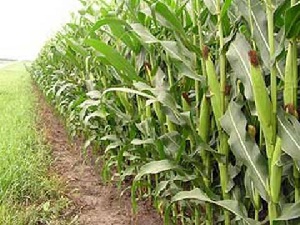
The incalculable damages done to our farming system by President Tinubu’s policies of floating the Naira, subsidy removal, opening the borders and giving licence for massive importation of grains is what caused the total crash of grains’ price. To worsen the matter, and given credence to the insinuations that, Tinubu is deliberately acting to destroy northern economy, is the astronomical rise in farming inputs, especially fertilisers.
Therefore, abandoning grains cultivation for vegetables and other cash crops by Nigerian farmers is the current trend in almost all the ecologies of northern Savanna.
I and my team had recently traversed all the states in the northern Savanna ecologies on site inspections and evaluations and what we observed was that, no single large farm (5ha and above) have been planted with Maize.
This is due to high costs of inputs especially fertiliser and labour costs. For instance, in early June, with the onset of this year’s wet season, the retail price of Granulated Diammonium Phosphate (GADP) was N70,000 per 50kg bag; quality NPK 20:10:10 was N48,500; NPK 15:15:15, N45,000; Urea, N36,500 and Single Super Phosphate (SSP) was N39,500; but as of Saturday, July 19th, 2025, the cost of DAP is N95,000; NPK 20:10:10, N61,000; NPK 15:15:15, N60,000; Urea, N51,000 and SSP, unavailable (apparently hoarded against its anticipated demand which is coming up in August – September).
With this year’s onset of the rainy season, in June this year, the average Costs of Production (CoP) developed from the Economics of Production (EoP) of the two main value chains under discussion, was N665,000 per hectare. But this has dramatically increased to over N1.2m as of 20th of this month, July, 2025, an increase of over 100%!
With these kind of exorbitant inputs costs, coupled with the government-sponsored massive imports of grains, Nigerian farmers cannot make any profitable cultivation of grains, particularly Maize and Rice.
If the trend continues, we may be facing a looming food insecurity hitherto unknown, and which may consequently lead to famine, especially in the north, where a mulidimenaional poverty hold sway.
Nigeria has a substantial domestic demand for maize, estimated at around 16 million tons. While Nigeria is Africa’s largest maize producer and the 14th largest globally, production still falls short of meeting this demand, creating a significant supply gap.
Similarly, Nigeria has a high and growing demand for rice, consuming approximately 7 million metric tons annually. While, local production has been steadily increasing over the years and currently covers almost 60% of this demand, leading to a significant decrease in deficit that is often filled by imports. This gap has persisted for decades, until the immediate past Buhari administration recognised the need to boost domestic rice production to meet the increasing domestic demand.
Rice is a staple food in Nigeria, with consumption levels estimated at almost 7 million metric tons per year, according to KPMG Nigeria.
Despite being the leading rice producer in sub-Saharan Africa, Nigeria’s domestic production falls short of meeting the total demand, necessitating the immediate past government to emphasised on increased domestic production rather than opening the borders to import all sorts of products, including toxic food for local consumption, as done by the present administration.
President Tinubu administration should actively initiate and implement policies and initiatives capable to stimulate private sector involvement, boost local food production, and enhance food security, rather than employing a deliberate attempt at undermining the gains achieved by Nigerian farmers over the years.
The average national domestic demand of over 16m tons of Maize and 7m tonnes of rice cannot be achieved and not many countries in Africa can bridge that gap to meet Nigeria’s domestic demand. Nigeria is a major rice consumer, with a per capita consumption of 32 kg per year, according to documents: bpdpco.gm.gov.ng.
The consequences of closure of several food processing (rice and maize processing mills) industries in the country, due to the current policies of President Tinubu, would only aggravate the poverty level and joblessnes in the north.
Many pundits and industry observers view Tinubu’s policies of massive imports of grains, floating of the Naira, subsidy removal and opening of borders as responsible for the farmers’ plight and calculated attempt to cripple the agricultural industry, which the North dominate.
This weeks’ market survey (18th – 20th July) in major markets in the north put the prices of 100kg of Maize at N33,000 – N37,000 depending on the variety; and that of Paddy rice at N38,000 to N40,000 depending on the quality. None of these commodity can buy a single 50kg bag of fertiliser. This is a significant major set back to Nigeria’s agricultural aspirations, growth and development.
What is apparent is that, Tinubu administration is widely perceived to be deliberately undermining northern farmers to weaponize poverty, so that people would become so miserable that, they can easily be bought with a little handout ahead of 2027 elections.
Indabawa is the National President, Professional Farmers Association of Nigeria (PFAN) [email protected]
21st July, 2025

