
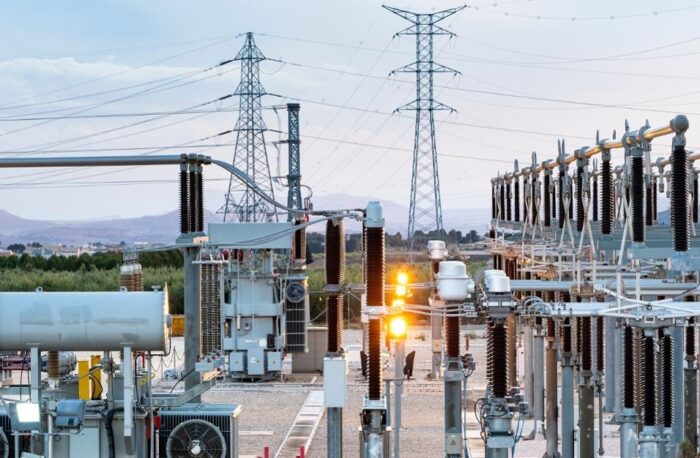
For decades, Nigeria has been called the “Giant of Africa.” The question no one in government wants to answer is why a giant cannot keep the lights on. Nigeria sits on the largest proven oil reserves in Africa, holds the continent’s most populous nation at over 220 million people, and commands the fourth largest GDP on the continent at roughly $252 billion. It possesses vast deposits of solid minerals, a fintech ecosystem that accounts for 28% of all fintech companies on the African continent, and a diaspora that remits billions of dollars annually. If potential were electricity, Nigeria would have been powering half the world. Instead, an immediate former minister is boasting about 6,000 megawatts.
Adebayo Adelabu resigned as Minister of Power on April 22, 2026, citing his ambition to contest the Oyo State governorship election. In his resignation letter, he listed among his achievements that peak generation had increased to over 6,000 megawatts during his tenure, supported by the integration of the Zungeru Hydropower Plant. It was presented as a great crowning legacy. The claim deserves scrutiny, and the numbers deserve context.


To begin with the context. Ghana, Nigeria’s neighbour in West Africa, has a national electricity access rate of 85.9%, with 74% access in rural areas and 94% in urban areas. Kenya, with a 71.4% national electricity access rate including 62.7% in rural areas, leads East Africa. Nigeria, by contrast, recorded an electricity access rate of just 61.2 percent as of 2023, according to the World Bank. This is not a distant or poorer country outperforming Nigeria. Ghana’s GDP stands at approximately $113 billion, less than half of Nigeria’s. Kenya’s is around $141 billion. Ethiopia, which has invested massively in the Grand Ethiopian Renaissance Dam and is already exporting electricity to neighbouring countries, has a GDP of roughly $126 billion. All three are doing more with far less.
Now to examine the 6,000-megawatt, Daily Trust obtained electricity generation data from the Association of Power Generation Companies and the Nigerian Electricity Regulatory Commission, covering quarterly performance from 2023 to 2025 and monthly data from January to March 2026. The data shows that in 2023, peak generation was approximately 5,000 megawatts; in 2024, it reached approximately 5,528 megawatts; in 2025, it ranged between about 5,300 and 5,801 megawatts; and by March 2026, available capacity had declined to approximately 4,089 megawatts. The grid never recorded a verified peak of 6,000 megawatts or higher. Adelabu had in fact set the 6,000-megawatt target publicly on at least three separate occasions, missing each deadline, and later admitted the target was not achieved, attributing the failure to vandalism of key transmission infrastructure.
In February 2026, Nigeria’s national grid produced an average available capacity of 4,384 megawatts, the lowest monthly average since June 2024. For a country with over 220 million people, this means electricity supply remains far below national demand, with the grid delivering only about 32 percent of its theoretical installed capacity of approximately 13,000 megawatts. To put that in sharper comparison: in 2018, 48 sub-Saharan African countries, home to nearly one billion people, produced about the same amount of electricity as Spain, a country of 45 million. Nigeria, the continent’s most resource-rich large economy, is a significant part of that embarrassing equation.
The tragedy here is not just technical. It is a governance failure with compounding human costs. An economy that cannot provide reliable electricity cannot competitively manufacture goods, cannot industrialize at scale, cannot attract the volume of foreign direct investment its endowments warrant, and cannot build the digital infrastructure that would allow it to lead on artificial intelligence, data governance, and the emerging critical minerals economy where Africa’s next great opportunity lies. Countries with a fraction of Nigeria’s mineral wealth and human capital are already debating those frontiers. Nigeria is still campaigning on megawatts.
What a departing minister should be able to say, given Nigeria’s endowments, is not that peak generation touched 6,000 megawatts at some unverified moment. He should be saying that Nigeria now generates reliably above 15,000 megawatts, that rural electrification has crossed 70 percent, and that the country is on a credible trajectory toward the kind of energy sufficiency that unlocks industrial growth. That is the standard Nigeria’s size and resources demand. Anything below it is not an achievement. It is an apology dressed in a press release.
The power sector has received billions of dollars in investment across multiple administrations. The 2013 privatisation exercise, the Presidential Power Initiative, the Electricity Act of 2023, and successive reform promises have produced a sector that still, in 2026, cannot guarantee eight hours of reliable supply to the average Nigerian household. That a minister exits that ministry citing a megawatt figure that fact-checkers have shown was never actually reached, and that even if reached would be unworthy of celebration given Nigeria’s potential, captures the full depth of the problem. The ambition is too small. The accountability is too thin. And the country deserves better from those who are privileged to manage its extraordinary, squandered potential.
- Isah Kamisu Madachi is a policy analyst and development practitioner. He writes via [email protected]

