
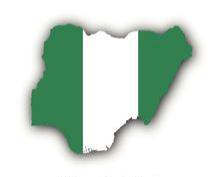
Democracy is widely regarded as the most acceptable system of government in the modern world. It is founded on the principle that the people are the ultimate source of political authority and should have the freedom to choose their leaders through periodic, transparent, and credible elections. In a true democracy, governance is carried out by representatives elected by the people for the purpose of promoting the common good and advancing national development.
The fundamental pillars of democracy are well known. They include free and fair elections, respect for the rule of law, freedom of expression, equality before the law, an independent judiciary, a vibrant multiparty system, protection of fundamental human rights, and a professional civil service that rewards competence and merit. These principles are designed to ensure accountability, justice, and citizen participation in governance.
However, the critical question remains: To what extent does Nigeria embody these democratic ideals?
More than two decades after the return to democratic rule in 1999, many Nigerians continue to express concerns about the quality of governance and the effectiveness of democratic institutions. While democratic structures exist, the substance of democracy often appears weakened by political practices that undermine public confidence. Electoral controversies, political defections driven by personal interests rather than ideology, abuse of power, weak institutions, and widespread corruption continue to challenge the country’s democratic development.
Across different administrations, Nigerians have witnessed recurring concerns over mismanagement of public resources, political patronage, ethnic and religious divisions, insecurity, and inadequate service delivery. These challenges have contributed to widespread poverty, unemployment, declining public trust, and growing frustration among citizens.
One of the most troubling aspects of Nigeria’s political landscape is the persistent crisis of leadership. Since independence in 1960, the nation has struggled to establish a consistent tradition of visionary and transformational leadership. Despite abundant natural resources, a vibrant population, and immense economic potential, Nigeria has often fallen short of achieving its developmental aspirations.
The problem is not necessarily the absence of policies or political programmes. Rather, it is frequently the failure to implement them effectively, coupled with a lack of accountability and continuity. Development plans are often abandoned when governments change, while national interests are sometimes subordinated to personal, ethnic, regional, or partisan considerations.
More than a century after the amalgamation of Northern and Southern Nigeria in 1914, questions of national unity, identity, and inclusion remain subjects of intense debate. The creation of states, constitutional reforms, and various political arrangements have not entirely eliminated ethnic suspicions, regional rivalries, or feelings of marginalization among different groups.
In recent years, agitation over which region should produce the nation’s president has increasingly dominated political discourse. While the quest for inclusiveness and equitable representation is understandable in a diverse society such as Nigeria, democracy ultimately demands that competence, character, vision, and capacity take precedence over geography.
The assumption that citizens automatically benefit when a leader emerges from their region has repeatedly proven inaccurate. Experience has shown that poor leadership affects everyone regardless of ethnicity, religion, or place of origin. Conversely, effective leadership can positively transform the lives of citizens across all regions and social classes.
Examples from established democracies demonstrate that voters often prioritize policy direction, leadership competence, and governance outcomes over regional considerations. The success of a nation depends less on where its leaders come from and more on the quality of decisions they make and the values they uphold.
As Nigeria prepares for future electoral cycles, particularly the 2027 general elections, there is a growing need for a new political culture anchored on integrity, competence, patriotism, and service. The nation requires leaders who possess not only political ambition but also administrative capability, emotional intelligence, and a genuine commitment to public welfare.
Leadership should not be viewed merely as an opportunity to wield power. It should be regarded as a sacred responsibility that demands sacrifice, accountability, and dedication to the common good. Great leaders inspire trust because they place national interests above personal gain. They demonstrate empathy toward the struggles of ordinary citizens and pursue policies that create opportunities for all.
Nigeria needs leaders who understand the realities of unemployment, inflation, insecurity, educational decline, healthcare challenges, and infrastructural deficits. It needs leaders who can bridge divides, unite diverse communities, and inspire confidence in the future. It needs leaders who reject corruption, resist the temptations of power, and uphold the principles of justice and fairness.
The country’s progress will not be determined solely by economic indicators or political slogans. It will depend largely on the character, competence, and vision of those entrusted with public office. Nations rise when leadership is guided by integrity and purpose; they decline when leadership is driven by selfish interests and short-term calculations.
The Nigeria of our dreams is still possible. It is a Nigeria where teachers receive their salaries promptly, where civil servants are motivated and productive, where educational institutions provide quality learning opportunities, where hospitals offer affordable and effective healthcare, and where every citizen has a realistic chance to fulfil his or her potential.
It is a Nigeria where merit is rewarded, justice is upheld, and public institutions serve the people rather than powerful interests. It is a Nigeria where diversity becomes a source of strength rather than division and where government exists not as an instrument of privilege but as a vehicle for national progress.
Achieving such a nation requires more than constitutional provisions or electoral victories. It requires a collective commitment by leaders and citizens alike to uphold the values of honesty, responsibility, patriotism, and service.
As American writer Josiah Gilbert Holland famously observed: “God, give us men. Times like this demand strong minds, great hearts, true faith, and willing hands.”
Indeed, Nigeria’s future depends not merely on the politics we practice, but on the quality of leadership we choose and the values we embrace as a nation.
- Aliyu Umar is a Public Affairs Analyst and can be reached via [email protected]



