

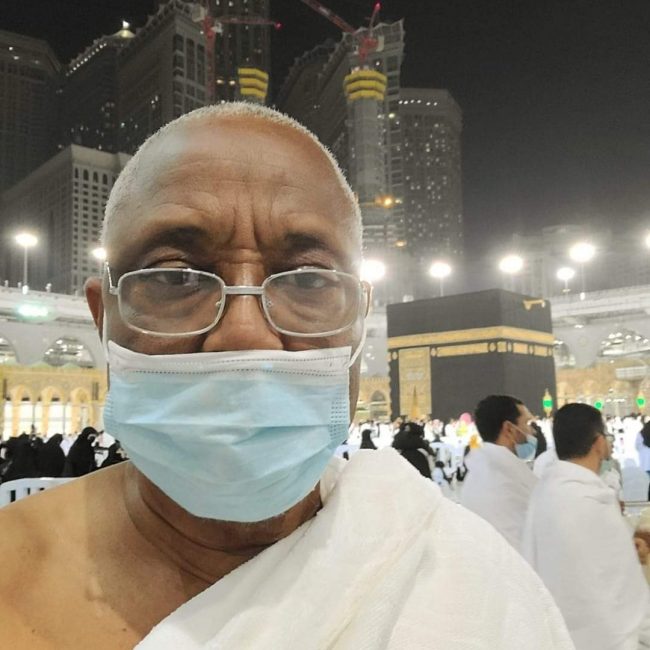
Just as I approached the police officer manning the combination of steel and plastic cone-barricaded Ibrahim Al Khalil street of Jabal Omar stretch leading to some of the five-star hotels in front of the Masjid-Alharam (Grand Ka’aba Mosque) in Makkah, his attention switched to a black hijab-adorned lady who was driving a white company sedan bearing elaborate logo on either side that have both Arabic and English inscription.
She requested to be allowed to drive through to go to one of the hotels where she was supervising a remodelling project that coincidentally happened to be the one I was staying in.


Read Also: Jos prison break and mask of the beast
I bumped into her about an hour later waiting for the elevator. As soon as I recognised her my reporter’s sense kicked in. “Good afternoon, do you speak English?,” I asked in a low-toned voice, maintaining a respectable distance.
It was a big risk talking to a lady unrelated to me in a country that is the mother of Sharia law and practice. Yet, I was confident she would respond kindly and, she did, with a half smile.
I told her I saw her earlier driving a car and wanted to know how it felt. It turns out she spoke good English and said she studied abroad and had a car as a student.
The conversation ended when the elevator door opened and together with a set of five pilgrims in their ihram, entered the car and ascended to our various floors.
The encounter added to my excitement about how the Saudi Crown Prince, Mohammad bin Salman (MBS), is revolutionising his country. I hold contrary view to most of his critics on especially the freedom given to women to drive cars, work in the office and even travel without a mahram for certain age group.
While the Saudi womenfolk are enjoying their new-found freedom, life had dimmed for certain categories of expats and other foreign professionals some of whom were even born in the Hollyland.
Saif (not his real name), the taxi driver that took me to the airport, was born to a family of Pakistanis that had migrated to Makkah nearly seventy years ago. He is in his late thirties and told me he was born in that great city and also have four children of his own, but is currently having difficulty making ends meet.
Priority is now given to Arab indegines and, with the integration of women in the workplace, fewer people like him are now getting jobs. The indigenous women are mostly educated and have been taking up jobs that few years ago were dominated by men.
My long conversation with him about life in Saudi Arabia under MBS started from a simple question of why he charged me SR200 (Saudi Riyals) for a ride from my hotel in Makkah to Jeddah airport, when I paid just SR100 for the same service less than two years ago in December 2019.
Saif said fuel is now too expensive – a liter of petrol is sold at SR2.50 which is equivalent to three hundred and fifty-two Naira (N352.00).
“A liter of petrol was sold for SR1 (one Saudi Riyal) during the reign of the previous ruler, late King Abdullah ….. same as the price of bottle of water,” he lamented, almost crying.
I reminded him that the issue of petrol pricing is determined by so many factors, including the price of crude oil in the world market, cost of refining and most of all, demand and supply.
Deep in my heart however, I was thankful that I am still buying petrol in Nigeria for half of what it cost motorists in Saudi Arabia, though that bonus privilege we enjoy under the subsidy regime may end by next year.
The Crown Prince has his dreams for a Saudi Arabia that is less dependent on oil and had since started implementing economic plans that includes opening up the country to foreigners for investment in other sectors, including tourism.
Value Added Tax (VAT) of 5% has already been introduced and foreign expats and corporate companies pay about 20% income tax.
Will MBS realise the vision he set to achieve by 2030 for his country? Most likely yes.
- Iyawa is Nigeria’s former Ambassador to Mexico

