
Preamble
I want to begin with a confession. When I got this invitation, my first instinct was to reach for a PowerPoint and fill it with charts and frameworks. Then I caught myself. You don’t talk to the North in PowerPoint slides. You talk with stories. So let me tell you a story — one that has been unfolding for over a century — about advertising, commerce, and a region that the industry has, for far too long, treated as a footnote rather than a headline.
This paper is a conversation between a practitioner from Lagos and a market that deserves a great deal more serious attention from our industry. It is part history, part diagnosis, and part provocation. My hope is that we leave this room with a shared sense of urgency — and, more importantly, a shared sense of possibility.


- Before the Agency: The Ancient Grammar of Northern Advertising
Long before Lintas set up shop in Lagos, long before the first newspaper advertisement appeared in the Iwe Irohin in 1859, the North already had its own advertising ecosystem. It simply did not call it that.
In the great commercial kingdoms of Sokoto, Kano, and Kaduna, hired town criers — known in Hausa as makadan sarki or simply yan kira — worked the market days with the energy of the most charismatic brand ambassador you have ever briefed. Laden with samples of goods or carrying the sellers’ message in their voices and drums, they moved through the markets drawing crowds, creating desire, and driving footfall. The market itself was the channel. The human voice was the medium. Trust — built through community relationships — was the creative strategy.
This is not a trivial observation. It tells us something fundamental about the Northern consumer: that advertising here has always been personal, communal, and culturally embedded. The idea that a message from a known, trusted, community-rooted voice carries more weight than an anonymous broadcast is not just a historical curiosity. It is a live insight that any agency serious about operating in this market must internalise.
The colonial era brought formal media infrastructure. The Broadcasting Company of Northern Nigeria (BCNN) in Kaduna was among the earliest regional broadcasters, and Radio Nigeria Kaduna grew to carry one of the most powerful Hausa-language signals on the African continent, reaching audiences not just in Nigeria but across Niger, Chad, Cameroon, and Ghana. The sheer geographic and demographic reach of that signal — in a language spoken by tens of millions — was, and remains, an extraordinary advertising platform that the industry has consistently undervalued.
- A Brief History of Formal Advertising in the North
The formal advertising industry, as we know it, was born in Lagos. West African Publicity Limited — founded in 1928, later transformed into Lintas — was a Lagos institution serving colonial commercial interests. For its first several decades, the industry’s centre of gravity never seriously shifted northward. The second wave of agencies — Rosabel, Insight Communications, and then the explosion of the 1990s with Prima Garnet, SO&U, Casers, and others — were also overwhelmingly Southern-based operations.
This is not an accident. It reflects where the industry’s anchor clients — the multinational FMCG companies, the banks, the breweries — concentrated their marketing attention. Lagos was, and still is, the commercial capital. Lagos got the agencies, the talent, the budgets and the energy.
The North, meanwhile, developed a parallel but thinner advertising ecosystem, largely built around government media, outdoor plants, and the activation-led work that FMCG companies and their distributors preferred. Kano, as the commercial hub of the North, had advertising activity — but it was largely executional rather than strategic. Campaigns were planned in Lagos and executed locally. Local agencies existed, but they were often under-capitalised and structurally fragile.
The establishment of APAK — the Advertising Practitioners’ Association Kano — is a significant marker of organised professional intention in the region. Today, APAK represents the institutional ambition of Northern practitioners to build a credible, regulated, and growing industry on their own terms. The fact that this summit exists, and that it attracted the Director-General of ARCON’s participation, signals that the industry is beginning to take the North seriously as a conversation partner rather than simply a deployment territory. - The Northern Market: A Consumer Reality Check
Let me be direct about the market, because any honest conversation about agency management must begin with an honest assessment of the commercial landscape.
The North is not a homogeneous market. It is a collection of distinct economies — the commercial dynamism of Kano, the administrative and political weight of Abuja, the industrial ambitions of Kaduna, the agricultural richness of states across the Middle Belt, the unique frontier character of Maiduguri and Damaturu. Each has its own advertising realities.
But some things are true across the board. Kano is, by many measures, Nigeria’s second-largest city and a regional trading hub of continental significance. A credible estimate suggests that over 30% of consumer goods moving through Northern Nigerian markets are eventually consumed in neighbouring countries — Niger, Chad, and Cameroon. This means that when a brand wins Kano, it is not just winning a city. It is seeding a distribution network that stretches across borders.
The Northern consumer is also distinct from the Lagos consumer in ways that matter to advertising. Research consistently shows that Northern consumers are more brand loyal and less price-conscious on certain categories, though highly price-sensitive on others. Traditional dress and cultural identity remain strong consumer statements. Family and community remain primary referencing systems for purchase decisions. Radio — especially Hausa-language radio — continues to be a dominant information medium in ways that Lagos-centric media plans routinely ignore.
The economic headwinds of 2024 and 2025 — the Naira float, fuel subsidy removal, food inflation — hit Northern consumers hard. Several multinationals exited or curtailed operations in Nigeria. ShopRite closed its Kano store. These exits created pain, but they also created opportunity — Nigerian-owned businesses stepped into the vacuum, and locally produced and locally marketed goods gained renewed relevance. For agencies that understand how to build local brands, this is a moment of genuine commercial possibility. - What Works in Lagos — and What We Can Learn From It
Lagos is, whatever its many complications, a laboratory for advertising practice. It is competitive, fast, demanding and unforgiving. The agencies that survive and thrive in Lagos have developed capabilities that are genuinely instructive — not because Lagos is a template for the North, but because strong fundamentals travel.
Let me share what I believe are the most transferable lessons from the Lagos agency model:
4.1 The Client Servicing Discipline
The best Lagos agencies have invested heavily in client servicing as a professional function. Account management is not a junior role to be filled by someone waiting for a creative brief. It is a strategic relationship function, requiring deep business knowledge of the client’s category, competitive intelligence, and the ability to advise rather than merely execute. In many Northern agencies, client servicing is thin — and clients notice. Building genuinely capable account management teams is perhaps the single highest-leverage structural investment a Northern agency can make.
4.2 Creative as Strategy
The strongest Lagos agencies long ago shed the idea that creative is decoration for a media plan. Creative is strategy. A great campaign insight — rooted in a true understanding of the consumer — is worth more than any media weight you can throw at it. The Northern market, with its rich cultural texture, its deep linguistic heritage, its humour and its oratory traditions, is actually a creatively rich environment. The challenge is building the talent systems to unlock that richness systematically rather than accidentally.
4.3 Financial Structure and Discipline
This is the uncomfortable conversation. Many agencies across Nigeria — North and South — operate without proper financial architecture. They run on credit from media owners, pay staff irregularly, and confuse turnover with profit. The Lagos agencies that have survived thirty or forty years have done so because they developed financial discipline early. Payment terms, credit policies, retainer structures, cost-of-service calculations — these are not administrative formalities. They are the difference between an agency that endures and one that evaporates the moment a major client leaves.
4.4 Talent as Infrastructure
In Lagos, the constant churn of talent between agencies, brands, and media companies has paradoxically produced a rich pool of advertising professionals. People move, but the knowledge stays in the ecosystem. In the North, this ecosystem is thinner. There are fewer agencies, fewer brands with in-house marketing teams, and fewer media companies running at the professional standard that produces marketing-literate talent. Building talent is therefore not just an individual agency challenge — it is a collective industry challenge. APAK has a role to play here that goes beyond association governance. - The Specific Challenges of Agency Management in the North
Let me now turn to the challenges plainly, because this paper would be dishonest if it only described opportunity without naming the obstacles.
5.1 Client Budget Concentration
The advertising revenue available in the North is disproportionately concentrated in a small number of categories — telecommunications, banking, and government — with FMCG spend often planned and placed from Lagos or Abuja. This means Northern agencies frequently work on the execution edge of campaigns they had no hand in conceptualising. Breaking into the strategic conversation with these clients requires a level of proactivity, insight generation, and self-marketing that many agencies in the region have not yet fully developed.
5.2 The Quackery Problem
ARCON has been consistent in calling out the problem of unregistered practitioners and quack agencies operating across the country. In the North, where regulatory enforcement has historically been lighter, the quackery problem is particularly acute. It depresses pricing, damages client confidence in the industry, and makes it harder for legitimate agencies to justify professional fees. This is not just a regulatory issue — it is an existential market integrity issue that APAK must take seriously as an advocacy and self-policing priority.
5.3 Infrastructure and Cost Pressures
Running an agency in any Nigerian city today means managing the cost of diesel, generator maintenance, unreliable internet, and rising rents. In the North, these costs sit alongside specific operational challenges: security considerations in certain sub-regions, the difficulty of attracting and retaining Southern-trained creative talent who are reluctant to relocate, and the underdevelopment of production infrastructure — from decent photography studios to reliable printing facilities.
5.4 The Media Ecosystem Gap
The Northern media market, while historically strong in radio and print, has been slower to develop the kind of robust private broadcast ecosystem that Lagos enjoys. Digital infrastructure — broadband penetration, smartphone ownership — is improving but still lags the South significantly. This means agencies must be genuinely multi-channel thinkers, equally fluent in the reach logic of Hausa radio and the engagement logic of WhatsApp and TikTok — a combination that requires a different kind of media planning capability than what Lagos has normalised.
5.5 Cultural Intelligence as a Skill Gap
Here is perhaps the most important challenge, and the one I suspect will generate the most discussion: the advertising industry’s chronic underinvestment in cultural intelligence specific to Northern Nigerian markets. Campaigns are routinely produced in Lagos by people who have never spent meaningful time in Kano or Kaduna. The result is advertising that reaches Northern consumers without speaking to them — that is technically present but culturally absent. A genuinely good Northern agency has an extraordinary competitive advantage here: you understand things that no amount of consumer research conducted from a Lagos boardroom will fully surface. The question is how to convert that cultural fluency into a marketable capability.
I am a firm believer in authenticity when it comes to communications. As far back as 2006, when we were going to create a major campaign for Indomie, we treated the north as a market that needed to be respected for its cultural nuances. The campaign we developed was not done out of Lagos. We had to come to Zaria to work with local creatives to lend relevance and resonance to our campaign. In 2010, we did the same thing for the same brand. This time, we worked out of Kano. This was what led to one of the brand’s most memorable campaign-Mama Do Good. What most people don’t know is that Mama Do Good is a pidgin adaptation of our northern campaign, Mama Yara.
These experiences convinced me on the need to accord the northern market the attention and respect it genuinely deserves. This inspired our Group to set up an agency for the north, called Gidan Aku about three years ago. Based in Abuja, we believe this will afford us the chance to take our Lagos knowledge to work with talent from the north and offer national and regional brands an opportunity for higher standards as they would expect of their Lagos agencies. It’s still early days of experimenting for us, but it is a cause we are 100% committed to. - The Structural Blueprint: What a World-Class Northern Agency Looks Like
Let me now try to sketch what a genuinely excellent advertising agency in Northern Nigeria should look like — not what exists, but what is possible and necessary.
6.1 Leadership with Commercial Vision
The agency must be led by someone who understands advertising as a business, not just as a craft. Passion for creativity is necessary but insufficient. The agency leader must be a business developer, a talent architect, a financial manager, and an industry ambassador — simultaneously. This is a rare combination anywhere. In the North, it must be deliberately developed and deliberately rewarded.
6.2 A Bilingual Creative Culture
I use ‘bilingual’ loosely here. The agency must be fluent in two creative languages: the global brand language that multinational clients and their Lagos-based marketing directors expect, and the indigenous cultural language that actually moves Northern consumers. This is not about producing ‘local’ ads versus ‘mainstream’ ads. It is about understanding how brand storytelling works differently across these registers, and being expert in both.
6.3 Data Capability
The agencies that will win the next decade — in Lagos, in Kano, everywhere — are the ones that can bring data to the client conversation. Not elaborate market research reports, but practical consumer insight: what our audience watches, when they buy, what triggers their loyalty, how they respond to price changes. Building even basic data capability — a client insight function, social listening, post-campaign analytics — immediately differentiates a Northern agency from the quack competition and repositions it as a strategic partner.
6.4 Strategic Alliances
No agency, particularly in a market this size, can afford to try to do everything alone. The leading Lagos agencies have built networks — affiliations with international groups, specialist partnerships with PR firms, event companies, and digital shops. Northern agencies should think similarly. APAK itself could be the infrastructure for a formal alliance framework — shared pitch resources, shared talent development, shared industry advocacy — that strengthens all member agencies without requiring any single one to carry the load alone. - The Opportunity: Why the Next Decade Belongs to the North
I want to end not with warnings but with a genuine argument for optimism — grounded in commercial logic, not sentiment.
Northern Nigeria’s population continues to grow at one of the fastest rates in a country that is itself growing rapidly. The youth bulge in the North — a demographic that is online, mobile-first, commercially aspirational, and culturally proud — represents a consumer cohort that brands must reach in the next ten years or miss a generational opportunity. The agencies that develop the capability to reach this audience with cultural authenticity will be indispensable.
The exit of multinationals from Nigeria in 2024 and 2025, while painful in many ways, has accelerated the rise of locally owned and locally marketed brands. These are brands that need local agency partners who understand local market dynamics. They cannot afford Lagos rates, and they should not have to. A well-structured Kano agency, priced appropriately for the local market and delivering genuine strategic value, is exactly what this new generation of Northern-owned brands needs.
The e-commerce growth projections for Northern Nigerian states — a projected CAGR of over 15% through 2031 — signal a consumer class increasingly comfortable with digital commerce. This means digital advertising, performance marketing, and social media strategy will become significant revenue streams for agencies that move early and move boldly.
And finally: the political economy of Nigerian advertising is shifting. ARCON’s mandate — to ensure that advertising reflects Nigerian cultural identity and promotes Nigerian talent and production — is, whatever one’s views on its specific implementations, a structural tailwind for agencies with authentic Northern cultural capability. An agency in Kano that can produce genuinely compelling, culturally rooted work for the Northern market is not just a regional player. It is, increasingly, what ARCON’s framework is designed to reward. - A Direct Charge to Practitioners in This Room
I want to speak directly to the practitioners here, and I want to do so without the usual diplomacy that summit papers tend to prefer.
The North has been underserved by the Nigerian advertising industry for too long. That is a fact. But it is also a fact that the Northern practitioner community has sometimes been complicit in its own marginalisation — by tolerating quackery, by accepting executional roles without fighting for strategic ones, by not investing sufficiently in talent development, and by treating APAK as a social club rather than a professional development engine.
This moment — this summit — is an opportunity to turn a corner. Here is my direct charge:
- Register your agency properly. Operate within ARCON’s framework. Refuse to compete on a quackery price basis. Your professional integrity is your most durable competitive asset.
- Invest in your people. Identify the two or three most talented people in your agency and build a deliberate development plan for them. If you lose them, you have failed as a leader. If you grow them, they become your legacy.
- Win the cultural intelligence argument. Make the case — loudly, consistently, with evidence — that agencies which understand Northern consumers are not a consolation prize for clients who cannot afford Lagos. They are the strategically superior choice for any brand serious about the Northern market.
- Engage APAK as an industry infrastructure. Push it to be more than it has been. Propose a talent development programme. Propose a shared pitch facility. Propose a member mentorship scheme. The association is only as strong as the ambitions of its members.
- Tell your story. The advertising industry has been very bad at advertising itself. If you are doing good work, write about it. Enter it into awards. Make it visible. The silence of Northern agencies in national industry conversations has contributed to the impression that nothing of consequence is happening here. That impression is wrong. Correct it.
- Be deliberate about collaborations. There are advantages inherent in strategic collaborations between APAK and other sectoral groups such as AAAN, MIPAN, EXMAN and OAAN. I will also propose the same collaboration with the Lagos Advertising & Ideas Festival (LAIF) Awards for the recognition of regional advertising as a key category.
Conclusion: A Market That Deserves Better — and Is About to Get It
The story of advertising in Northern Nigeria is one of unrealised potential. The market is large, culturally rich, commercially significant and structurally underserved. The agencies that operate here have survived in conditions that would have destroyed less resilient businesses. And the practitioners who are here today have chosen this profession, in this environment, against considerable odds.
That is not a small thing. Resilience is the foundation on which the next chapter is built.
The question before us today is not whether the Northern advertising market has a future. It clearly does. The question is whether we — as an industry, as practitioners, as leaders of the professional associations that represent us — will build the structures, develop the talent and make the investments that allow that future to arrive faster and be more equitable than the past.
I believe we will. I believe this summit is part of that process. And I am genuinely grateful to APAK, and to its Chairman Alhaji Sammani Shariff Bashir, for creating this space for a conversation that the industry has needed for a long time.
The North has always advertised. It has always known how to call attention to what matters, how to build trust through community, how to make a message travel.
The formal advertising industry is, in a real sense, still learning to do what the town criers of Kano mastered centuries ago.
Let us catch up. And then let us go further.
Thank you for the opportunity to share my thoughts with you.
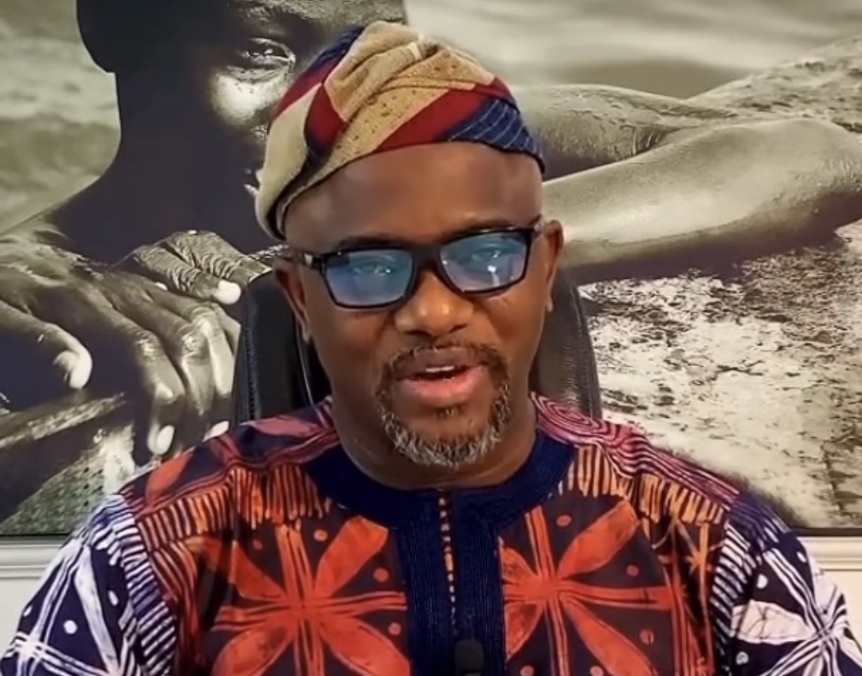
- Being a paper presented by Lanre Adisa, President, Association of Advertising Agencies of Nigeria (AAAN)/ Chairman, Heads of Advertising Sectoral Groups (HASG) at Regional Summit on Advertising and Marketing Communications | Bristol Palace Hotel, Kano | May 2026

