
For decades, climate change was largely discussed as an environmental phenomenon, one that concerned scientists, conservationists and international climate negotiators. Today, however, it has evolved into one of the defining governance challenges of the twenty-first century. It is no longer simply about rising temperatures or melting glaciers; it is about the capacity of governments to provide security, healthcare, education, infrastructure, food, water and emergency services in an increasingly unpredictable world.
The effectiveness of any government is measured not only by its policies but by its ability to deliver services that improve the lives of its citizens. Climate change is making that responsibility far more complex. Every flood that destroys roads, every drought that threatens food production, every heatwave that overwhelms health facilities, and every displaced community requiring humanitarian assistance places additional pressure on public institutions and exposes weaknesses in governance.
In Nigeria, climate change has become one of the greatest tests of governance. From recurrent flooding across the Niger and Benue river basins to advancing desertification in the North and coastal erosion in the South, the impacts are no longer theoretical. They are disrupting public administration, straining government budgets and reshaping development priorities.
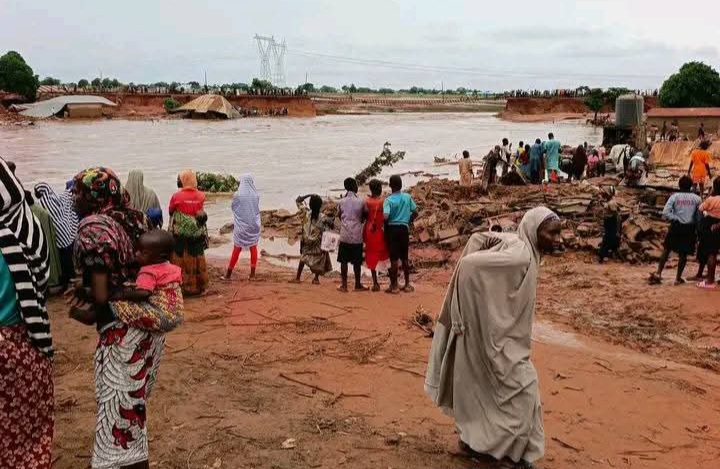
Perhaps no recent event illustrates this reality more vividly than the devastating flood that struck Mokwa Local Government Area of Niger State in May 2025. Torrential rainfall submerged communities, destroyed homes, washed away roads and bridges, displaced thousands of residents and claimed hundreds of lives. Beyond the tragic human cost, the disaster exposed how climate shocks can cripple governance at the sub-national level.
Schools were forced to close, healthcare facilities struggled to serve displaced populations, transportation networks collapsed in affected communities and local governments found themselves overwhelmed by emergency response responsibilities. Resources originally earmarked for development projects had to be redirected towards relief operations, temporary shelters and reconstruction.
The Mokwa disaster demonstrated that climate change is not simply an environmental emergency; it is a governance emergency.
Following the disaster, the Federal Government attributed the scale of destruction to a combination of extreme weather linked to climate change, blocked waterways, poor urban planning and unchecked construction on floodplains. The Minister of Water Resources and Sanitation, Prof. Joseph Utsev, stressed that while unusually intense rainfall contributed to the tragedy, human activities had significantly increased community vulnerability. His remarks underscored an important governance lesson: climate disasters are often the result of both natural hazards and institutional failures.
Similarly, the Niger State Government acknowledged the enormous burden the floods imposed on infrastructure, public services and emergency response systems. Relief operations coordinated through the Niger State Emergency Management Agency (NSEMA), alongside the National Emergency Management Agency (NEMA), highlighted the critical importance of institutional collaboration during climate-induced emergencies. Yet the experience also revealed gaps in preparedness, enforcement of environmental regulations and resilience planning.
These are not isolated challenges. Across Nigeria, climate-related disasters continue to expose structural weaknesses in governance.
The catastrophic nationwide floods of 2022 affected more than thirty states, displacing over one million people and damaging thousands of kilometres of roads, schools, healthcare facilities and farmlands. Billions of naira that could have been invested in education, infrastructure and economic development were diverted towards emergency relief and reconstruction. For governments operating under already constrained fiscal conditions, such recurring disasters significantly reduce the capacity to deliver essential services.
Climate change is also reshaping public health governance. Rising temperatures and changing rainfall patterns have contributed to the spread of malaria, cholera and other climate-sensitive diseases. Floodwaters contaminate drinking water sources, increasing outbreaks of water-borne illnesses, while prolonged heat places additional stress on hospitals and primary healthcare centres.
Agriculture presents another governance challenge. Nigeria’s food security depends heavily on rain-fed farming, making millions of farmers vulnerable to irregular rainfall, prolonged drought and flooding. The consequences are visible in declining agricultural productivity, rising food inflation and worsening rural poverty. Government interventions increasingly focus not only on supporting farmers but also on building climate-resilient agricultural systems through irrigation, drought-resistant crops and improved weather information.
Climate change has equally become a driver of insecurity. Competition over shrinking water resources and grazing land has intensified conflicts between farming and pastoral communities in several northern states. Environmental degradation has compounded socio-economic tensions, illustrating that climate adaptation must now form part of national security planning.
The Lake Chad Basin offers another sobering example. Once among Africa’s largest freshwater lakes, it has shrunk dramatically over the past decades due to climate variability and human pressures. The resulting loss of livelihoods has fuelled migration, unemployment and instability across Nigeria and neighbouring countries, demonstrating how environmental decline can undermine governance, economic development and regional security simultaneously.
Recognising these realities, Nigeria has begun strengthening its climate governance architecture. The enactment of the Climate Change Act in 2021 established a legal framework for achieving climate resilience and low-carbon development. The establishment of the National Council on Climate Change further signalled government’s intention to mainstream climate action into national planning.
However, legislation alone cannot solve the problem. Effective climate governance requires implementation that reaches every ministry, department and agency. Climate resilience should become an integral component of budget preparation, infrastructure design, procurement processes, urban planning, education policy, agricultural development and public health planning. Roads should be designed to withstand extreme weather. Schools should incorporate disaster preparedness into their management systems. Hospitals should anticipate climate-related disease outbreaks rather than merely reacting to them.
The Nigerian Meteorological Agency (NiMet) and the Nigeria Hydrological Services Agency (NIHSA) have consistently issued seasonal climate and flood outlooks warning states likely to experience severe flooding. Yet many of these warnings are either ignored or receive inadequate policy attention until disasters occur. This disconnect between scientific information and government action represents one of the greatest weaknesses in Nigeria’s governance system.
Climate adaptation must therefore shift from emergency response to risk prevention. Early warning systems are valuable only when governments enforce building regulations, protect floodplains, maintain drainage infrastructure, relocate vulnerable settlements where necessary and invest in resilient public infrastructure.
International experience demonstrates that effective governance can significantly reduce climate risks. Bangladesh has transformed disaster management through community-based early warning systems and cyclone shelters, dramatically reducing fatalities despite frequent natural disasters. The Netherlands continues investing in sophisticated flood-control infrastructure that protects lives, businesses and public assets. Rwanda has integrated environmental sustainability into national development planning, recognising that governance and climate resilience are inseparable.
Nigeria need not replicate these models wholesale, but it can draw valuable lessons from them. More importantly, it must strengthen coordination among federal, state and local governments. Climate governance cannot remain the responsibility of environmental agencies alone. Ministries responsible for finance, agriculture, health, housing, education, transportation, works and humanitarian affairs all have critical roles to play.
Local governments deserve particular attention because they constitute the first line of response during climate emergencies. Yet many lack the financial resources, technical expertise and institutional capacity required for disaster preparedness and environmental management. Strengthening local governance will therefore determine the effectiveness of Nigeria’s broader climate adaptation strategy.
The private sector also has an indispensable role. Businesses increasingly face climate-related operational risks ranging from disrupted supply chains to damaged infrastructure. Corporate investment in renewable energy, sustainable agriculture, resilient construction and green technologies should complement government efforts while creating new economic opportunities.
Citizens, too, share responsibility. Poor waste disposal, illegal construction on waterways, indiscriminate deforestation and environmental degradation continue to worsen the impacts of flooding across many Nigerian communities. Climate resilience ultimately depends on collective responsibility involving governments, businesses and citizens alike.
Climate change is redefining the meaning of good governance. It demands governments that are proactive rather than reactive, preventive rather than remedial, resilient rather than vulnerable.
The lessons from Mokwa, the nationwide floods of 2022 and countless climate-related emergencies across Nigeria are unmistakable. Every washed-away bridge delays economic activity. Every flooded school interrupts education. Every destroyed health centre weakens healthcare delivery. Every displaced family represents not only a humanitarian concern but also a governance challenge.
As climate risks intensify, governments will increasingly be judged by their ability to anticipate disasters, protect vulnerable populations and sustain essential public services under difficult conditions. Good governance in the twenty-first century is no longer defined solely by transparency, accountability and efficient public administration. It must also include climate resilience.
The future of public service delivery in Nigeria will depend not on whether climate change occurs, it already is, but on whether governments at every level possess the foresight, institutional capacity and political will to govern effectively in an era shaped by climate uncertainty. The time to build that resilience is now, before the next flood, the next drought and the next climate emergency once again expose the cost of delayed action.


- Aliyu Umar is a Public Affairs analyst and can be reached via [email protected]

