
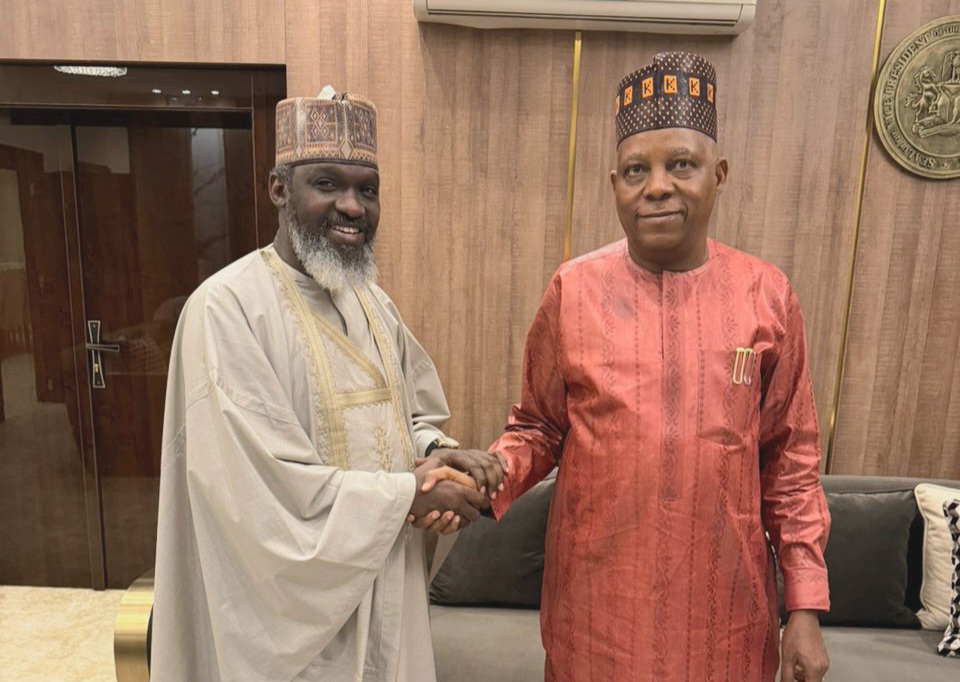
As Nigeria’s political atmosphere gradually becomes stormy and uncertain, and as political parties intensify preparations for their primary elections ahead of the timetable stipulated by the Independent National Electoral Commission (INEC), it has become necessary for Nigerians to reflect deeply on certain vital national questions that demand objective political solutions.
Since 1999, the Fourth Republic has rested on two fundamental pillars: the written Constitution and the unwritten covenant of national equity. These two principles have sustained political balance, peace, stability, and national cohesion in our democracy.
That covenant — the understanding that presidential power should alternate between the North and the South in an uninterrupted eight-year cycle — was never merely an act of sentiment. It was an act of statesmanship, carefully designed to heal the wounds of the annulled June 12, 1993 election and to reassure every region that no part of the country would remain a permanent spectator in the Nigerian project.


Today, that covenant faces another major test.
To contemplate a single-term presidency for Bola Ahmed Tinubu is to reopen a debate Nigeria believed it had already settled. To truncate the South’s rightful political cycle once again — as many believe occurred in 2015 — would send a dangerous signal that the very formula underpinning our political stability can be discarded whenever it becomes politically convenient.
The rotational arrangement is not merely a political strategy; it is the moral infrastructure of the Nigerian federation. It requires neither judicial interpretation nor political manipulation, but only fidelity to an understanding that has served the nation reasonably well over the years.
The North was allowed to complete its full political cycle, and Nigerians witnessed the stability that accompanied that process. The question before the national conscience today is simple: does the South deserve anything less?
In 2023, Nigerians did not merely elect a candidate; they endorsed the continuation of a stabilizing political order that brought President Tinubu to power through a democratic mandate.
Supporting President Tinubu’s second term should therefore be seen as a commitment to national peace, continuity, and political predictability. It is a declaration that transfers of power in Nigeria should no longer be moments of national tension and uncertainty, and that the rules of engagement should not change midway through the process.
True national transformation cannot be fully achieved within a single term. Meaningful reforms require continuity to mature into enduring institutions, sustainable economic realities, and lasting national progress.
Nigeria must therefore choose between temporary political expediency and long-term national stability.
To honor the South’s eight-year cycle is to reaffirm that every region remains an equal stakeholder in the federation, that political covenants should be respected, and that Nigeria remains worthy of the trust and loyalty of its citizens.
The North must also remember and reciprocate the political goodwill extended by President Tinubu in 2015, which significantly contributed to the emergence and eventual victory of Muhammadu Buhari. Politics, after all, remains a relationship built on mutual respect, partnership, sacrifice, and reciprocity.
Tinubu/Kashim to 2031
- Hon. Mahmud Babaliya Aftaka
DG, MATASAN AREWA FOR TINUBU 2027 (MAT)

