
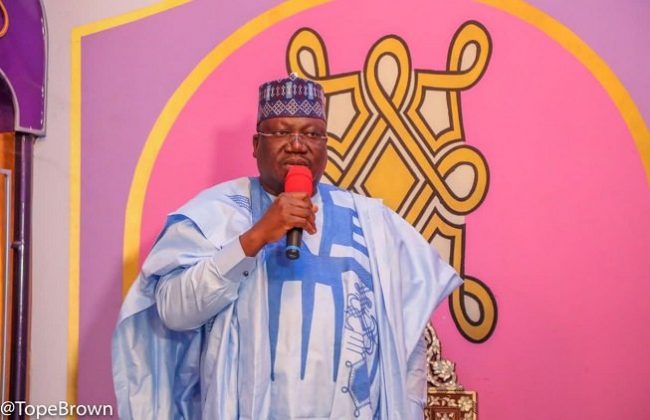
In every democracy, words spoken by public officials carry consequences beyond the immediate audience. They shape public perception, reinforce political culture, and influence the expectations of citizens. It is for this reason that Senator Ahmad Ibrahim Lawan’s recent announcement that he facilitated the recruitment of two young men from Yobe North into the Defence Intelligence Agency (DIA) deserves closer scrutiny.
There is nothing objectionable about celebrating the success of young Nigerians who have secured employment in one of the country’s most strategic security institutions. Abdulsalam Shafiu Yaro and Abdullahi Sani Machina should be congratulated for embarking on a career dedicated to protecting Nigeria’s sovereignty. Their appointment should inspire hope among young people that service to the nation remains an honourable calling.


The concern, however, lies not with their recruitment but with the public claim that it was “facilitated” by a serving senator. Nigeria’s Constitution is unambiguous about the role of legislators. Senators are elected to make laws, scrutinise executive action, approve national expenditure, and represent their constituents in Parliament. They are not recruitment officers for government agencies. The Defence Intelligence Agency, like every federal institution, is expected to recruit on the basis of merit, competence, security vetting, and established procedures, not political influence.
When elected officials publicly claim responsibility for appointments into public institutions, they unintentionally reinforce one of Nigeria’s most destructive political myths: that opportunities belong not to the qualified but to those who know the right politician.
This narrative is particularly damaging to Nigerian youths. It tells millions of hardworking graduates that academic excellence, professional competence, and perseverance may count for little unless a political officeholder intervenes. Such messaging weakens public confidence in state institutions and normalises patronage as the pathway to success.
Our young people must reject this mentality. They are not citizens whose worth depends on political endorsement. Their value lies in their education, character, innovation, resilience, and ability to compete fairly. A democratic society thrives when opportunities are earned through transparent processes rather than distributed as political favours.
If Abdulsalam Shafiu Yaro and Abdullahi Sani Machina met every criterion prescribed by the Defence Intelligence Agency, then the greatest credit belongs to them. Their qualifications, discipline, and determination should define their achievement. To present their appointment primarily as the product of political facilitation inadvertently diminishes their personal accomplishments.
For that reason, Senator Lawan owes these young officers an apology for framing their success in a manner that overshadows their merit. They deserve to begin their careers as officers respected for their competence, not perceived as beneficiaries of political patronage.
The Senator should note that he owes an even greater debt to the people of Yobe North. Since Nigeria’s return to democratic governance in 1999, the electorate has repeatedly entrusted him, of all people, with one of the highest legislative offices in the land. Few politicians have enjoyed such enduring confidence from their constituents. That confidence is neither an entitlement nor a personal inheritance; it is a mandate demanding accountability.
The people did not elect Senator Lawan principally to secure jobs for a handful of individuals. They elected him to influence national policy, attract sustainable development, strengthen federal institutions, improve education, expand economic opportunities, and legislate in ways that create jobs for thousands rather than facilitate employment for a select few.
The tragedy of Nigerian politics is that many citizens have come to applaud politicians for performing functions that should ordinarily be discharged by impartial public institutions. We celebrate the legislator who “gets someone employed,” the governor who “approves” a scholarship, or the minister who “gives” a contract, while overlooking the more fundamental question: why should these opportunities depend on political intervention in the first place?
Strong democracies are built on institutions, not personalities. Public offices should serve every qualified citizen equally, irrespective of political affiliation, ethnic background, or personal connections. That is the essence of constitutional governance.
Senator Lawan has served Nigeria long enough to appreciate this distinction. His experience should be deployed to strengthen systems, not to reinforce patronage politics. The most enduring legacy any legislator can leave is not a list of beneficiaries but a nation where no young Nigerian believes that a political godfather is the price of opportunity.
Our democracy will mature only when public officials cease to market access to government as a personal favour and begin to defend merit as a constitutional principle. Nigeria’s youths deserve nothing less.
- Mr Abdulkadir is a legal consultant and can be reached via [email protected]

