
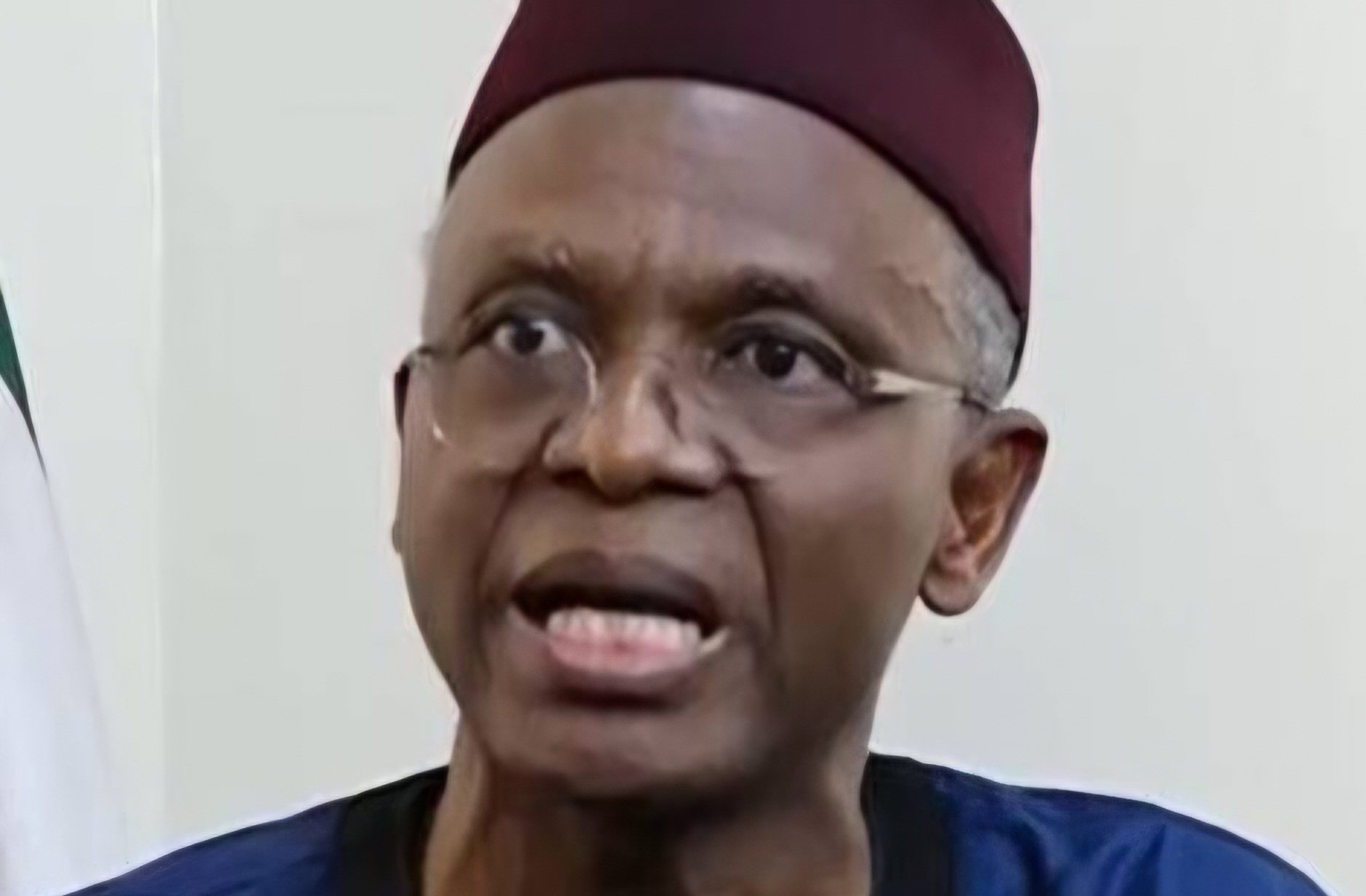
I have deliberately stayed off this subject for months. Nasir El-Rufai’s family are people I know closely, and I did not want anything I write mistaken for either loyalty or vendetta. But my closeness to the family is modest next to what Governor Uba Sani and a handful of others standing by him now once meant to that same family, and it is partly that contrast, alongside my original caution, that has pushed me to finally write. My position on matters like this has always been simple: I love Nigeria more than I love being right, and where a process follows the rule of law and rests in competent hands, I keep my opinion to myself. But watching the last few weeks of this case, I think the story has stopped being about El-Rufai. It has become a story about how Nigeria’s institutions treat anyone once they fall out of favour, and that should worry every Nigerian, whether or not they ever liked him as governor.
By this Saturday, Mallam Nasir El-Rufai will have spent roughly 150 days in detention without conviction, a run interrupted only by three days in March when he was released, commendably, to bury his mother. There is no framework of law under which holding someone that long, for offences that are bailable, can be called ordinary due process. It is beginning to look less like prosecution and more like persecution, and that distinction matters, because it puts our entire justice administration system on trial alongside him.


To be clear, El-Rufai is not beyond reproach. He can be investigated and prosecuted for his conduct in office and for what he has said publicly. The problem was never that he is standing trial, or even that he faces proceedings simultaneously in courts in the FCT and Kaduna State. The problem is that in the process of prosecuting him, he appears to have been denied, directly or indirectly, the protections of personal liberty and fair trial that the 1999 Constitution guarantees to every Nigerian. Sections 35 and 36 are not decorative. Section 36(5) states plainly that a person charged with a crime is presumed innocent until proven guilty in a competent court. That presumption is the foundation on which the right to bail rests, a right reinforced in the Administration of Criminal Justice Act, whose Section 158 says a suspect “shall… be entitled to bail.” Section 165 goes further: bail conditions are discretionary, but they “shall not be excessive.”
Consider what “not excessive” has meant in practice. The Federal High Court in Abuja set bail at a N100 million bond, requiring a surety who must be a federal civil servant not below Grade Level 17, resident specifically in Maitama or Asokoro, in possession of a verified Certificate of Occupancy, three months of bank-authenticated salary evidence, a departmental verification letter, and a six-month tax clearance certificate. The Kaduna State High Court, for its part, set a N200 million bond requiring two sureties, one holding landed property in Kaduna worth N200 million with a verified C-of-O, and the other an elder whose status must be certified by the Kaduna State Council of Elders or Traditional Council. These are not bail conditions designed to prevent flight. They are conditions designed to be nearly impossible to satisfy. A former head of a federal agency, a former minister, and a former two-term governor, with no history of jumping bail, would ordinarily qualify for release on self-recognition. Instead, the State has constructed a bureaucratic wall so specific it reads less like caution and more like intent.
Start the broader timeline in February. El-Rufai is granted bail by the EFCC after detention over corruption allegations. Within the hour, armed operatives from a different agency arrest him again, at the EFCC’s own gate. Nobody in government could say clearly, at the time, which agency ordered the second arrest. If a bail order can be undone the same evening by unnamed men waiting outside the building where it was issued, then bail in Nigeria is not a right. It is a courtesy that can be withdrawn at will. That should alarm a governor’s successor as much as it alarms El-Rufai’s supporters, because the next person in that chair, in any State, could be any of us. Since then, the case has multiplied rather than progressed. EFCC, ICPC, and SSS are each running proceedings against the same man, in different courts, over overlapping conduct, almost as if they answer to different governments, or are competing over which one lands the more decisive blow. When multiple agencies pursue one defendant simultaneously, a citizen is entitled to ask whether this reflects diligence or design, structured so that if one case falters, another is already positioned to keep him in custody regardless. Five months on, no trial has concluded. The charges have barely moved. What has moved is the number of fronts on which he is being held.
And when you place this alongside other things happening in the same political space, the inconsistency becomes hard to ignore. A prominent Kaduna political figure, who holds an advisory role to the State governor as well as a coordinating position for the president’s second-term agenda, has publicly and repeatedly said that election results were altered in Igabi Local Government. He remains in that position today, without investigation, invitation, or prosecution. It is difficult to see how that admission is any less serious than the allegation El-Rufai made on Arise TV about phone interception, and yet the two men have been treated in entirely different registers by the same system.
Last week gave us the clearest illustration yet of where this pattern leads. A court approved a medical visit for El-Rufai. ICPC facilitated it. A photograph then surfaced, and the Commission responded by arresting the treating physician for making false statements. I make no claim about what actually happened in that consultation room. But consider the precedent this sets, regardless of who was right. Every doctor now knows that treating a high-profile detainee carries personal legal exposure. That is not a small thing; it touches any Nigerian who might one day be in custody and need a doctor they can trust. And notably, that arrest appears to have ended El-Rufai’s medical engagement altogether that day. A medical consultation should not be capable of being terminated by an arrest of the physician mid-visit. A State serious about its own credibility does not let its anti-corruption agencies double as gatekeepers of medical access. Then there is the courtroom itself. The trial has now stalled twice over who should hear it, first an application for the judge’s recusal, then a separate petition to transfer the case entirely. Whatever the individual merits, the optics compound. A case can survive one procedural fight over venue. Two, layered on everything above, starts to look like a trial that cannot settle on a forum, which is its own quiet injustice: a defendant denied a fixed, impartial venue is being denied a fair hearing by delay alone.
None of this requires anyone to believe El-Rufai is innocent. He may have serious questions to answer, and due process is not immunity. But due process has a specific, technical meaning. It means bail that is honoured once granted. It means one agency with a clear mandate, not three racing each other. It means medical access that does not expose a physician to arrest mid-consultation. It means a court that can actually hear a case rather than continuously relitigate its own composition. Where those things are absent, the State is not projecting strength. It is revealing that its institutions cannot run a straightforward prosecution without generating a fresh scandal every few weeks.
It is worth remembering, too, that due process is not a favour extended to the powerful. It is the same protection an ordinary Nigerian in a State prison, without a lawyer or a name anyone recognizes, is entitled to and rarely receives. If the system bends this visibly for a former governor with resources and a national profile, it is worth asking what happens, quietly, to the thousands of Nigerians in detention who have neither.
There is a simple corrective available to government here, and it costs nothing but discipline. Let one agency lead, with the others in support rather than in parallel competition. Let bail conditions, once met, be honoured without a second agency waiting at the gate. Let medical and legal access be treated as procedural rights, not privileges revocable on suspicion. None of this weakens the prosecution’s hand. If the case against El-Rufai is as strong as the State believes, it needs no help from irregular process. It is, in fact, the surest way to win a conviction that no one, at home or abroad, can later call into question.
Nigeria is watched closely right now, by investors weighing risk, by diaspora professionals deciding whether to come home, by every foreign court and rating agency that quietly tracks how our institutions behave under pressure rather than what our constitution says on paper. A case handled this way does more damage to that reputation than any single editorial could. If we want the world to take our rule of law seriously, the simplest place to start is ensuring that when we detain a former governor, we do it in a manner that survives scrutiny even from people who despise him.
- Suleiman writes from Abuja. He is a Management, Governance, and Security Consultant, and an AI Policy and Governance enthusiast. He can be reached via [email protected]

