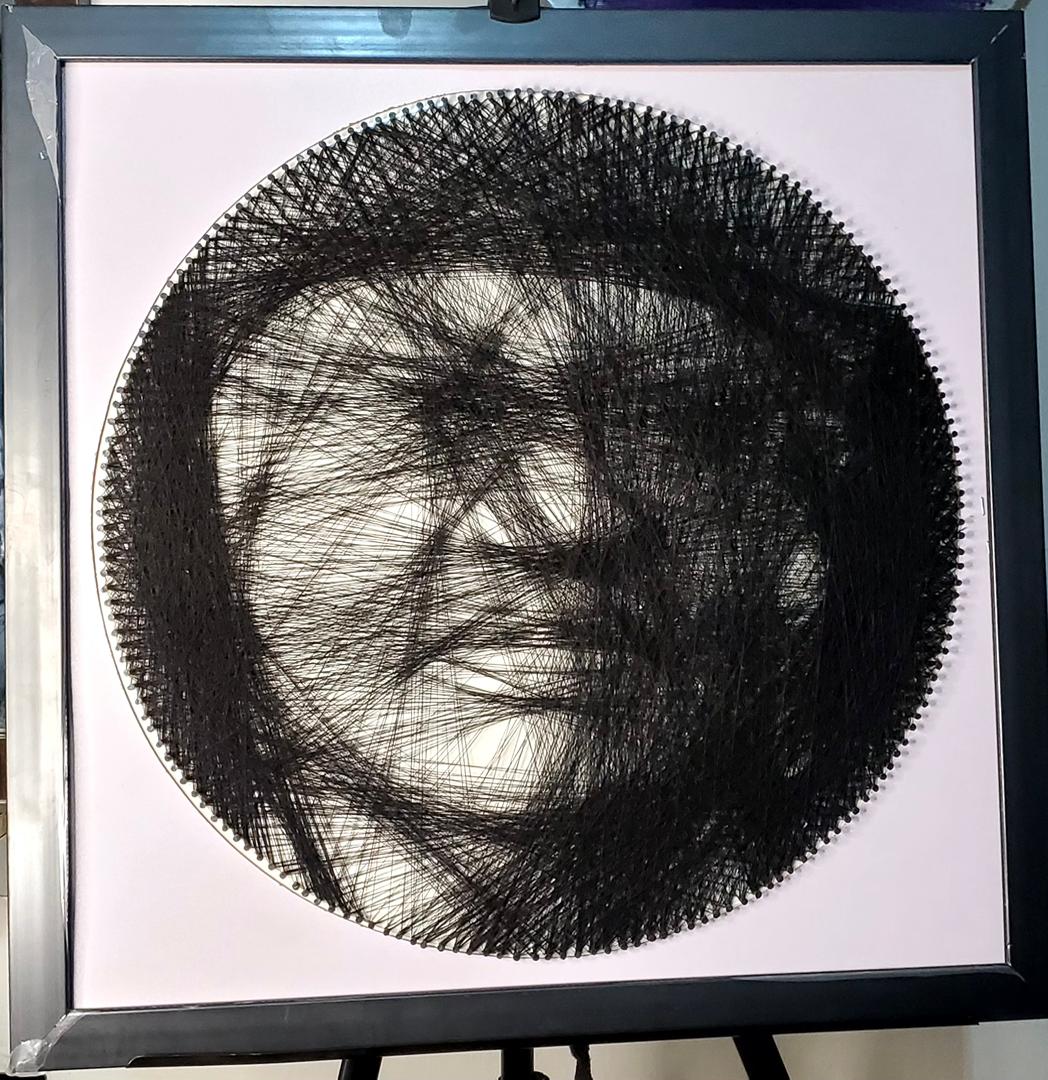

There are people who enter public service like actors stepping onto a well-lit stage, and there are those who slip in like dawn softly, steadily, without noise, yet changing the whole landscape as they arrive. Barrister Sa’adat Yunusa Mohammed, the soon-to-be first Gimbiyar Dange, belongs to the latter.
Her name rings through Sokoto today beyond courts attention, because her work has begun to speak louder than the traditional praise of politics. To call her a public servant would be technically correct, but emotionally insufficient. She is a public conscience in human form, the one that remind saner minds that governance can still remember its moral roots.
Born, bred, and buttered in Sokoto State, Sa’adat comes from a lineage that shaped Northern history; the family of Shehu Usman Dan Fodio, the scholar-reformer who turned faith into philosophy and philosophy into statecraft. From her mother, the first female graduate of the Fodio family, she inherited the courage to imagine a life beyond expectation; from her culture, she learned that tradition does not have to be a cage, but can instead be a compass.
An alumna of Usmanu Danfodiyo University, Sokoto, where she earned her LLB, and the Nigerian Law School, where she was called to the Bar, Sa’adat’s legal formation was steeped in both intellect and integrity. To further expand her intellectual horizon, she is currently pursuing her Master of Laws (LLM) at the University of East London, with a PhD in view at Walsh University, USA. For her, learning is beyond a stage of life, but a lifelong stance.
When she took her first steps into the legal world, she did not do so to chase prestige. Her years as a Principal Legal Officer at the National Human Rights Commission were less about drafting memos and more about rewriting human stories.
There, she handled over 50 cases of domestic violence, mediated conflicts that never made the evening news, and became a voice for women and children who had long learned to whisper their pain. Her work was not performative activism; it was the quiet, administrative revolution of someone who understood that justice is not complete until it reaches the forgotten.
In one of my earlier happenstance with her, she once said her guiding principle is disarmingly simple, that the law must be humane before it can be just. It’s a belief that shaped every of her career move that followed; from the corporate negotiations she handled at NAPET Telecommunication to the policy work that defines her role today.
When the Sokoto State Governor, His Excellency, Governor Ahmad Aliyu Sokoto, appointed her as Special Adviser on Poverty Reduction Agency (SPORA) in 2023, she approached the role not as a technocrat chasing indicators but as a reformer interpreting human need. She has never failed her people, she fits her duty like truth fits conscience, precise and unpretentious, indeed, the square peg finally finding its rightful square hole
Under her direction, SPORA began to look less like an office and more like a movement. Poverty, to her, was not a statistic; it was a child dropping out of school, a mother selling dignity for survival, a young man that is one rejection away from despair.
She has trained over 150 women and youth, supporting microbusinesses, funding education for hundreds of indigent students, and pursuing legal redress for 19 women’s rights violations.
Sa’adat’s philosophical stand remain uncompromising that social justice without economic empowerment is charity, and that empowerment without institutional reform is futility. It is this fusion of idealism and method that has made her relevant.
If SPORA reflects her role in government, then the Sa’ara Mata Foundation, which she founded and leads as Chief Executive Officer, reveals her soul’s deeper mission to institutionalize compassion.
In less than three years, the foundation has trained and empowered over 200 people in Sokoto State, mostly women and young people, across technical (computer studies) and vocational entrepreneurial fields such as tailoring, grinding, and the making of local beverages and nuts, all with tangible impact on the state’s socio-economic fabric.
Beyond skills, the foundation has become a refuge for rights. It has supported and promoted the rights and interests of women, youth, and children, pursuing cases of fundamental human rights enforcement in Abuja, Sokoto, Kaduna, and other parts of the country, and successfully negotiating several out of court in favour of victims.
Education, too, has found an advocate in her. Through the foundation, she has purchased and distributed over 250 JAMB forms free of charge, and sponsored several underprivileged students from secondary school to university. The Sa’ara Mata Foundation has, in many ways, become her social blueprint.
Sa’adat’s brand of politics feels strangely refreshing in the dense, sometimes cynical air of Nigerian politics, she belongs to the All Progressives Congress (APC) but carries herself like an ambassador of women’s dignity before party identity.
As a member of multiple national campaign councils in the 2023 election, from the Women Presidential Campaign Council to the Progressive Sisters Network, she has been both strategist and symbol. Her kind of politics is not the one that make needless noise; it is about negotiation, the art of finding humanity within hierarchy.
When she speaks at conferences or women’s forums, she is speaking from the scars and stories of those she has helped. And that, perhaps, is why people listen.
Her education from Harvard Law School and Yale School of Management has not made her distant; rather, it has expanded her horizon. She speaks the language of development with the authenticity of one who has seen deprivation up close.
Now, as she prepares to be formally conferred with the title of first Gimbiyar Dange, the symbolism could not be deeper. The title, being the first of its kind is reserved for women of substance and heritage like her. For Sa’adat, it is less coronation and more covenant being a pact between her and the people whose lives she has chosen to serve.
As part of the investiture, she will visit hospitals and correctional facilities across Sokoto State, distributing financial grants, essential donations, and words of hope. It is a gesture that mirrors her philosophy of service and impact beyond ceremony.
To study Sa’adat Yunusa Mohammed is to witness a future Nigeria might one day mature into; a place where intellect does not alienate compassion, where politics does not suffocate purpose, and where leadership wears both a head and a heart. Her work has shown that change need not be dramatic to be real; it can be as subtle as a policy rewritten, as simple as a girl returning to school, or as symbolic as a woman of law becoming the Gimbiyar of her people.
Sokoto has produced many women of worth. But in Sa’adat Yunusa Mohammed, the state may have found something rarer; a woman whose mind and heart have learned to serve the same purpose.
If the North’s future ever needed a face, it might just look like hers; promising, thoughtful, courageous, and luminously human. This is why the North needs more women like sa’adat for collective prosperity.
The rest, is ellipsis…
- Ìtàn’ Abdullahi Ayọ̀bámi, a Communication Strategist and Independent Thinker (Abuja)