
- Hospital dismisses allegation as baseless and without credible evidence
A pregnant woman says she went to the hospital healthy, but after undergoing a Caesarean Section (C-Section), she discovered that one of her kidneys had been removed.
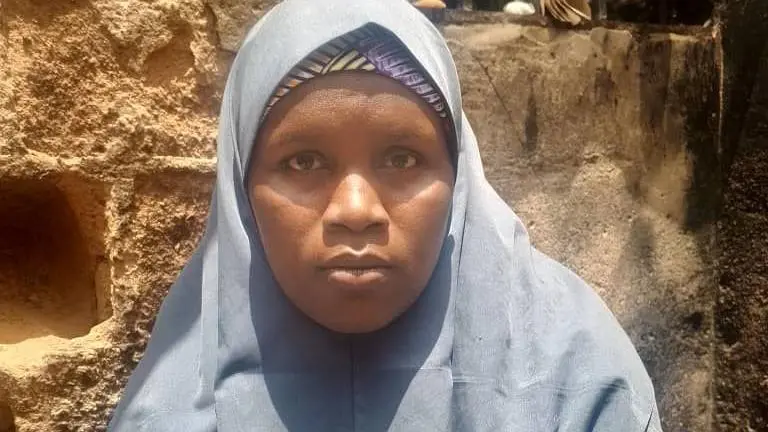
Barira Alhassan, a middle-aged woman from Gombe State, accused doctors at the Gombe State Specialist Hospital in northeastern Nigeria of removing one of her kidneys during a childbirth surgery.


However, the hospital authorities have denied the allegation, describing it as “a complete lie, baseless, and without any credible evidence, hospital records, or patient documentation to support it.”
Her relatives said that medical tests conducted on her before the surgery showed she had two healthy kidneys. But after the surgery, she became seriously ill, and subsequent tests reportedly showed that she now has only one kidney.
In an interview with the BBC Hausa service, Barira Alhassan said she had the surgery on April 8, 2026, and began feeling unwell a few days later.
“A few days after the surgery, I started feeling very ill. I was vomiting, had severe stomach pain, my body was swollen, and I felt pain whenever I urinated,” she said.
She added: “I even started asking other women who had C-sections if they felt the same way after surgery, because this was the first time I had ever had surgery, even though I have given birth to ten children.”
Barira said a doctor who examined her later told her that she now has only one kidney, which shocked her.
“I was thrown into panic when the doctor told me I have only one kidney. He even asked me if I had sold it.
“I told him no. He then began to calm me down, saying a person can live with one kidney like anyone else. He later gave me medication,” Barira said.
She added that after her relatives insisted on being told what happened, it seemed to her that the hospital authorities were trying to persuade them not to make the matter public.
“Now that we insisted on being told what happened, it seems the hospital is trying to pacify us so the matter doesn’t go public,” Barira said.
After receiving this information, Barira’s family lodged a complaint with the management of the Gombe State Specialist Hospital and requested her medical records, but they were told the records could not be found.
Her brother, Zakari Alhassan, told the BBC that they filed the complaint because a scan done on Barira as far back as 2015 showed she had two healthy kidneys.

Zakariyya Alhassan said “Our father went to the hospital to find out what happened, but he was not given any satisfactory explanation. He said what he wanted to know was what happened to his daughter’s missing kidney.”
He added that the hospital said they could not find Barira’s records, even though she regularly attended the hospital and gave birth there. “This increased our concern and strengthened our suspicion that something was done to our sister.”
Barira’s family said they have submitted several complaints but have not yet received a satisfactory response.
Zakariyya said that after seeing no progress, he wrote a petition to the Gombe State Ministry of Health, demanding justice and an investigation into the matter.
“After that, the ministry invited my sister, her husband, and the hospital staff, and asked us not to take the matter public until the investigation was concluded.”
However, Zakariyya said they are still not satisfied with how the matter is being handled, and the family continues to demand a thorough investigation.
Barira herself said all she wants is justice. “What I want is a full investigation to reveal how I lost my kidney, and for justice to be done for me,” she said.

Hospital denies kidney removal allegation
The management of the Gombe State Specialist Hospital has denied the allegation that one of its doctors removed one of Barira Alhassan’s kidneys during a childbirth surgery.
In a statement, the hospital described the claim as “a complete lie, baseless, and without any credible evidence, hospital records, or patient documentation to support it.”
The hospital said theatre records show that Barira only had an Emergency C-Section, and no surgery was performed involving her kidneys.
“Nowhere in the records does it show that the doctors who performed the surgery touched anything related to her kidneys,” the hospital management said.
The hospital said, after Barira’s family raised concerns, further investigations were conducted to uncover the truth.
According to the statement, a test carried out at a federal teaching hospital indicated that Barira may have been born with only one kidney, rather than having lost a kidney as a result of the surgery.
The hospital also said it paid for that test to help establish the facts.
“It is important to note that our hospital management paid for this investigation to help ascertain the truth of the matter,” the statement said.
The hospital said it met with Barira and her family twice, explained the findings to them, and reviewed all her medical records.
The statement added that Barira’s family later requested that another test be done at an independent health facility, and the hospital agreed.
“At the moment, the hospital management is waiting for the family to present the results of the new investigation, as agreed at our last meeting,” the statement said.
The hospital also alleged that publicizing the matter on social media is only meant to damage its reputation and erode public confidence in healthcare workers.
However, it reiterated that no kidney was removed from Barira during her surgery.

