
In December 2025, I visited Shanono and Tsanyawa, two local government areas in Kano State that experienced a series of cross-border incursions by armed bandit groups expanding operations from their stronghold in Katsina. At the time of my visit, the bandits had robbed all the border villages of their livestock and were focusing on the next available revenue stream: kidnapping.
At Yankamaye village, located roughly two kilometres from the border separating Kano from Katsina, I sat with the family of a local Fulani chief (ward head). His village had been repeatedly sacked, and most residents had relocated. His son told me that his father refused to leave only because he was a rallying point for the community, not because he was spared by the criminals. He narrated that when the raids started, the bandits came one night and untied all 25 of his father’s cows, taking them back to their bases in Katsina.


Initially, the cattle refused to move, causing a commotion that drew his father’s attention from his room just metres away. When the chief tried to confront them, the bandits threatened to shoot him, and his wives saved the situation by pulling him back into the house. The bandits finally forced one of the chief’s children to accompany them to the border to break the herd’s resistance to strangers.
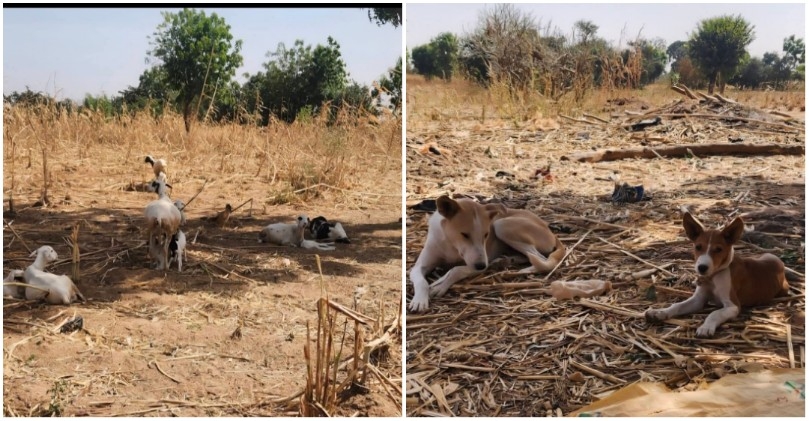
Since then, the Fulani chief was left with only five sheep, their lambs and two puppies.
Out of concern that her father was, for the first time in his life, without a single cow, his daughter donated a bull to him to help him start a new herd. But subsequent bandit attacks scuttled her act of goodwill; just weeks later, the group stormed her husband’s village and rustled over 200 cattle, including her herd. Since the father still had some sheep left, he felt compelled to return his daughter’s kind gesture and immediately sent the bull back to her.
His plight mirrors that of many other Fulani families who have lost livelihood sources to armed bandit attacks and whose attempts to restock their herds have been thwarted by constant threats. As a local Fulani chief, the loss of cattle represents not only economic ruin but also the total collapse of social standing.
He remained quiet all the while his eldest son was telling me their story. “Haka Allah Ya so” (This is what Allah decreed), he said at the end.
In the past 15 years that I have been reporting on banditry, I have heard similar stories in Birnin Gwari, Dansadau, and Jibiya.
Now, whenever someone speaks about bandits fighting for or protecting the Fulani, asks Fulani chiefs and leaders to condemn and dissociate themselves from banditry, or frames the entire ethnic group as fighting a war for dominance, my mind goes back to these stories. Ask yourself: does the local Fulani chief in Yankamaye still need to publicly condemn and dissociate himself from the people who robbed him of his most valued possessions for you to believe that he, too, is a victim? Ask yourself again: was he ever linked to banditry?
When I arrived at the village that morning, the chief’s son, who was going to be my guide, had gone to recover some cows from law enforcement agents. Startled by a strange noise in the night, about five cows had broken free and fled into the bush. News came the next day that they had been rounded up by some good samaritans and taken to law enforcement at the local government headquarters. The chief had dispatched his son in the company of the owner to go recover them. In my presence, the son reported back to his father that all the cows had been released to them ONLY AFTER THEY PAID N35,000 to the law enforcement agency.
Sadly, the Fulani are equally victims of the institutions that should protect him.

