
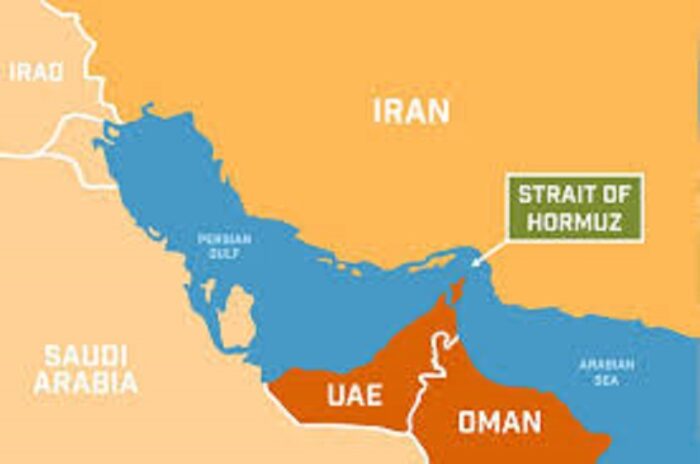
The 2026 Strait of Hormuz crisis has exposed one of the most serious strains in transatlantic relations since the Iraq War.
The standoff is raising difficult questions about alliance cohesion, U.S. leadership, and the future of the North Atlantic Treaty Organisation (NATO) as a unified security bloc.


When the U.S. imposed a naval blockade in the strategic waterway following the collapse of diplomacy with Iran, it did so largely without the backing of its traditional allies.
That moment of hesitation, and the delayed support that followed, has fueled debate among foreign policy experts over whether NATO is entering a period of deeper division or simply redefining its internal balance.
At the outset of the crisis, several key NATO members, including Britain, France, Germany, Italy, and Spain, declined to participate in the U.S.-led blockade. Their reluctance was rooted in a mix of strategic, legal, and political considerations.
European governments were not convinced that Washington had articulated a clear and achievable endgame.
Prof. Michael Clarke of King’s College London has often argued that European states are increasingly cautious about joining military operations without defined political objectives, and the Hormuz situation appeared to fit that pattern.
From their perspective, ambiguity about whether the blockade was intended as deterrence, coercion, or a step toward broader confrontation made participation risky.
Dr Nathalie Tocci, Director of the Istituto Affari Internazionali, has long emphasised that European support for military operations depended heavily on multilateral backing, particularly from the United Nations.
In the absence of such endorsement, many European governments faced domestic and institutional constraints that made participation difficult to justify.
The blockade therefore appeared less like a collective security effort and more like a unilateral move by Washington.
According to Ben Barry of the International Institute for Strategic Studies, European militaries are wary of being drawn into a potentially high-intensity naval confrontation with Iran in one of the world’s most volatile chokepoints.
The Strait of Hormuz carries a significant share of global oil supplies, and any escalation threatened not only military assets but also the global economy.
For European governments already grappling with energy vulnerabilities, the calculus leaned toward restraint rather than immediate alignment.
Analysts say the refusal to join the blockade created the impression of a fractured alliance, yet NATO has always operated on consensus rather than automatic participation.
NATO Secretary-General Mark Rutte has reiterated in various contexts that member states retain sovereignty over their military commitments.
From this standpoint, the divergence over Hormuz may reflect the alliance functioning as designed rather than failing outright.
Still, the optics of the moment were striking. The U.S., historically the anchor of NATO operations, found itself acting largely alone at a critical juncture.
For some analysts, the episode underscores a deeper shift in how allies perceive threats.
Richard Haass, president emeritus of the Council on Foreign Relations, has argued that alliances weaken when member states no longer share the same sense of urgency about specific challenges.
In the Hormuz crisis, Washington viewed Iran’s actions as requiring immediate and forceful response, while European capitals emphasised de-escalation and the protection of global commerce.
This divergence did not arise overnight but reflects years of evolving strategic priorities on both sides of the Atlantic.
A related perspective comes from Ian Bremmer of Eurasia Group, who has described the current international system as moving toward a “G-Zero” world in which no single power can reliably marshal a unified coalition.
The U.S. remains militarily dominant, but its ability to translate that power into collective action has diminished.
According to experts, the Hormuz blockade appears to illustrate this dynamic, where leadership does not automatically translate into followership.
In the weeks following the initial standoff, several NATO countries signaled a willingness to contribute to a different kind of mission, one focused on maritime security and the protection of commercial shipping rather than enforcing a blockade.
This shift suggests that the issue was not outright opposition to engagement but disagreement over the nature and scope of that engagement.
However, the timing of this support has raised further questions.
Early backing in such crises often serves as a signal of unity and deterrence. Its absence may have reduced the psychological impact of the U.S. move and complicated efforts to isolate Iran diplomatically.
Dr Kori Schake of the American Enterprise Institute has noted in previous analyses that coalitions provide not just military strength but also political legitimacy.
According to her, acting without allies can make even a powerful country appear isolated, potentially weakening its bargaining position.
From this perspective, the later willingness of European states to engage may be seen as constructive but insufficient to offset the initial gap in unity.
The U.S. response to this dynamic has been mixed. Official statements have emphasized the effectiveness of the blockade and downplayed the lack of early allied participation.
Yet there are indications that policymakers in Washington are aware of the limitations imposed by acting alone.
Fiona Hill, a former U.S. National Security Council official, has consistently argued that alliances function as force multipliers. Without them, operational burdens increase and strategic outcomes become harder to achieve.
Reports of ships bypassing enforcement measures and continued instability in the region underscore these challenges.
The broader implications of the crisis extend beyond immediate military considerations.
It raises questions about whether NATO is evolving into a more flexible and less cohesive structure, where participation in operations becomes increasingly selective.
Joseph Nye of Harvard University has long stressed that the strength of alliances lies in a combination of shared interests and mutual trust.
According to him, when either of these erodes, cooperation becomes conditional.
The Hormuz episode suggests that trust, particularly in decision-making processes, may not be as strong as it once was.
At the same time, it would be premature to conclude that NATO is on the verge of fragmentation.
The alliance continues to coordinate closely on issues closer to its core mandate, particularly in Europe.
Foreign affairs analysts have pointed out that what the Hormuz crisis reveals is not necessarily a collapse but a recalibration.
They observe that European allies appear more willing to assert their own strategic preferences; while the U.S. may need to invest more effort in consultation and consensus-building if it seeks broad support for operations beyond the Euro-Atlantic area.
For the wider world, including regions such as Africa, the consequences of this shift could be significant as reduced cohesion among major powers may lead to slower and less coordinated responses to global crises, thereby increasing economic volatility.
Disruptions in the Strait of Hormuz have already affected energy markets, with ripple effects felt far beyond the Middle East.
Countries dependent on imported fuel, including many in Africa, face heightened vulnerability in such scenarios.
For observers, the Hormuz crisis highlights a changing reality for NATO.
The alliance remains intact, but its internal dynamics are evolving. The U.S. can no longer assume automatic backing, and European allies are increasingly guided by their own assessments of risk, legality, and strategic interest.
Experts believe that the delayed support from NATO allies suggests that cooperation is still possible, but on terms that reflect a more balanced distribution of power and cautious approach to international security. (NANFeatures)

