
The Auditor-General’s Annual Report on Non-Compliance and Internal Control Weaknesses in Ministries, Departments, and Agencies (MDAs) for the year ended December 31, 2022, was released in September this year. As to be expected, media houses published stories based on the report’s content, because, as we say in media parlance, news is no news until it is reported.
What made the Auditor-General’s report very appealing to media organizations was the fact that it uncovered many financial anomalies in several government agencies and institutions. With regards to the Central Bank of Nigeria (CBN), it was found to have failed to remit N1.4 trillion of the federal government’s operating surplus and recover billions in debt and questionable interventions. It also detailed how several CBN branches issued N29.77 billion worth of banknotes already classified as “Counted Audited Dirty,” a category of notes formally processed and certified as unfit for circulation.


Based on the report, an online platform known as FIJ published a story titled “Audit Shows ‘N1.44trn Missing’ From CBN, Yet Cardoso Can’t Explain.” The opening paragraph of the FIJ story, which centered around the seven-day ultimatum issued to the apex bank by the Social Economic Rights and Accountability Project (SERAP), read: “Yemi Cardoso, the governor of the Central Bank of Nigeria, has yet to address why the CBN hasn’t remitted N1.44 trillion of the federal government’s operating surplus two months after a 2022 audit revealed that.”
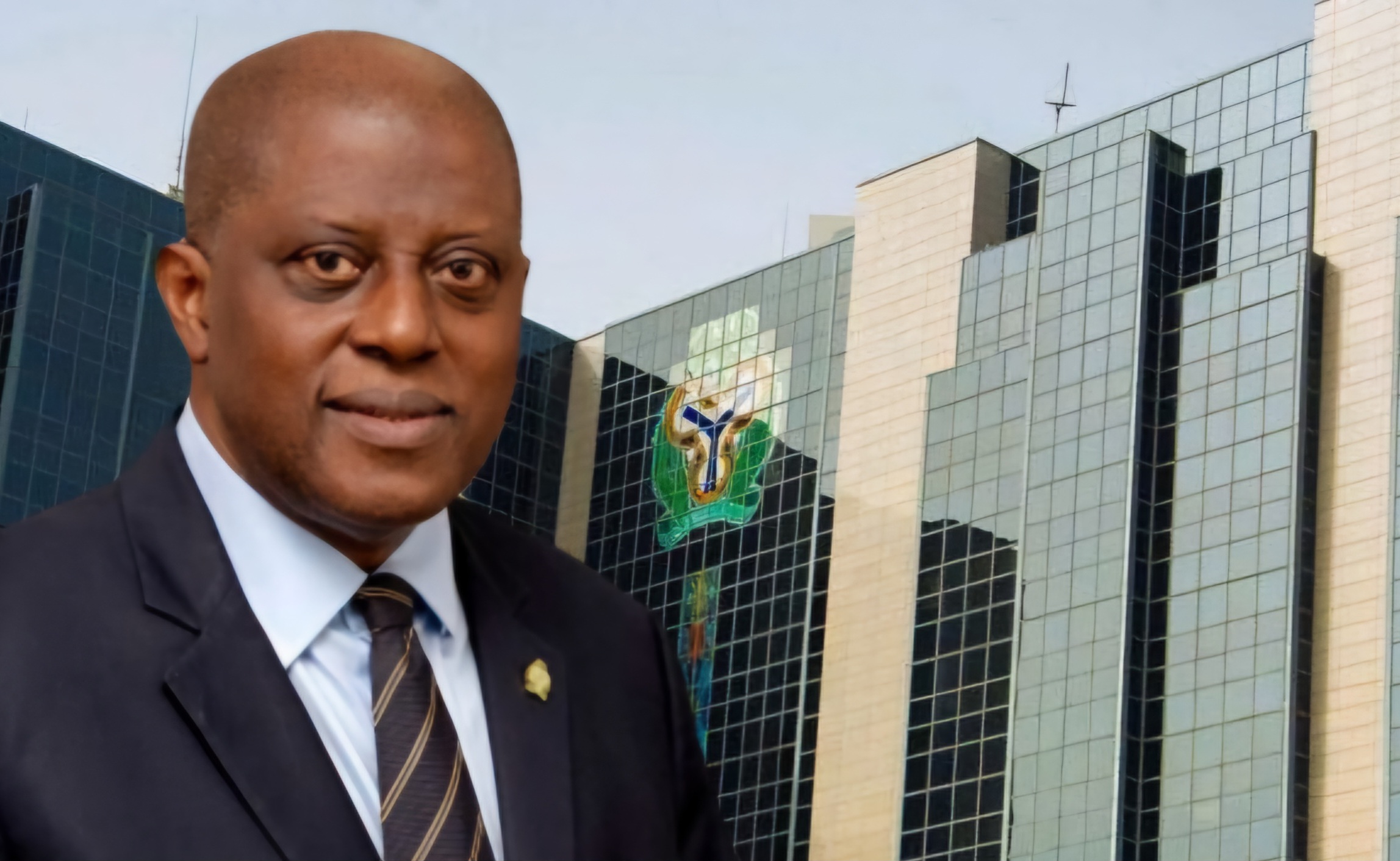
This is very unfair to Yemi Cardoso, because many people will wrongly assume that it happened under his tenure. Yet, Cardoso only became CBN governor in 2023, more than a year after the period covered in the Auditor-General’s report.
In its own story, however, The PUNCH clearly stated that “The Office of the Auditor-General of the Federation has accused the Central Bank of Nigeria, under the leadership of the former Governor, Godwin Emefiele, of re-circulating dirty and unfit banknotes valued at N29.77bn in violation of the apex bank’s own Clean Note Policy.”
This highlights the difference that context provides to stories. As experts often say, context provides the background, history, and surrounding circumstances that give facts meaning, helping readers understand why something happened, how it connects to broader issues, and why it matters. This prevents misinterpretation and fosters informed judgment rather than just surface-level understanding. Without context, news becomes isolated facts, leading to confusion, misunderstanding, or even misinformation.
So, while it is okay to seek clarification from Cardoso—since he and his team are responsible for managing the consequences of the previous administration’s policies—it is very wrong to portray him as the culprit. Heads of institutions can only speak based on what they know and provide facts that can be backed by documentary evidence, not anyone’s say-so.
In a nutshell, the Auditor-General’s report only added to the woes of Emefiele, who is already being tried for his actions during his time in office. Cardoso should, therefore, not be made to take medicine for another person’s ailment. The legal transgressions or “sins” of Godwin Emefiele are his, and he should be made to account for them.
We must also not forget that public and expert sentiment often aligns with the view that Cardoso inherited a significantly compromised institution, making it difficult to hold him solely responsible for the fallout of his predecessor’s policies. Indeed, upon assuming office, Cardoso pointed to a ₦10 trillion injection into the economy via “quasi-fiscal” intervention programs under Emefiele, which he blamed for the current high money supply and resulting inflation. There was also the inherited ₦22.7 trillion (later estimated at ₦27 trillion) in “Ways and Means” advances (central bank lending to the government), which significantly devalued the naira and fueled price instability.
Cardoso was also met with a $7 billion backlog of valid foreign exchange obligations that had paralyzed the market. It is not for nothing that critics and successors alike described the Emefiele era as one of “diminished institutional autonomy” and “corporate governance failures,” where the CBN strayed from its core mandate of price stability into political and fiscal activities. Yet, since coming on board, Cardoso pivoted back to orthodox monetary policy, aggressively raising interest rates (reaching 27.25% by late 2024) to mop up excess liquidity and tame inflation. The CBN successfully cleared the $7 billion FX backlog, which has helped organic reserve growth and restored some investor confidence. After peaking, headline inflation began a gradual deceleration in late 2024 and 2025, falling toward 16.05% by October 2025.
The saying that government is a continuum implies that governance is a continuous process, rather than a series of disconnected, independent administrations. When one “CEO” takes over from another, they are expected to build upon the positive foundations, projects, and policies of their predecessor to ensure sustainable development and public service. Still, Emefiele cannot be called Cardoso, just because government is a continuum.
- Lawal writes from Abuja

